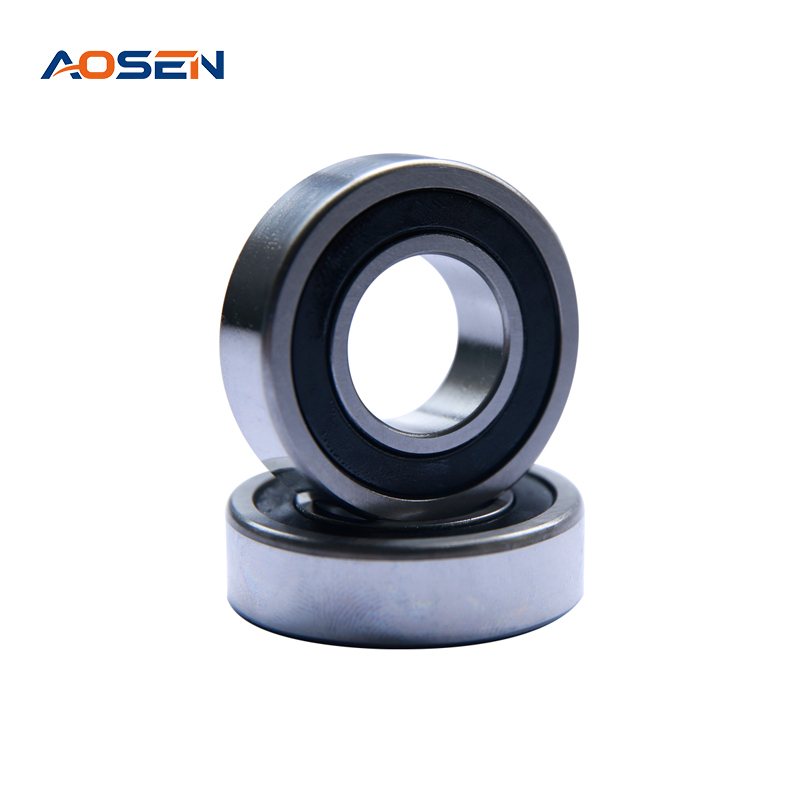
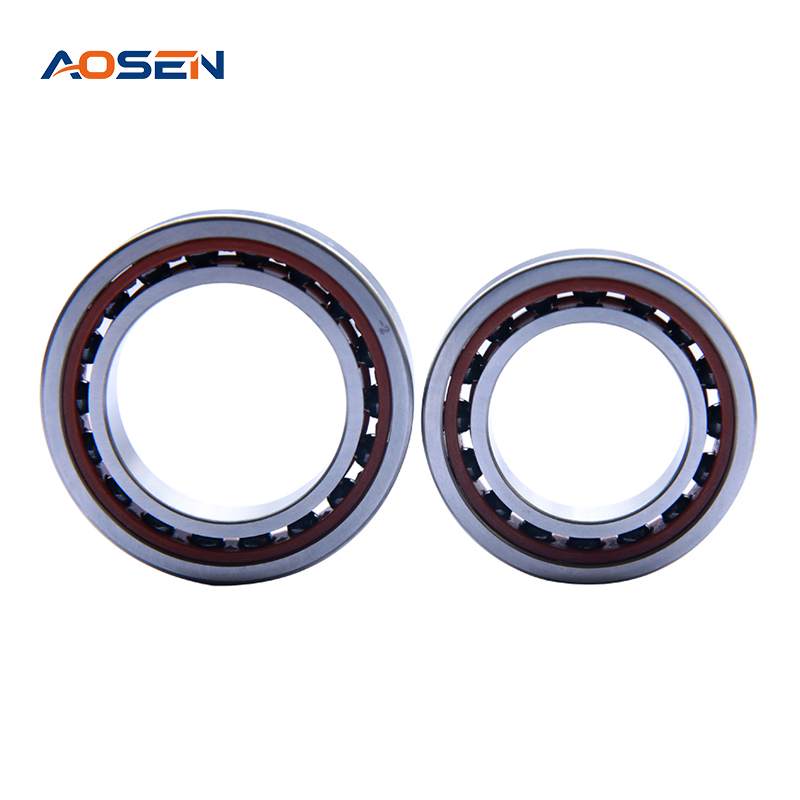
Angular contact ball bearings are where speed, precision, and load control meet. As an Angular Contact Ball Bearings manufacturer and export supplier, Ningbo Aosen Bearing Co., Ltd. supports this product family with our own production base, in-house measuring equipment, and export-focused engineering service. We supply single-row angular contact ball bearings in the 7000, 7200, and 7300 series for machine tool spindles, precision motors, automation systems, pump shafts, and industrial machinery where combined radial and axial loads need to be managed reliably.
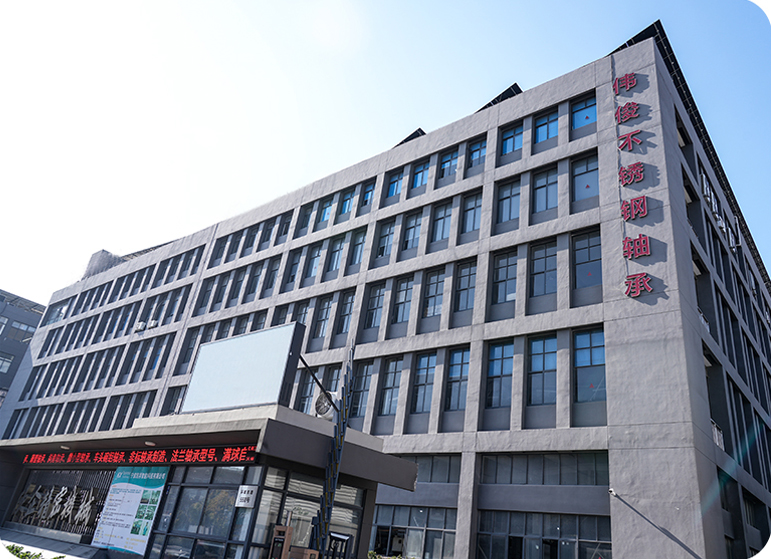
Our factory, established in 2016, covers more than 8,000 square meters and is equipped for large-scale production, strict dimensional control, and OEM/ODM customization. We combine that manufacturing base with a dedicated foreign-trade team to serve mid-to-high-end markets in Europe, the United States, Japan, Southeast Asia, and the Middle East. The result is a practical supply option for projects that need stable quality, responsive communication, and delivery planning that protects your production schedule.
Our Angular Contact Ball Bearing Range
The category is organized by load and speed requirements. Each series shares the same fundamental design — balls running in raceways that are offset so the bearing can support axial load in one direction while carrying radial load — but the contact angle and dimensional envelope determine where each series fits.
7000 Series
High-speed, low-friction angular contact ball bearings with a smaller contact angle. They suit lower axial loads, high rotational speeds, and applications where low heat generation and smooth running matter.
Typical fit: CNC spindles, precision motors, medical instruments, optical equipment, automation modules.
7200 Series
A balanced angular contact design for applications requiring larger axial load capacity while retaining high-speed stability. Higher rigidity makes it a common choice for spindles and power-driven equipment.
Typical fit: machine tool spindles, power tools, motors, automated production lines, industrial robots.
7300 Series
A heavy-duty angular contact series with high load-carrying capacity and strong rigidity. It is designed for sustained operation under larger axial loads and demanding high-speed conditions.
Typical fit: large machine tool systems, heavy industrial robots, aerospace precision equipment, high-end testing machinery.
Contact Angle and Application Fit
The contact angle is the key selection variable. A smaller angle gives higher speed capability and lower friction but less axial load capacity. A larger angle improves axial load rating and rigidity at the expense of some speed capability. This is why the same bore size can be supplied in different suffixes within the same series.
| Series |
Suffix Options |
Typical Application |
| 7000 |
C, AC |
High-speed spindles, precision instruments, low-noise motors |
| 7200 |
C, AC, B |
Machine tool spindles, power tools, automated lines, robot joints |
| 7300 |
C, AC, B |
Heavy-duty spindles, large robots, high-end testing and medical equipment |
Each series listing includes the bearing number, bore diameter d, outside diameter D, width B, and minimum chamfer dimension r min. When you send the bearing number only — for example 7205AC or 7308B — we can confirm the full dimensional envelope and production specification from our catalog.
Manufacturing and Quality Control
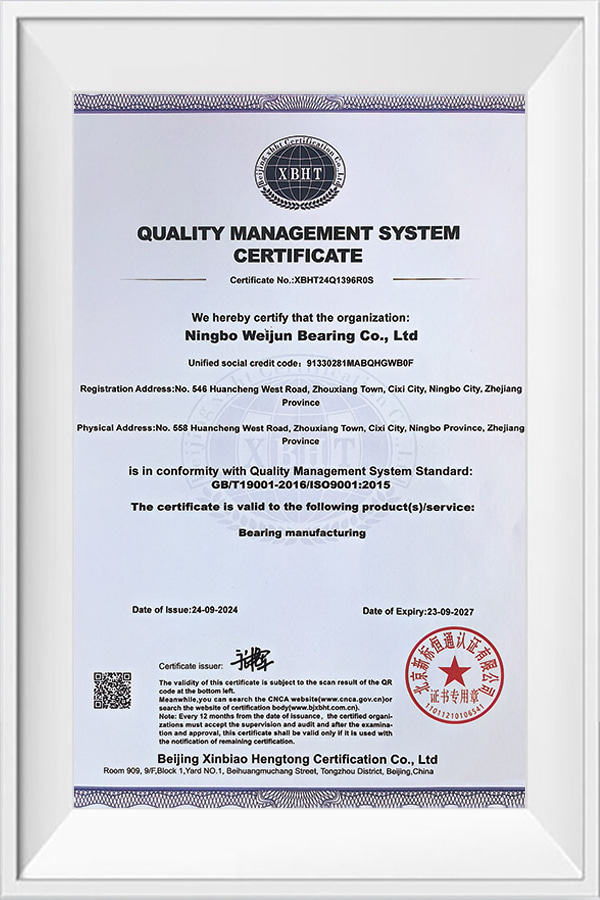
Our manufacturing approach follows the same discipline whether we produce deep groove ball bearings or angular contact ball bearings. Raw material selection, grinding, superfinishing, assembly, and final inspection are managed as one controlled process. The factory uses specialized inspection and measuring equipment to monitor inner and outer diameters, roundness, and other critical dimensions.
- Process-wide quality control from raw material to final inspection.
- Standardized factory checks covering flatness, dimensional accuracy, and visual condition before shipment.
- Dual quality control: our own factory inspection combined with the export team’s pre-shipment verification.
- OEM/ODM support based on customer drawings, samples, or detailed specification sheets.
For high-volume requirements, our factory’s annual output of 13–15 million deep groove ball bearing sets demonstrates our capacity to stabilize supply for repeat orders. Angular contact orders benefit from the same production planning, material sourcing, and batch consistency controls.
Configuration and Customization
Standard bearing numbers cover a large share of project needs, but we also support non-standard configurations. Typical customization options include special dimensions, material selection, sealing structures, and lubrication methods. If your application runs at high speed, high temperature, or in a washdown environment, tell us the working conditions and we will propose a configuration that fits.
For spindle systems and motor shafts, single-row angular contact ball bearings are often mounted in pairs. We can discuss back-to-back (DB), face-to-face (DF), or tandem (DT) arrangements, matched preload, and internal clearance to suit your assembly process and load direction.
The full dimension tables for each series are available on the corresponding product pages: 7000 Series Angular Contact Ball Bearings, 7200 Series Angular Contact Ball Bearings, and 7300 Series Angular Contact Ball Bearings.
Engineering Support and Delivery Scope
We work with project teams at the specification stage, not only after the order is placed. Our export and technical staff can check bearing interchangeability, review mounting recommendations, and confirm packaging requirements for sea, air, or express delivery. For customized dimensions, we evaluate the drawing against available grinding and superfinishing capability before quoting.
Because we are both a bearing factory and an export supplier, communication between your purchasing team and the production floor is direct. That shortens response time for technical queries, inspection reports, and delivery updates. We also welcome factory visits from customers who want to verify production processes and quality control measures firsthand.
Information We Use to Configure Your Solution
A precise proposal starts with the bearing number and operating conditions. Please include as much of the following as possible with your inquiry:
- Bearing series and suffix: for example, 7005C, 7208AC, or 7312B.
- Required dimensions: d, D, B, and chamfer if replacing a non-standard part.
- Radial and axial loads, including load direction and any preload requirement.
- Operating speed range, temperature, and lubrication method.
- Sealing requirements: open, shielded, or sealed design.
- Mounting arrangement: single bearing or matched pair set.
- Estimated quantity, target delivery schedule, and export packaging preference.
- Customer drawing or sample for custom dimensions or special material requirements.
FAQs
What is the difference between the 7000 and 7200 series?
The 7000 series uses a smaller contact angle and is optimized for high speed, low friction, and lighter axial loads. The 7200 series provides a larger contact angle, which increases axial load capacity and rigidity while still supporting high-speed operation.
Can a single-row angular contact ball bearing handle axial loads in both directions?
A single bearing supports axial load in one direction. For bidirectional axial loading, two bearings are normally mounted face-to-face or back-to-back as a matched set. We can supply bearings arranged for the preload and mounting method your assembly requires.
What do the C, AC, and B suffixes mean?
The suffix identifies the contact angle variant within a series. C generally designates a smaller contact angle for higher speed, while AC and B are progressively oriented toward greater axial load capacity and rigidity. The exact angle is confirmed in our quotation according to the bearing number.
Do you support custom dimensions or materials?
Yes. We provide OEM/ODM customization for special dimensions, materials, sealing structures, and lubrication methods. Send a drawing or sample, and we will evaluate the manufacturing feasibility against our production capability.
How do you ensure bearing quality before shipment?
Quality is controlled through the full production process, from raw material selection to final inspection. Critical dimensions such as inner and outer diameter and roundness are measured with specialized equipment, and each batch receives standardized factory checks before packing.

 Español