
 Español

How to Choose a Bearing: A Practical Selection Guide for Engineers and Buyers
Choosing the right bearing is one of those decisions that looks simple until a machine stops. A bearing that is too small, too fast, or made from the wrong material can fail in weeks and take expensive equipment with it. At Ningbo Aosen Bearing Co., Ltd., we have spent nearly a decade manufacturing deep groove ball bearings for industrial, automotive, and marine customers around the world. In this guide, we walk through the same bearing selection process we use with our own OEM clients, so you can specify the right bearing the first time.
Start with the Load: Direction and Magnitude
Every bearing selection should begin with the load. The term load covers both the direction of the forces acting on the shaft and their size.
Radial and axial loads
A radial load acts perpendicular to the shaft, as in a pulley or gear. An axial load acts along the shaft, as in a fan propeller or clutch. Many applications combine the two. Deep groove ball bearings handle moderate radial loads and some axial load, which is why they are so common in electric motors and industrial gearboxes. When the axial component is significant, angular contact ball bearings are often a better choice because their raceway geometry supports higher axial forces.
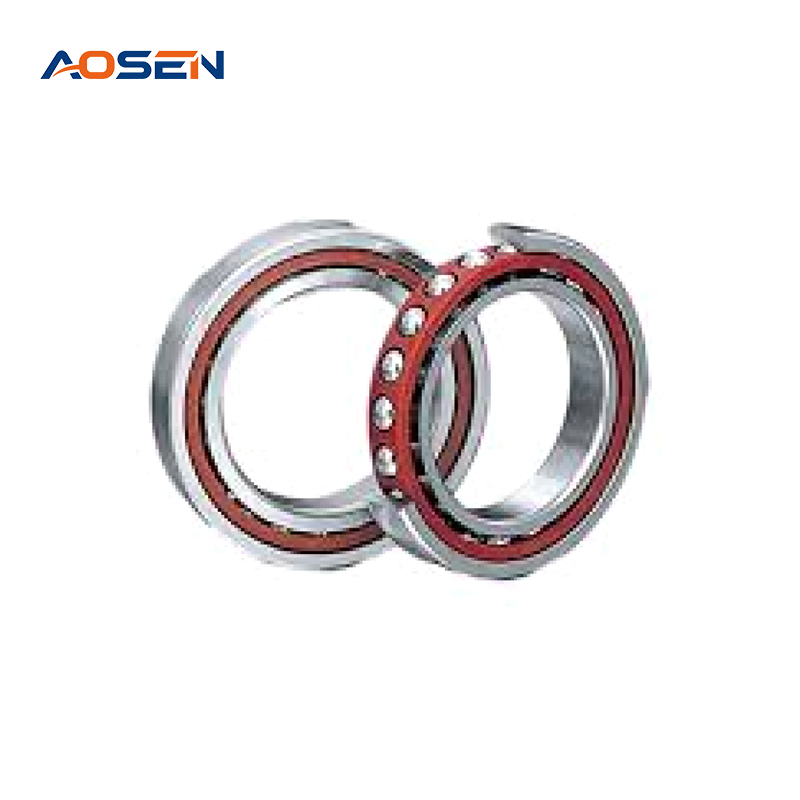 7200 Series Angular Contact Ball Bearings for High Axial LoadsThese single-row bearings use a large contact angle to handle significant axial forces while maintaining rigidity and precision, making them a suitable choice when applications combine heavy loads with high-speed operation.View Product →
Measuring the magnitude
You also need a rough idea of the load value. Check the dynamic radial load rating (C) and static load rating (C0) published by the manufacturer. These values are expressed in newtons or pounds. The applied equivalent load should stay within these limits after applying the appropriate application factor for shock or vibration. If the load is intermittent, higher peaks can be tolerated for short periods, but a bearing that is constantly overloaded will generate heat and early fatigue.
Speed and Operating Conditions
Speed changes the game. Ball bearings generally produce less friction than roller bearings of the same size, which gives them a natural speed advantage. The practical speed limit of a bearing depends on its cage, internal clearance, lubrication, and how much heat the housing can remove.
For continuous high-speed work, choose a deep groove ball bearing with a pressed steel or machined cage and a suitable clearance group. For moderate speeds, standard bearings with grease lubrication are normally adequate. Temperature also matters: high ambient temperatures require special greases, larger clearances, or synthetic oil lubrication. If your application runs hot or cold, tell the bearing supplier the expected temperature range rather than guessing from a catalog.
Dimensions, Series, and Mounting Space
After load and speed, look at the physical envelope. The bearing bore must match the shaft diameter, the outside diameter must fit the housing, and the width must fit the available space. Bearing series help narrow the choice: 6800 and 6900 series are more compact, 6000 series balances size and capacity, and 6200 and 6300 series offer heavier load capacity for a given bore size.
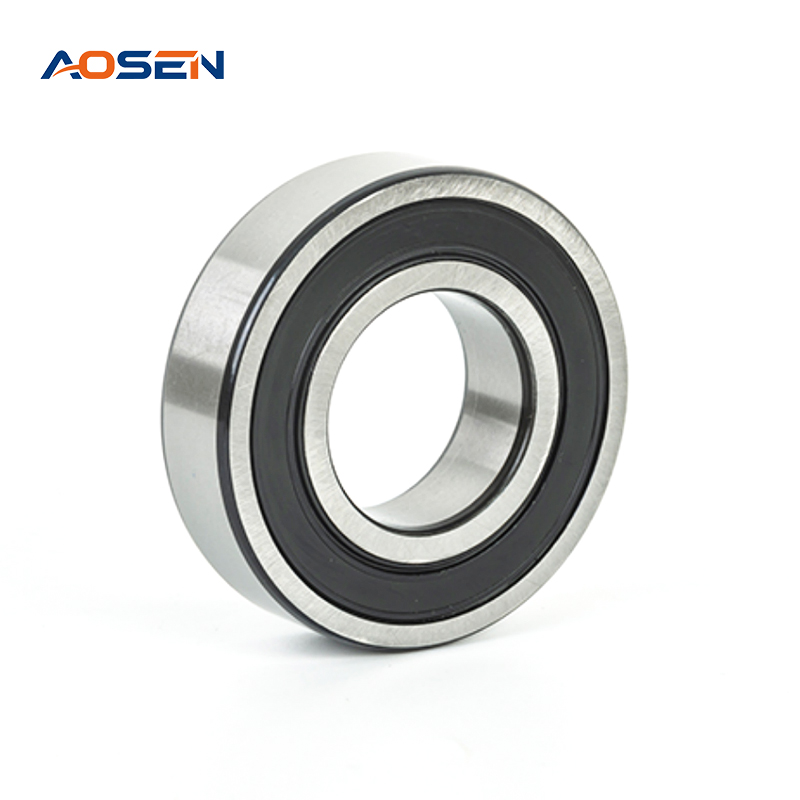 6200 Series Deep Groove Ball Bearings with GCr15 SteelManufactured from high-carbon chromium bearing steel, these deep groove bearings offer durability and fatigue resistance, fitting general engineering needs where shaft and housing dimensions must be carefully matched.View Product →
For most general engineering applications, a normal ISO tolerance gives a good fit. Precision instruments may require a higher tolerance class, while heavy press fits call for adjusted radial clearance. Don't forget the shaft and housing tolerances: a bearing can be perfect by itself and still fail if the mating surface is out of spec. At a minimum, measure the shaft diameter and housing bore after machining or plating.
Choose the Right Material and Sealing
The operating environment often determines the best bearing material. Standard chrome steel bearings are economical and work well indoors in clean, dry conditions. Stainless steel bearings are the answer when the bearing will face water, steam, chemicals, or washdown processes. The nickel and chromium content of stainless steel resists rust and corrosion, which is why our stainless steel products are popular in food processing, pharmaceutical, and chemical and electroplating industries.
Sealing is just as important as the material. The suffix ZZ means a metal shield on both sides; it blocks dust while generating very little friction. The suffix 2RS means two rubber seals; it provides better protection against liquid and fine contaminants, but slightly increases drag. If the bearing is exposed to moisture or washdown, choose 2RS. If it is a high-speed, low-torque application in a clean environment, ZZ may be a better compromise.
Stainless steel deep groove ball bearings with ZZ or 2RS closures cover many corrosive and hygienic applications. Pair the chosen material with the right lubricant: standard grease for normal temperature, low-temperature grease for cold environments, and food-grade grease for contact with food or beverage lines.
Bearing Types at a Glance
For a broader overview, our guide to ball bearing types explains how ball bearings compare with one another and with roller bearings.
| Bearing Type | Best For | Load Direction | Typical Industries |
|---|---|---|---|
| Deep groove ball bearings | High speeds and moderate loads | Radial plus some axial | Motors, pumps, gearboxes, general machinery |
| Angular contact ball bearings | Combined loads requiring axial rigidity | Radial plus significant axial | Spindles, compressors, industrial pumps |
| Stainless steel deep groove ball bearings | Corrosive, washdown, and hygienic environments | Radial plus some axial | Food, chemical, marine, pharmaceutical |
| Flange bearings | Compact mounting and axial location | Mostly radial | Conveyors, light machinery, instruments |
Practical Selection Steps
If you are choosing a bearing for a new machine or a replacement, follow this simple workflow:
- Define the load: direction, magnitude, and any shock or vibration factors.
- Estimate the required life and speed in revolutions per minute.
- Choose a bearing category: deep groove, angular contact, or another type that matches the load.
- Determine the bore diameter, outer diameter, and width using shaft and housing dimensions.
- Confirm the operating environment: moisture, chemicals, temperature, cleanliness, washdown.
- Select steel or stainless steel and choose the right closure: ZZ shield or 2RS seal.
- Check the rated speed and calculated life with the manufacturer's data.
- Contact the bearing supplier if you need custom dimensions, packaging, or special grease.
Partnering with a Factory-Backed Export Team
We know that choosing a bearing is only half the battle. Sourcing it reliably matters just as much. Ningbo Aosen Bearing Co., Ltd. operates as an export company backed by our own manufacturing factory, Ningbo Weijun Bearing Co., Ltd. Our factory covers more than 8,000 square meters and produces deep groove ball bearings in both chrome steel and stainless steel. Because we control both production and export, we can offer the consistency, traceability, and lead time that importers and OEM buyers need.
If you are selecting a bearing for a specific project, send us the relevant details: shaft size, load, speed, environment, and target life. Our team can recommend a practical solution from our standard series or discuss a custom specification. We also welcome customers to visit our facilities and see the manufacturing process first-hand. A good bearing choice should always be supported by a supplier you can trust.

-

-
 +86-15990593443
-
 No. 558 Huancheng West Road, Zhouxiang Town, Cixi City, Ningbo Province, Zhejiang Province

- Quick Links
- Product Categories
- Deep Groove Ball Bearings
- Stainless Steel Deep Groove Ball Bearings
- Angular Contact Ball Bearings
- Flange Bearings

Message Us Now !