
 Español

How to Read Bearing Numbers: A Practical Guide to Codes, Series & Suffixes
Every bearing carries a code, and that code is far more than a part number — it is a compact specification sheet stamped into steel. When a customer sends us a bearing number instead of a physical sample, that single line of characters is usually enough for us to quote, produce and ship exactly the right product. Once you know how to read bearing numbers, the marking on the ring tells you the bearing type, its size series, its bore diameter and even how it is sealed. In this guide, we walk you through the system just as we explain it to buyers and engineers every day.
The Three Building Blocks of a Bearing Number
Take a common designation such as SS 6204-2RS. It looks cryptic at first glance, but it breaks down neatly into three blocks, and virtually every bearing number follows the same logic:
- Prefix — letters in front of the basic number, usually indicating material or a special design. Here, SS tells you the rings and balls are stainless steel.
- Basic number — 6204 in our example. The first digit identifies the bearing type, the second digit the dimension series, and the last two digits the bore diameter.
- Suffix — everything after the basic number, describing seals, shields, internal clearance or other features. Here, -2RS means rubber seals on both sides.
Read from left to right, the number answers three questions in order: what it is made of, what type and size it is, and how it is protected.
Reading the Basic Number, Digit by Digit
First Digit: Bearing Type
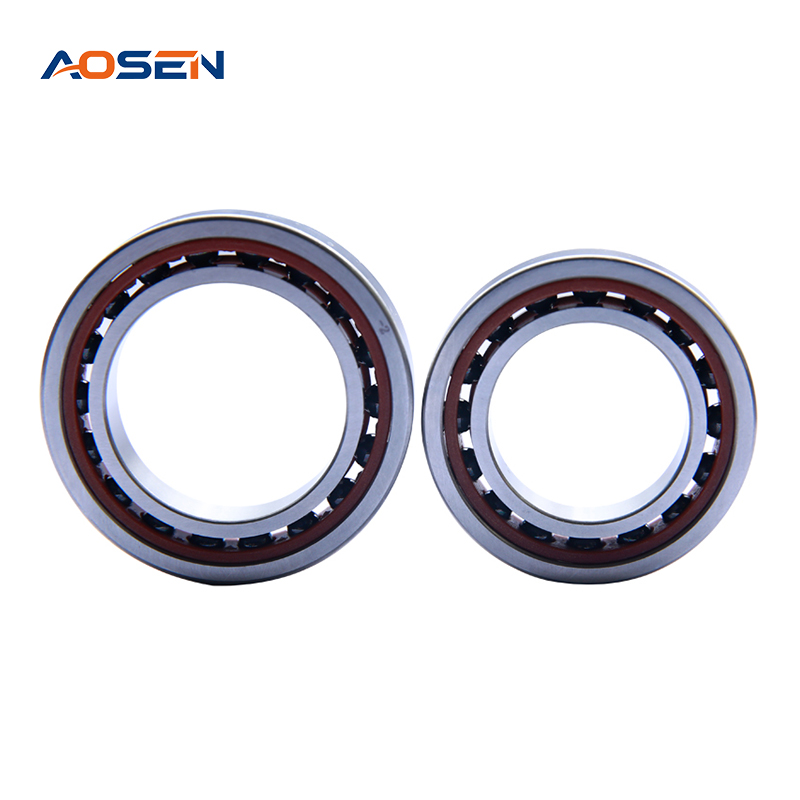
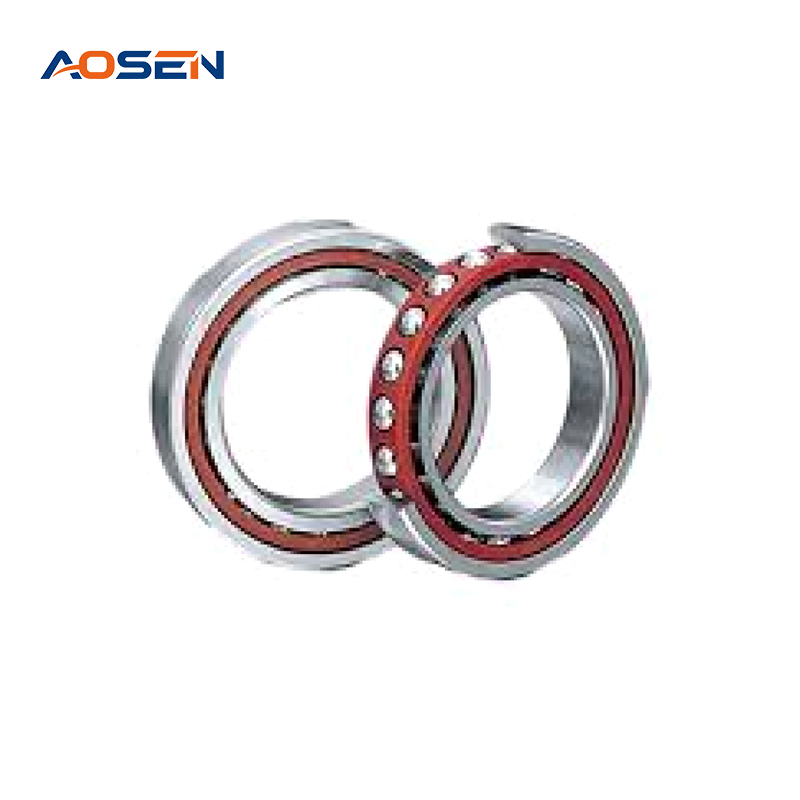
The leading digit identifies the bearing family. A first digit of 6 signals a single-row deep groove ball bearing — the most widely used type in motors, pumps, gearboxes and general machinery. A 7 identifies an angular contact ball bearing, built to carry combined radial and axial loads. If your number begins with 6, you are dealing with the deep groove family, which is exactly what our factory has specialised in producing for nearly a decade. For a broader refresher, our guide to what a deep groove ball bearing is and where it is used covers the basics in more depth.
Second Digit: Dimension Series
The second digit describes how large and robust the bearing is around a given bore. For the same 20 mm bore, a 6804 is slim and compact, a 6204 sits in the middle, and a 6304 has a noticeably larger cross-section. The most common series are:
- 6800 and 6900 series — thin-section bearings for tight radial spaces, such as small motors and bicycle components.
- 6000 series — extra light series, a good balance of slimness and capacity.
- 6200 series — light series, the all-rounder and the volume workhorse of most industries.
- 6300 series — medium series with a larger cross-section for heavier loads.
In other words, the larger the series digit (from 0 up to 3), the greater the outer diameter and width, and generally the higher the load capacity.
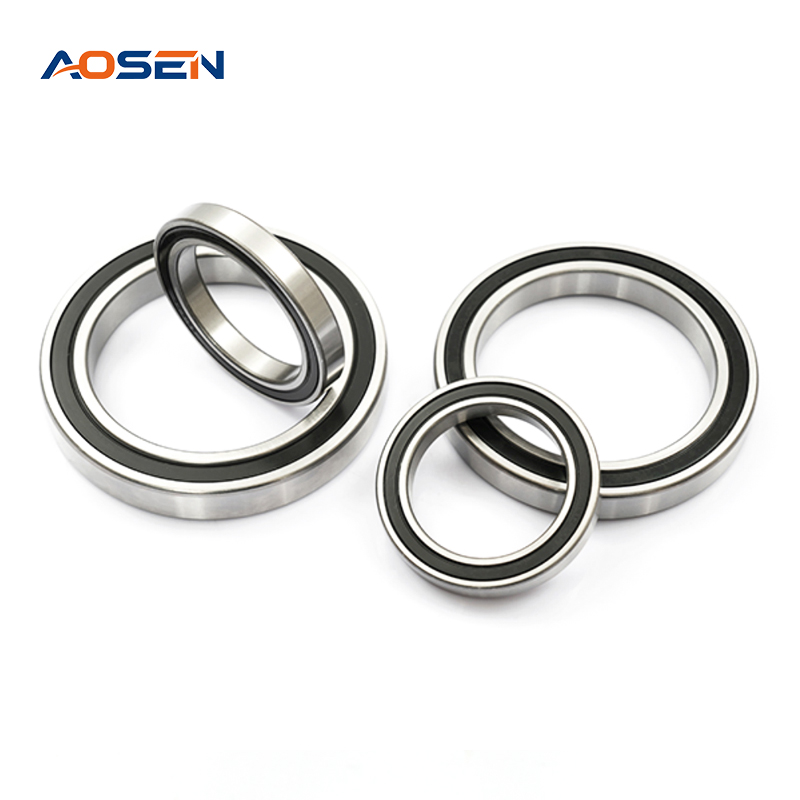
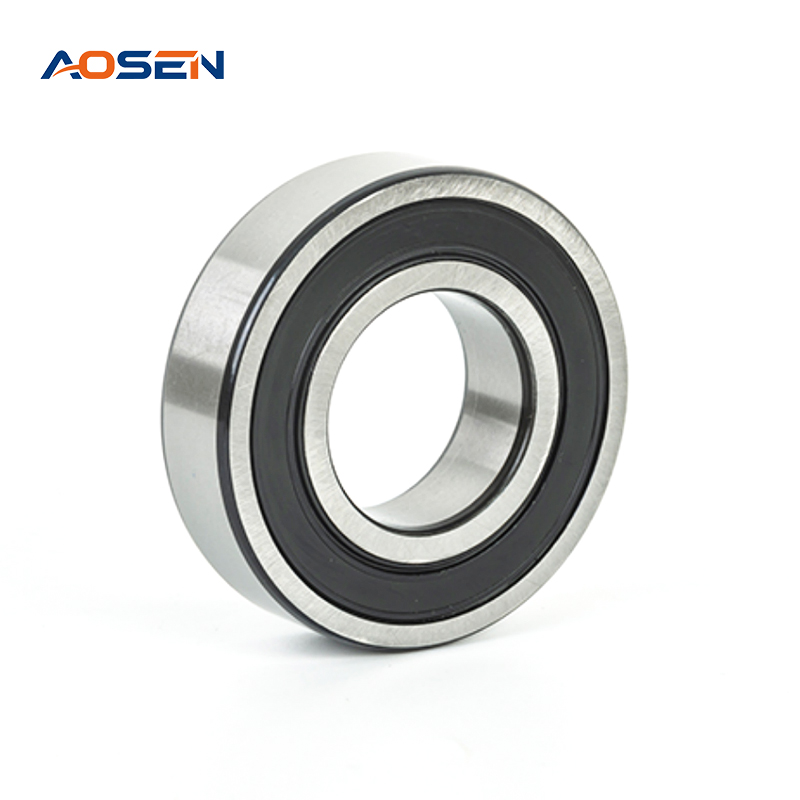 6200 Series Deep Groove Ball BearingsMade from GCr15 chrome steel for hardness, wear resistance and dimensional stability, the 6200 series illustrates how the larger series digit increases outer diameter, width and load capacity.View Product →
Last Two Digits: The Bore Code
The final two digits give you the bore diameter — the shaft size the bearing fits. For codes 04 to 99 the rule is simple: multiply the code by five. A 6204 therefore has a 20 mm bore, and a 6308 has a 40 mm bore. Bores below 20 mm use fixed codes instead, as shown below.
| Bore Code | Bore Diameter (mm) | Example |
|---|---|---|
| 00 | 10 | 6000 |
| 01 | 12 | 6001 |
| 02 | 15 | 6202 |
| 03 | 17 | 6203 |
| 04-99 | Code × 5 | 6204 = 20 |
For miniature bearings with bores under 10 mm, the last digits state the bore directly in millimetres: a 608 takes an 8 mm shaft, a 626 a 6 mm shaft, and a 695 a 5 mm shaft. This is one reason the 6000 series, with its neat 10 mm entry point, is such a popular fit for small motor and appliance shafts.
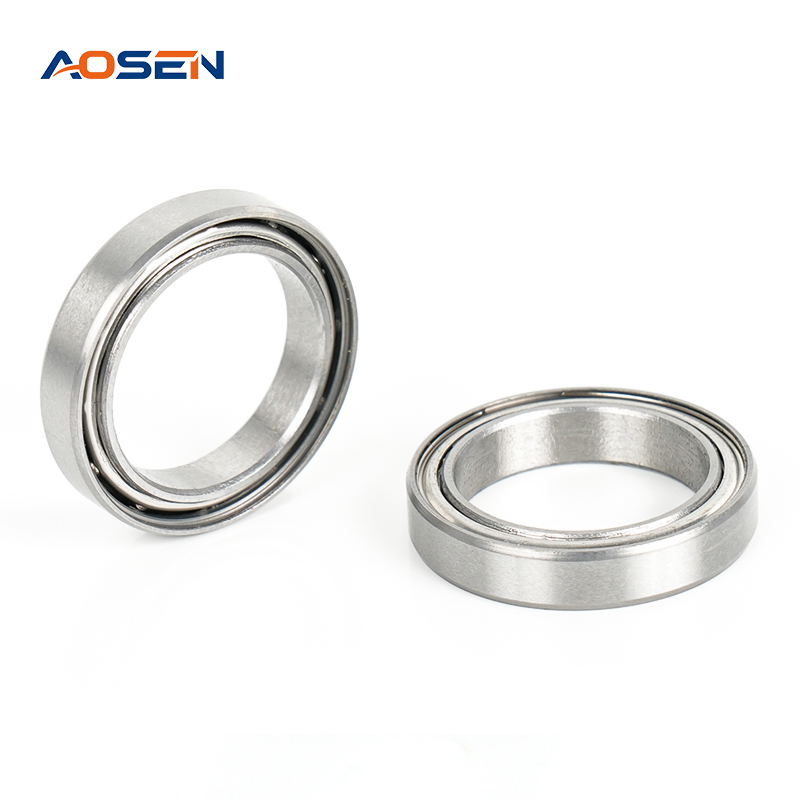
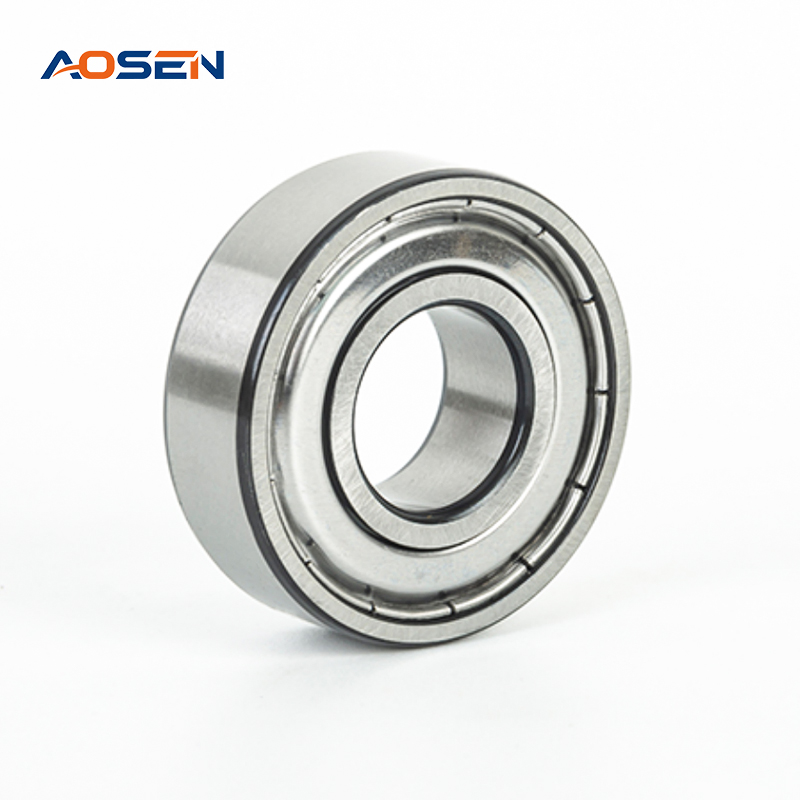 6000 Series Deep Groove Ball BearingsA widely used bearing series handling radial loads plus limited axial loads in both directions. Its 10 mm bore makes it a natural reference point when reading miniature bearing codes.View Product →
Prefixes: What the Letters in Front Tell You
Prefixes are less standardised than the basic number, but one appears constantly in industrial trade: SS, short for stainless steel. An SS 6200-2RS shares the exact boundary dimensions of a standard steel 6200-2RS, yet its rings and balls are produced in stainless steel for corrosion resistance. Our stainless lines mirror the standard families — SS 6000, SS 6200, SS 6300 and beyond — so customers can switch material without redrawing a shaft or housing.
One practical caution from experience: appearance alone is a poor way to confirm material, especially once parts have been mixed in storage. If you need to verify what is actually in the box, our guide on how to accurately identify a stainless steel deep groove ball bearing lists a few simple checks.
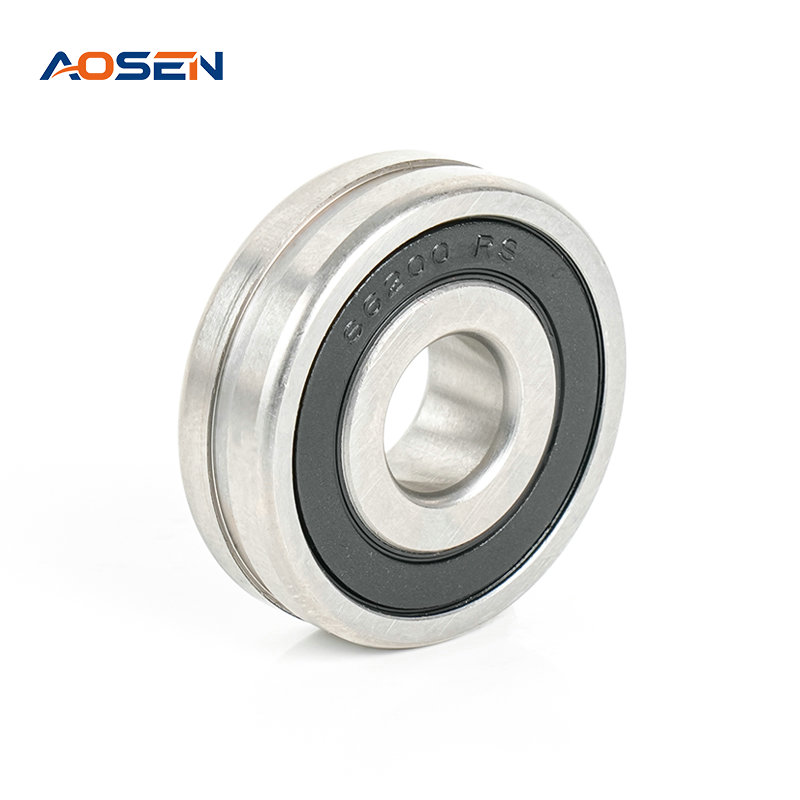 SS 6200 ZZ/2RS Stainless Steel Deep Groove Ball BearingsThese 10x30x9 mm bearings use AISI 420 martensitic stainless steel, combining load capacity with corrosion resistance. They suit conveyor rollers, guide rails, food packaging and agricultural machinery.View Product →
Suffixes: Seals, Shields and Beyond
The suffix tells you how the bearing is protected. For deep groove ball bearings, three variants cover most of the market:
- No suffix (open) — no sealing elements. Lowest friction, but the raceways are exposed, so open bearings are normally greased within a sealed housing.
- ZZ (or 2Z) — metal shields on both sides. Non-contact and low-friction, they keep dust and larger particles away from the grease while preserving high speed capability.
- 2RS — rubber contact seals on both sides. The seals touch the inner ring, providing excellent protection against moisture, liquids and fine contaminants at a small friction cost.
A simple rule of thumb: choose ZZ for dry, dusty, higher-speed environments, and 2RS for wet or washdown-prone conditions. That is why customers in food processing, marine engineering and water treatment almost always end up specifying 2RS — usually in stainless steel. Other suffixes exist, most commonly clearance codes such as C3, so if you meet letters you do not recognise, confirm them with your supplier rather than guessing.
Three Worked Examples
Let us decode three real designations from left to right:
- 6204-2RS — 6: deep groove ball bearing; 2: light series; 04: 4 × 5 = 20 mm bore; -2RS: rubber seals both sides. A classic sealed bearing for electric motors and agricultural machinery.
- SS 608-ZZ — SS: stainless steel; 6: deep groove; 0: extra light series; 08: 8 mm bore stated directly; ZZ: metal shields both sides. Typical for small appliances and light-duty coastal equipment.
- 6308 — 6: deep groove; 3: medium series; 08: 40 mm bore; no suffix: open. Usually grease-lubricated inside a pillow block or gearbox housing.
Notice how much those few characters carry — type, proportions, bore and sealing — without a single measuring calliper.
Tips from the Factory Floor
Before we close, a few habits that save our customers the most trouble:
- Never judge by bore alone. A 6204 and a 6304 share the same 20 mm bore but differ completely in outer diameter and width — reading the series digit prevents a costly mix-up.
- Match the suffix when replacing a sealed bearing. Swapping a 2RS for an open bearing in a wet environment is a short road to corrosion and premature failure.
- Send the full number, including prefix and suffix, when requesting a quote, so material and sealing can be confirmed in one step.
- Keep the original marking or packaging label for critical equipment; it documents the exact specification for future maintenance.
As a bearing exporter backed by our own manufacturing plant, we read these codes thousands of times a day, and it still strikes us how elegantly the system compresses a full specification into a handful of characters. Once you are comfortable with the three-block structure — prefix, basic number, suffix — you will never look at a bearing marking the same way again. And if you ever meet a number you cannot pin down, our team is always happy to decode it for you.

-

-
 +86-15990593443
-
 No. 558 Huancheng West Road, Zhouxiang Town, Cixi City, Ningbo Province, Zhejiang Province

- Quick Links
- Product Categories
- Deep Groove Ball Bearings
- Stainless Steel Deep Groove Ball Bearings
- Angular Contact Ball Bearings
- Flange Bearings

Message Us Now !