
 Español
How to Accurately Identify Stainless Steel Deep Groove Ball Bearing Models Using a Vernier Caliper?
In the routine maintenance and mechanical repair of industrial equipment, accurately identifying and replacing bearings is a critical step in ensuring stable operation. Due to prolonged wear or contamination by oil and grease, the laser-etched markings on the surfaces of many stainless steel deep groove ball bearings may become illegible. Consequently, determining the precise bearing model through physical measurement has become an essential skill for engineers.
This article will provide a detailed guide on how to quickly and accurately identify the model of a stainless steel deep groove ball bearing—using nothing more than a caliper—by measuring its inner diameter, outer diameter, and width.
Measurement Tools and Basic Parameters
To accurately identify a bearing model, we must first prepare a high-precision vernier caliper. During the measurement process, we need to obtain the following three key data points:
- Inner Diameter (d): Determines the size of the shaft with which the bearing mates, and is also the most critical parameter for deriving the suffix of the bearing model number.
- Outer Diameter (D): Determines the size of the bearing mounting bore.
- Width/Thickness (B): The axial dimension of the bearing.
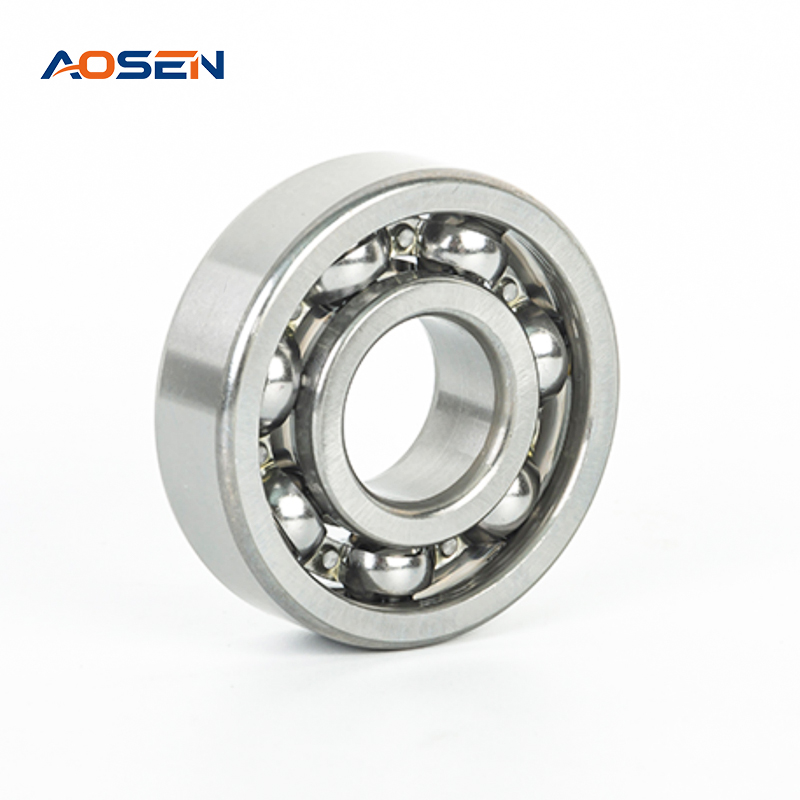
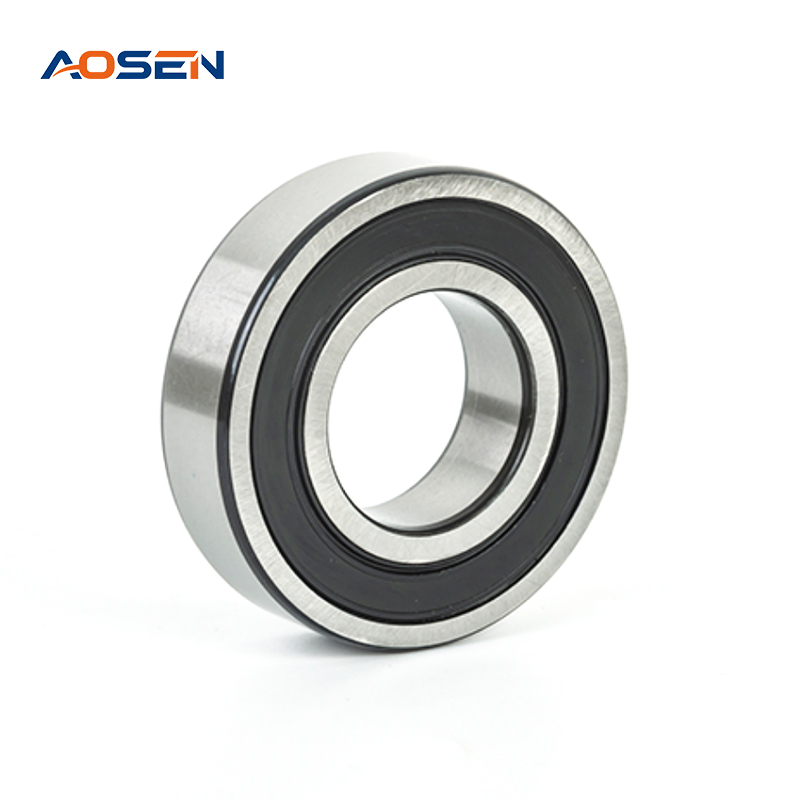
In the naming conventions for stainless steel deep groove ball bearings (e.g., S6004-ZZ), the prefix "S" denotes the stainless steel material, while the suffix "ZZ" indicates double-sided metal shields. The intervening numbers (such as 6004), however, hold the key to the bearing's dimensions.
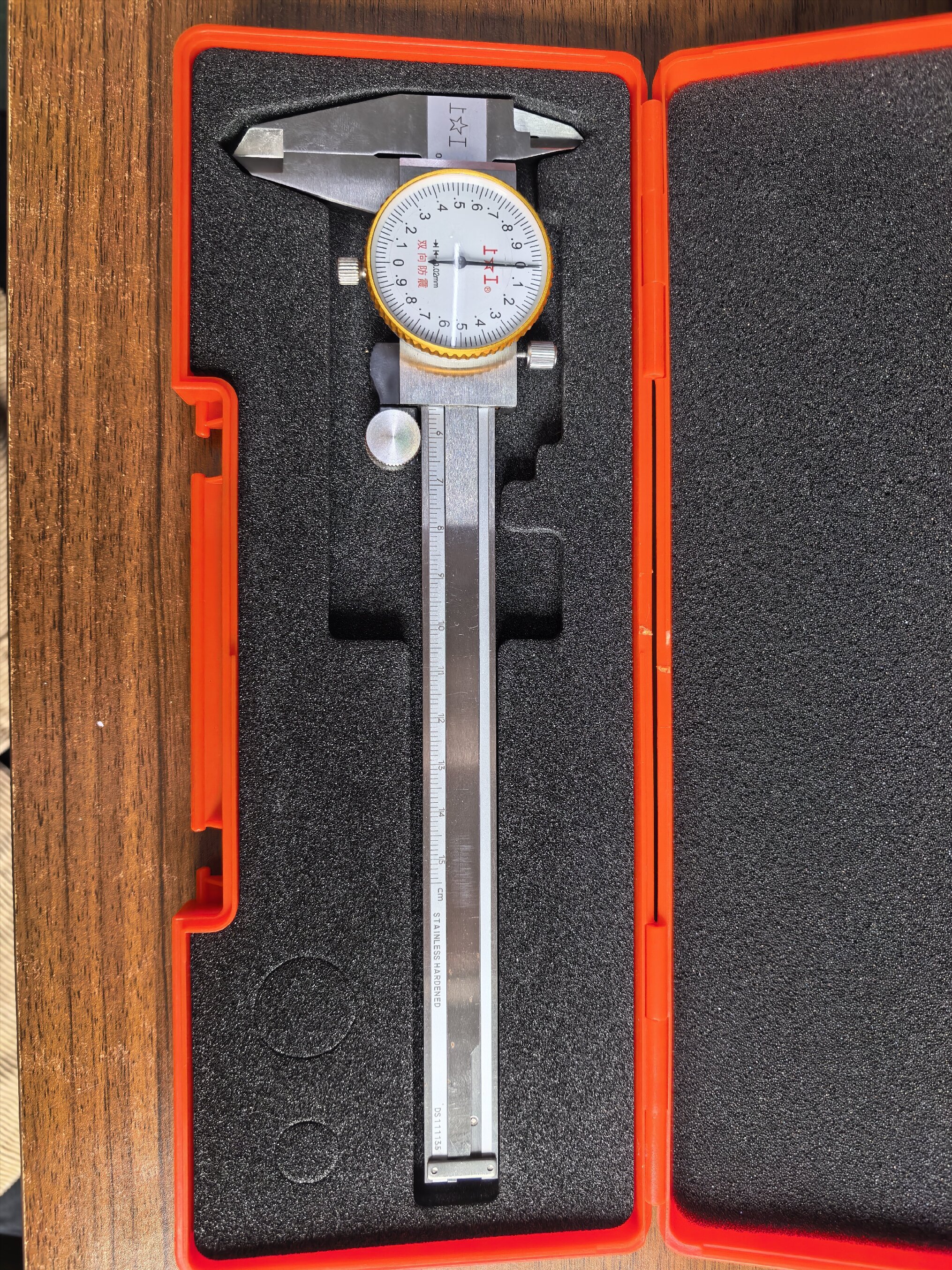
Vernier Caliper
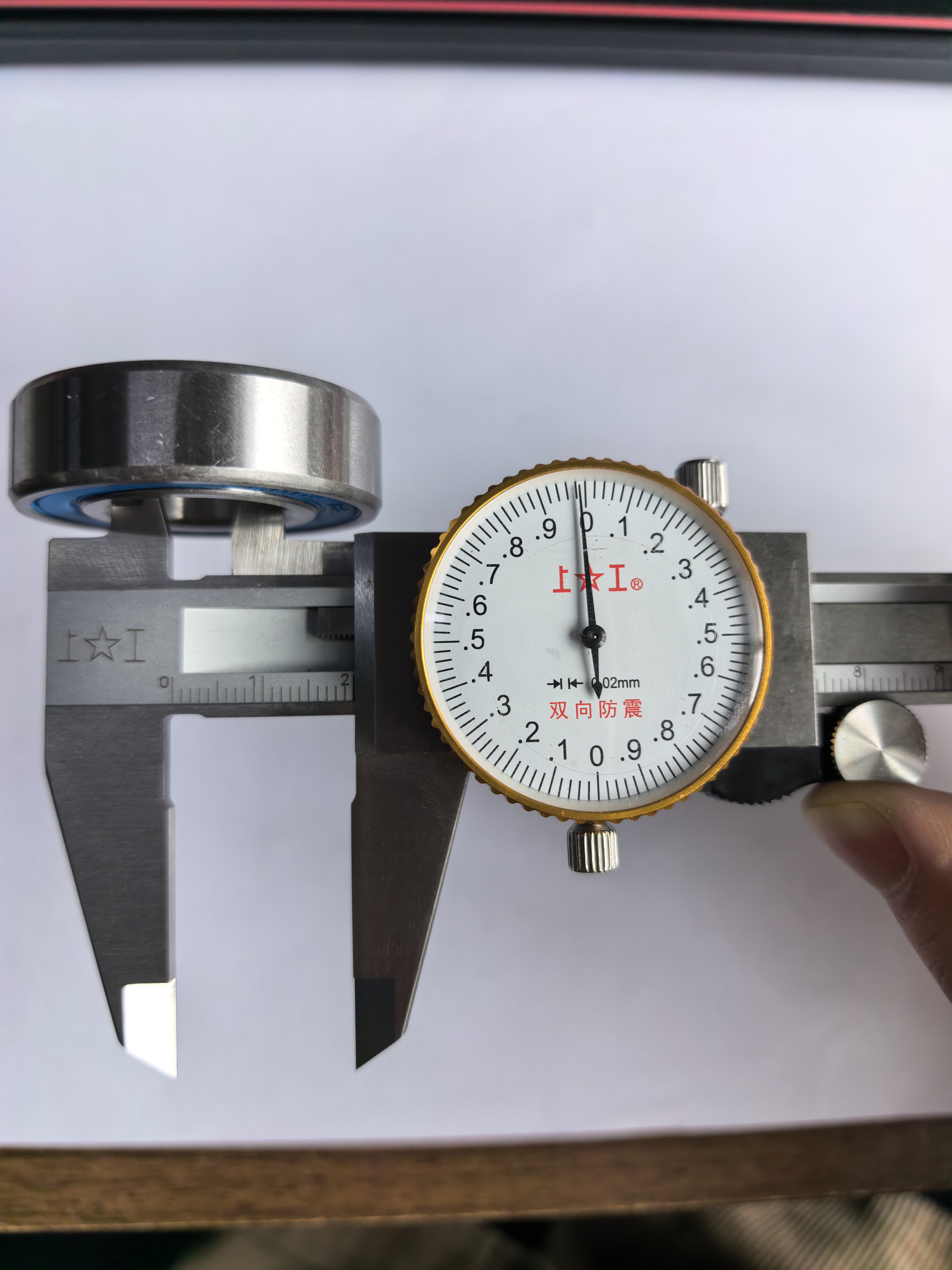
Inner Diameter Measurement
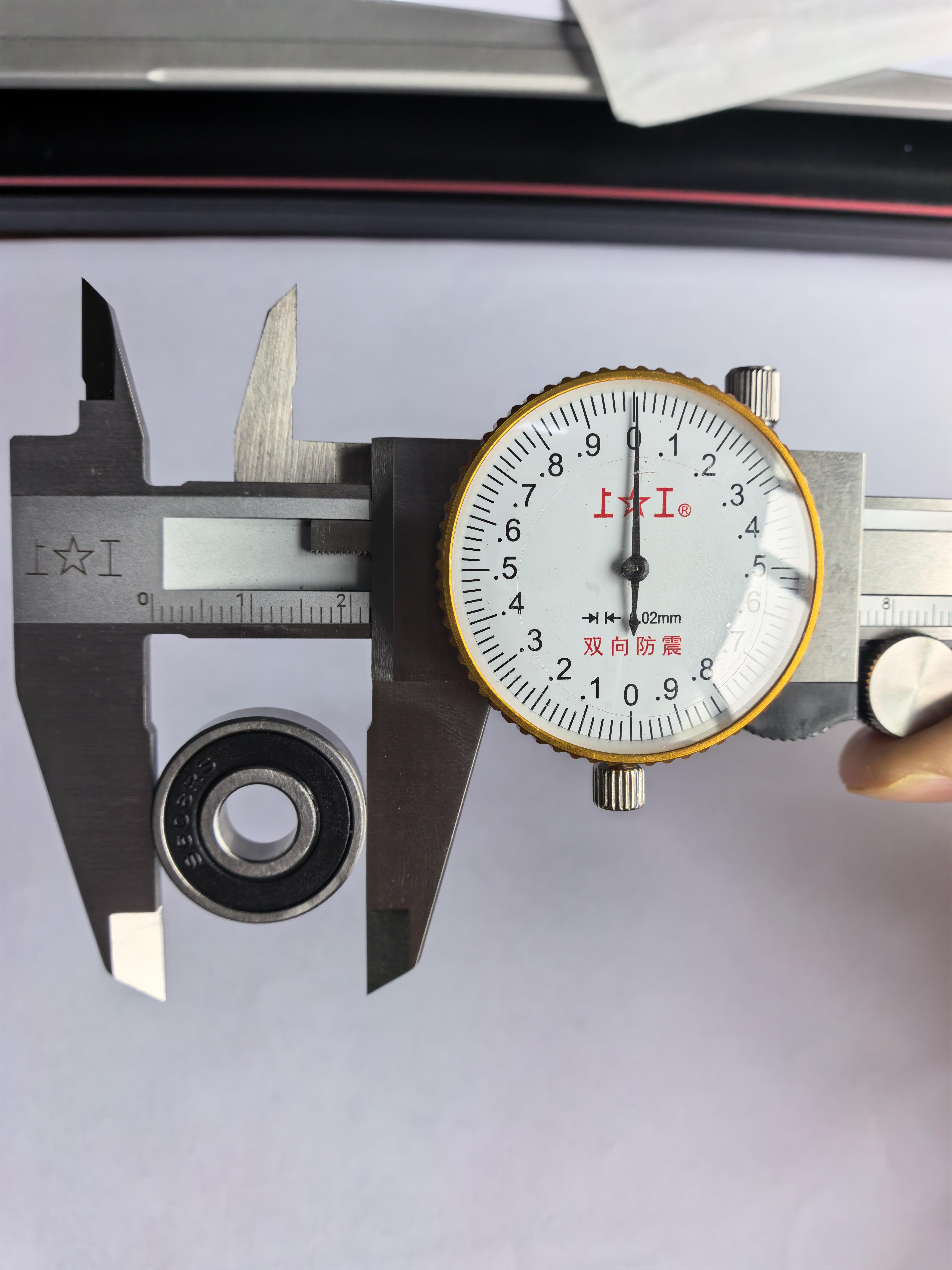
Outer Diameter Measurement
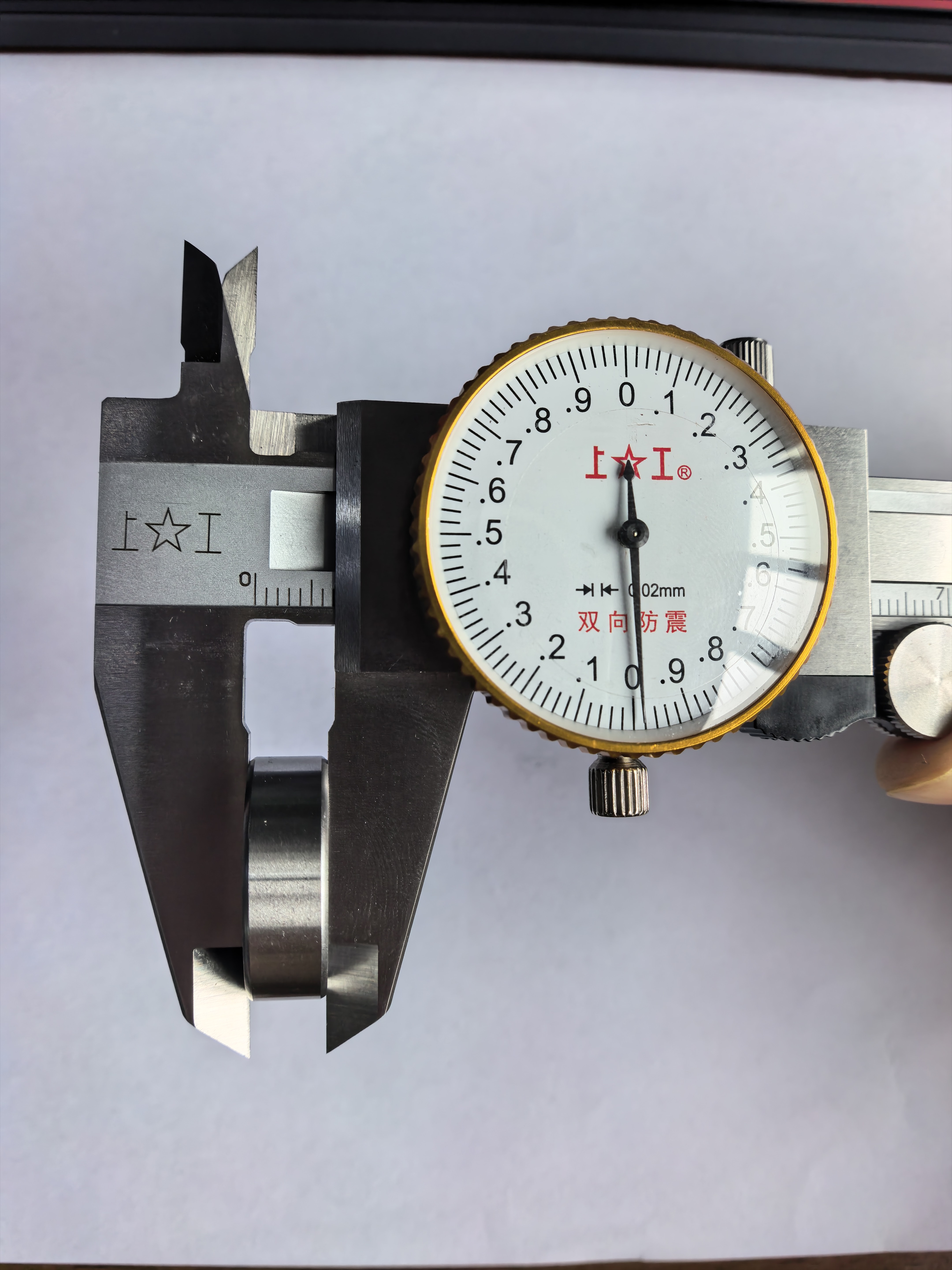
Width/Thickness Measurement
Methods for Identifying 4-Digit Model Bearings
For deep groove ball bearings designated by a four-digit code (e.g., the S60xx, S62xx, and S63xx series), there is a strict correspondence between the inner diameter and the final digits of the model number. We categorize this relationship into two scenarios: the "Standard Formula" and "Special Suffixes."
Standard Case: Applicable to models with a suffix ≥ 04 (Inner Diameter ≥ 20 mm)
When the inner diameter of the bearing, as measured with a vernier caliper, is greater than or equal to 20 mm, you can use the classic "divide by 5" formula:
Core Formula: Measured Inner Diameter of Bearing ÷ 5 = Last Two Digits of the Model Number
Case Analysis: S6004-ZZ — If you measure the inner diameter of a stainless steel bearing using a caliper and find it to be 20mm, you can apply the following formula: 20 ÷ 5 = 4 (yielding the suffix "04"). Preliminary Assessment: The suffix for this bearing model is 04. Subsequently, by taking further measurements of the bearing's outer diameter (42mm) and width (12mm) and cross-referencing them with a standard bearing size chart, you can conclusively identify the complete model number of the bearing as S6004-ZZ.
Special Case: Applicable to models with tail numbers 00, 01, 02, and 03
Please note that the rule of dividing the inner diameter by 5 does not apply to bearings with suffix codes ranging from 00 to 03. These four specific bearing types constitute exceptions within international standards; their inner diameter dimensions are fixed values that engineers must memorize. The specific corresponding values are as follows:
Suffix 00: Inner diameter fixed at 10 mm (e.g., S6000)
Suffix 01: Inner diameter fixed at 12 mm (e.g., S6001)
Suffix 02: Inner diameter fixed at 15 mm (e.g., S6002)
Suffix 03: Inner diameter fixed at 17 mm (e.g., S6003)
If the inside diameter measured with a vernier caliper corresponds to one of the four values listed above, please directly match it to the corresponding suffix; do not use the method of dividing by 5.
Methods for Identifying 3-Digit Model Bearings (Miniature/Small Bearings)
For miniature or small stainless steel deep groove ball bearings, their model numbers typically consist of three digits (e.g., S608, S626, etc.). Identifying this type of bearing is the most straightforward; **likewise, the "divide by 5" formula cannot be applied.**
Core Rule: Measured Inner Diameter of the Bearing = The Last Digit of the Model Number
Case Analysis: **S608-ZZ** — If you use a caliper to measure the inner diameter of a small bearing and find it to be **8mm**, then—based on the conventions for 3-digit bearing designations—the inner diameter corresponds directly to the suffix of the model number. Preliminary Assessment: The suffix of this bearing is **8**. By combining this with the measured outer diameter (22mm) and width (7mm), the model can be confirmed as the common miniature bearing **S608-ZZ**.
Summary and Selection Recommendations
In summary, the steps for identifying the model of a stainless steel deep groove ball bearing using a vernier caliper can be summarized as follows:
Measure the Inner Diameter, Determine the Suffix:
If the measured inner diameter is a single-digit number (e.g., 8 mm), it corresponds to the final digits of a 3-digit model number (e.g., 608).
If the measured inner diameter is 10, 12, 15, or 17 mm, it corresponds to the special 4-digit suffixes 00, 01, 02, and 03, respectively.
If the measured inner diameter is ≥ 20 mm, use the formula **Inner Diameter ÷ 5 = Suffix** (e.g., 20 ÷ 5 = 04).
Measure the outer diameter and width to determine the series:
Bearings with the same inner diameter may belong to different series—featuring varying outer diameters and widths—due to differences in load-carrying capacity (e.g., S6004, S6204, S6304, etc.). Therefore, the specific model must be definitively identified by cross-referencing both the outer diameter and the width.
By mastering the aforementioned measurement and calculation techniques, you can easily identify the true identity of a bearing—even a "plain" one lacking packaging or markings—thereby avoiding the awkward situations during equipment maintenance that arise from purchasing the wrong model or being unable to properly assemble the parts.
-

-
 +86-15990593443
 -
 No. 558 Huancheng West Road, Zhouxiang Town, Cixi City, Ningbo Province, Zhejiang Province

- Quick Links
- Product Categories
- Deep Groove Ball Bearings
- Stainless Steel Deep Groove Ball Bearings
- Angular Contact Ball Bearings
- Flange Bearings

Message Us Now !