A deep groove ball bearing is a specific and highly popular type of ball bearing — not a separate category. "Ball bearing" is the broad family name, while deep groove ball bearings (DGBB) represent the most widely used subtype within that family, accounting for roughly 80% of all ball bearing sales globally. Understanding the distinction matters when selecting the right bearing for load type, speed, and installation constraints.
The Ball Bearing Family: What It Includes
Ball bearings use spherical rolling elements to reduce rotational friction and support loads between moving parts. Within this family, there are several distinct subtypes, each engineered for specific load profiles and operating conditions:
- Deep groove ball bearings (DGBB): General-purpose, handles radial and moderate axial loads
- Angular contact ball bearings: Optimized for combined axial and radial loads at higher contact angles (15°–40°)
- Self-aligning ball bearings: Tolerate shaft misalignment up to 2°–3°
- Thrust ball bearings: Handle purely axial loads, not suitable for radial forces
- Four-point contact ball bearings: Support axial loads in both directions within a single row
When engineers or procurement teams reference a "ball bearing" without specification, they almost always mean a deep groove ball bearing by default — a testament to how dominant DGBBs are in practical use.
What Makes a Deep Groove Ball Bearing Distinct
The defining feature of a deep groove ball bearing is its raceway geometry. The grooves in both the inner and outer rings are deeper — closer in radius to the ball diameter — compared to other ball bearing types. This design produces several structural advantages:
- The deep groove enables the bearing to resist both radial loads and axial (thrust) loads in both directions
- More contact area per ball increases load capacity compared to shallow-groove designs
- The geometry supports high-speed operation — standard DGBBs are rated for speeds up to 20,000–50,000 RPM depending on size and lubrication
- The symmetric design allows mounting in either orientation without performance loss
A standard DGBB such as the ubiquitous 6205-2RS (25mm bore) has a dynamic load rating of approximately 14.0 kN and a static load rating of 6.95 kN — making it suitable for electric motors, pumps, fans, and conveyor systems without any special mounting considerations.
Head-to-Head: Deep Groove vs Other Ball Bearing Types
| Bearing Type |
Radial Load |
Axial Load |
Max Speed |
Misalignment Tolerance |
Typical Use |
| Deep Groove Ball |
High |
Moderate (both directions) |
Very High |
Low (<0.5°) |
Motors, pumps, fans |
| Angular Contact |
High |
High (one direction per bearing) |
High |
Very Low |
Machine tool spindles, gearboxes |
| Self-Aligning Ball |
Moderate |
Low |
Moderate |
High (2°–3°) |
Long shafts, agricultural equipment |
| Thrust Ball |
None |
Very High (axial only) |
Low |
Very Low |
Vertical shafts, screw jacks |
| Four-Point Contact |
Low–Moderate |
High (both directions) |
Moderate |
Low |
Slewing rings, robotics |
Table 1: Performance comparison of ball bearing subtypes across key operating parameters.
Load Capacity: Where Deep Groove Bearings Excel and Where They Don't
Deep groove ball bearings are unmatched for combined load scenarios at high speeds, but their load capacity profile has clear limits:
Radial Load Strength
DGBBs handle radial loads efficiently because the deep raceway distributes the load across multiple balls simultaneously. A 6206 bearing (30mm bore) carries a dynamic radial load rating of 19.5 kN — sufficient for most light-to-medium industrial motors.
Axial Load Capacity
Unlike thrust ball bearings, DGBBs can handle axial loads in both directions simultaneously — up to approximately 50% of their radial load rating under normal conditions. This versatility eliminates the need for separate thrust bearings in many designs. However, when axial loads exceed this threshold or are the primary load, angular contact bearings or thrust bearings are more appropriate.
Misalignment Sensitivity
This is a known limitation of DGBBs. They tolerate shaft misalignment of only 0.08°–0.16° before edge loading significantly reduces bearing life. For applications with inherent shaft deflection — such as long conveyor shafts or agricultural drives — self-aligning ball bearings or spherical roller bearings are a better choice.
Speed Ratings: Why Deep Groove Bearings Lead the Pack
Among all rolling element bearings, deep groove ball bearings achieve the highest permissible speeds. This is due to their low friction geometry and minimal internal heat generation. For reference:
- A 6000-series DGBB (10mm bore) can operate at up to 47,000 RPM with grease lubrication
- Equivalent cylindrical roller bearings of the same size are typically limited to 30,000–35,000 RPM
- Tapered roller bearings of comparable size may be limited to 10,000–15,000 RPM
This speed advantage makes DGBBs the default choice for electric motors, dental drills, centrifugal pumps, turbochargers, and high-speed machine spindles.
Sealing and Shield Options in Deep Groove Ball Bearings
One of the practical advantages of DGBBs over many other ball bearing types is the wide availability of sealed and shielded variants, enabling maintenance-free operation in contaminated environments:
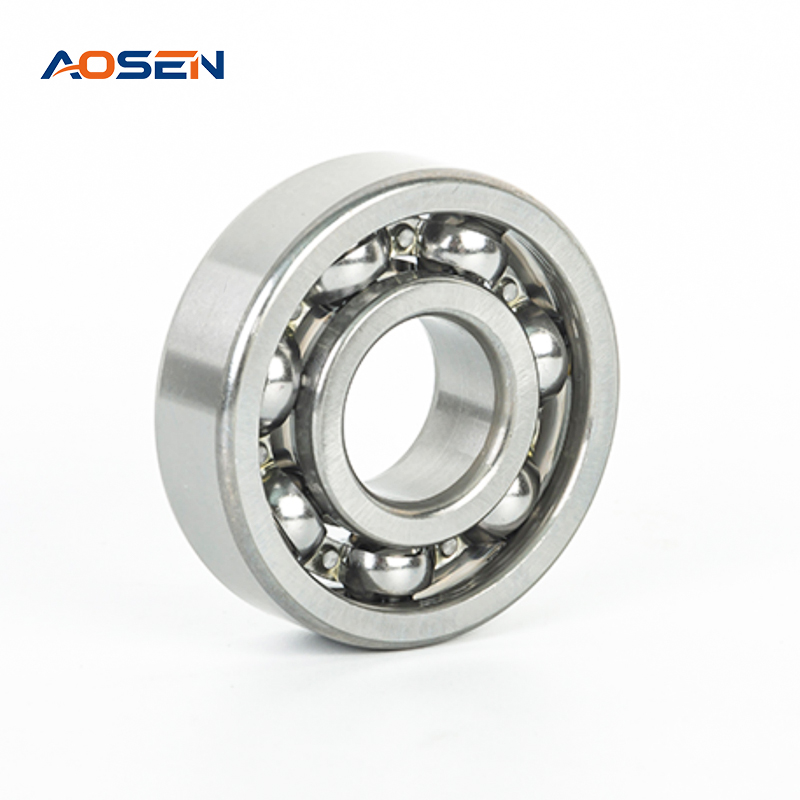
- Open (no suffix): No sealing — requires external lubrication; used where relubrication is routine
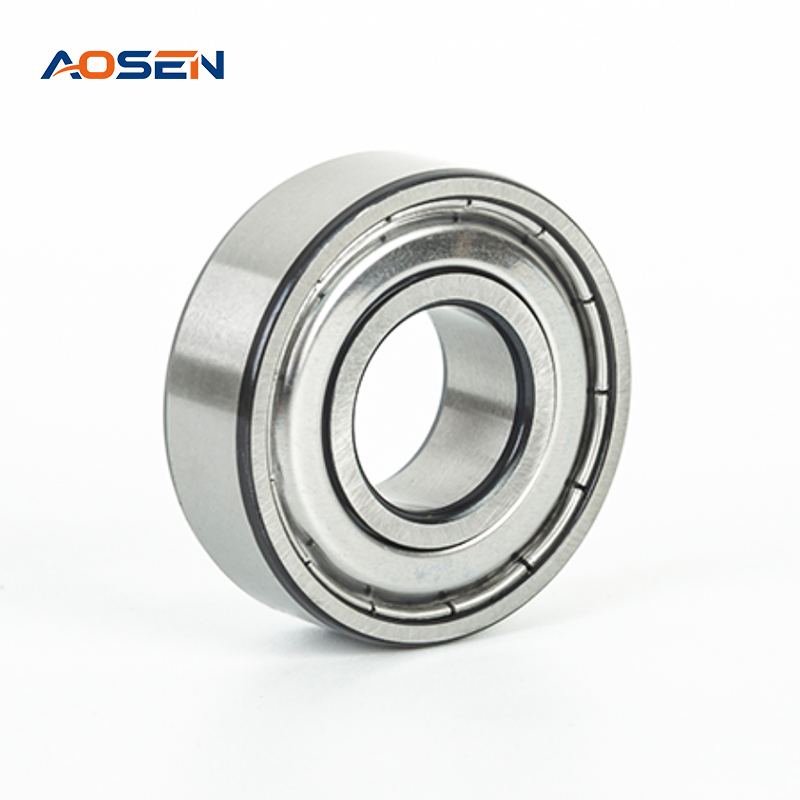
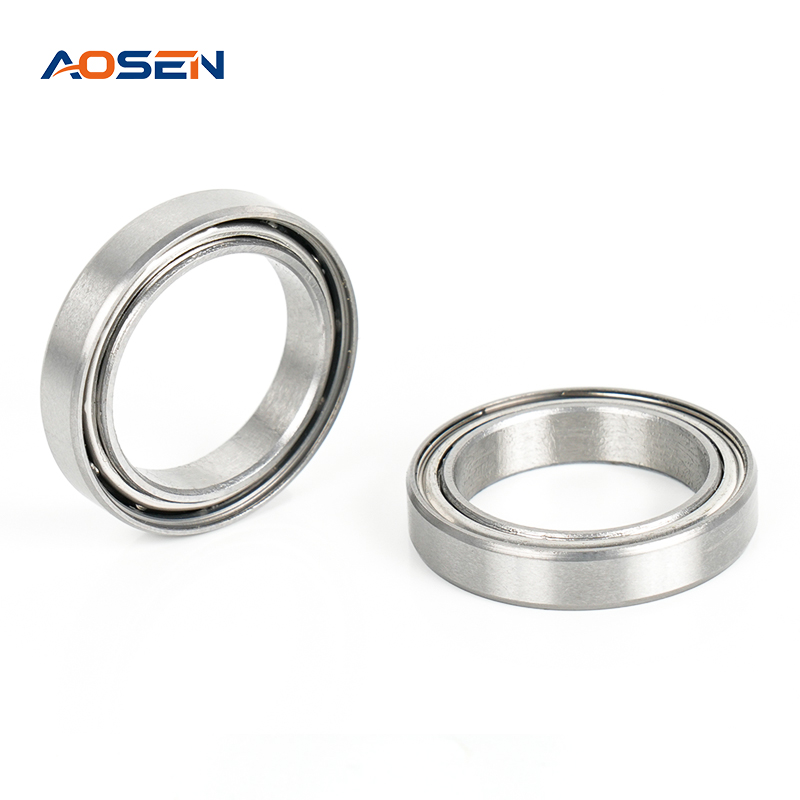
- Z or ZZ (metal shield): Protects against solid contaminants; does not fully seal against moisture; lower friction than seals
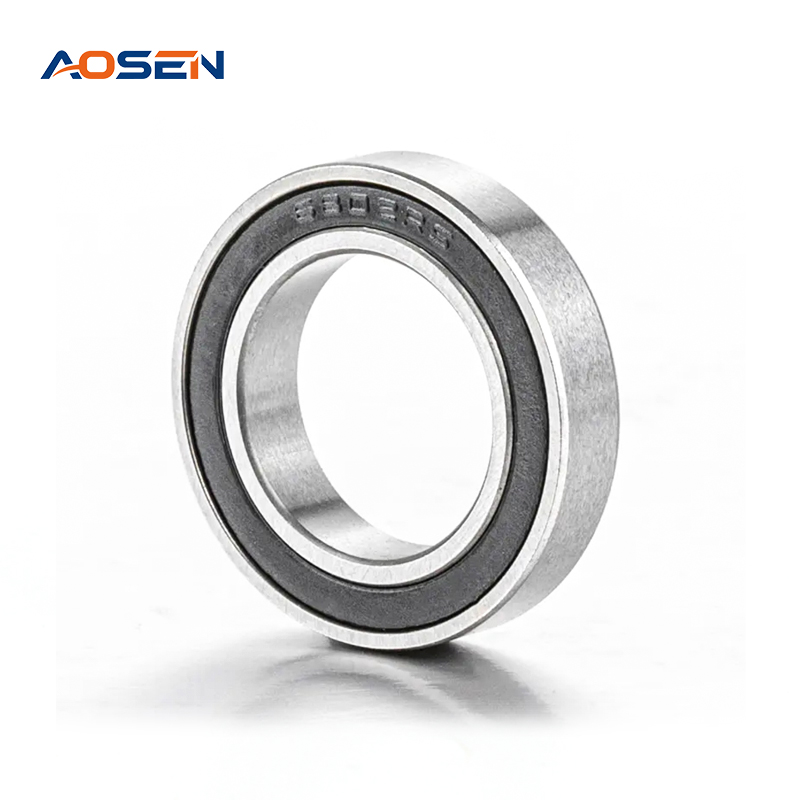
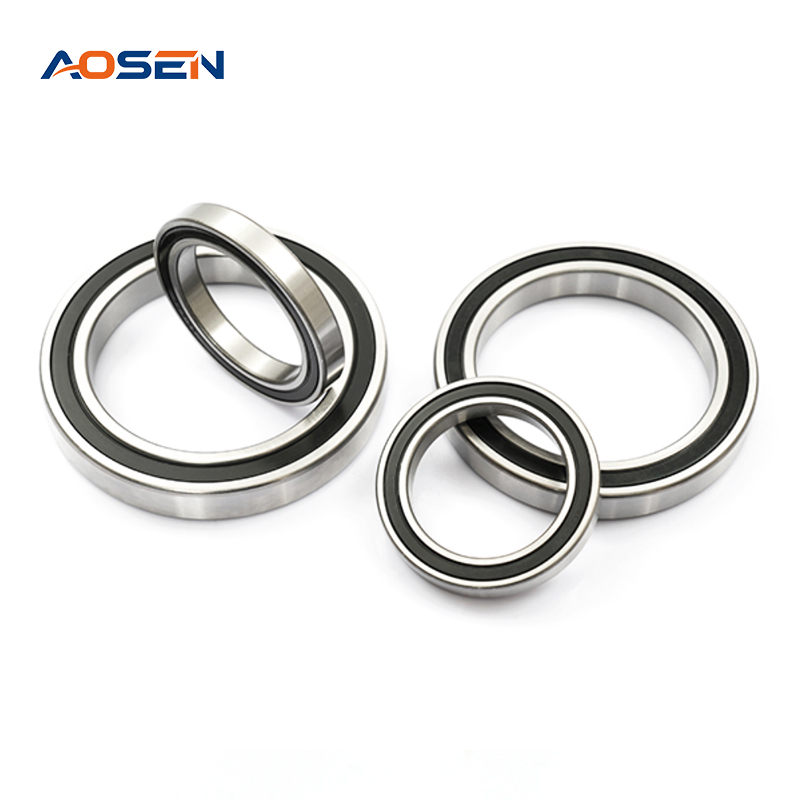
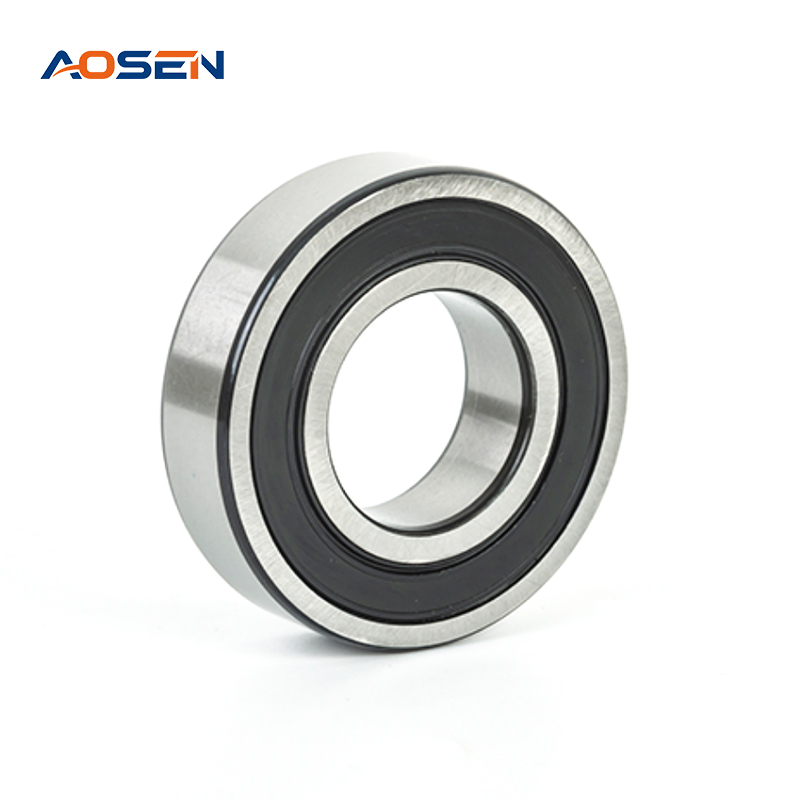
- RS or 2RS (rubber seal): Full contact seal on one or both sides; protects against both dust and moisture; pre-packed with grease for life-of-bearing lubrication
- RZ or LLB (low-friction seal): Non-contact or low-contact rubber seal — combines contamination protection with reduced drag at higher speeds
Angular contact ball bearings and thrust ball bearings offer far fewer seal options, requiring more careful housing design to manage contamination — another practical reason DGBBs dominate general industrial use.
When to Choose a Different Ball Bearing Over a Deep Groove Type
Despite their versatility, deep groove ball bearings are not always the optimal choice. The following scenarios call for alternative ball bearing types:
High Axial Load in One Direction
Machine tool spindles, ball screws, and helical gear drives generate strong axial forces in a defined direction. Angular contact ball bearings at 40° contact angle carry axial loads up to 70% of their dynamic rating — far exceeding what a DGBB can handle without premature failure.
Significant Shaft Misalignment
For applications where shaft deflection exceeds 0.5° — common in long shafts, wood processing machinery, or mining equipment — self-aligning ball bearings tolerate up to 3° of misalignment without edge loading, dramatically extending service life.
Pure Axial Load Applications
Vertical pump shafts, lifting mechanisms, and rotary tables apply loads almost entirely along the shaft axis. Thrust ball bearings are specifically designed for this, with load capacity up to 3–5× higher than a DGBB of the same bore size under pure axial loading.
Dimensional Standardization and Interchangeability
Deep groove ball bearings follow ISO 15 and ABMA standards, making them globally interchangeable across manufacturers. A 6204-2RS bearing from SKF, NSK, FAG, or a generic supplier shares identical dimensions: 20mm bore, 47mm OD, 14mm width. This standardization is a significant practical advantage — replacement parts are available worldwide and across price points.
Some specialty ball bearing types — particularly certain angular contact configurations and four-point contact bearings — have less universal standardization, requiring manufacturer-specific replacements and potentially longer lead times.
Practical Selection Guide: Ball Bearing Type by Application
| Application |
Recommended Bearing |
Reason |
| Electric motor (general) |
Deep Groove Ball Bearing |
High speed, combined loads, sealed options |
| CNC machine tool spindle |
Angular Contact Ball Bearing |
High axial rigidity, precision preload |
| Conveyor with flexible shaft |
Self-Aligning Ball Bearing |
Tolerates shaft deflection and misalignment |
| Vertical pump shaft |
Thrust Ball Bearing |
Pure axial load support |
| Household appliance motor |
Deep Groove Ball Bearing (2RS) |
Low cost, maintenance-free, quiet |
| Robotic joint / slewing |
Four-Point Contact Ball Bearing |
Bidirectional axial capacity in single row |
Table 2: Recommended ball bearing type by application type and primary load condition.
Cost and Availability: A Practical Consideration
Deep groove ball bearings are the lowest-cost rolling element bearings per unit of load capacity, benefiting from massive global production volumes. A standard 6205-2RS bearing from a reputable brand costs approximately $2–$8 USD in single quantities, dropping below $1 in bulk. Equivalent-sized angular contact bearings typically cost 3–5× more, and specialty types like four-point contact bearings can be 10× or higher.
For high-volume manufacturing or equipment requiring frequent bearing replacement, this cost differential is a meaningful factor in total cost of ownership — and often the decisive reason engineers default to DGBBs when load conditions permit.

 Español

 +86-15990593443
 No. 558 Huancheng West Road, Zhouxiang Town, Cixi City, Ningbo Province, Zhejiang Province