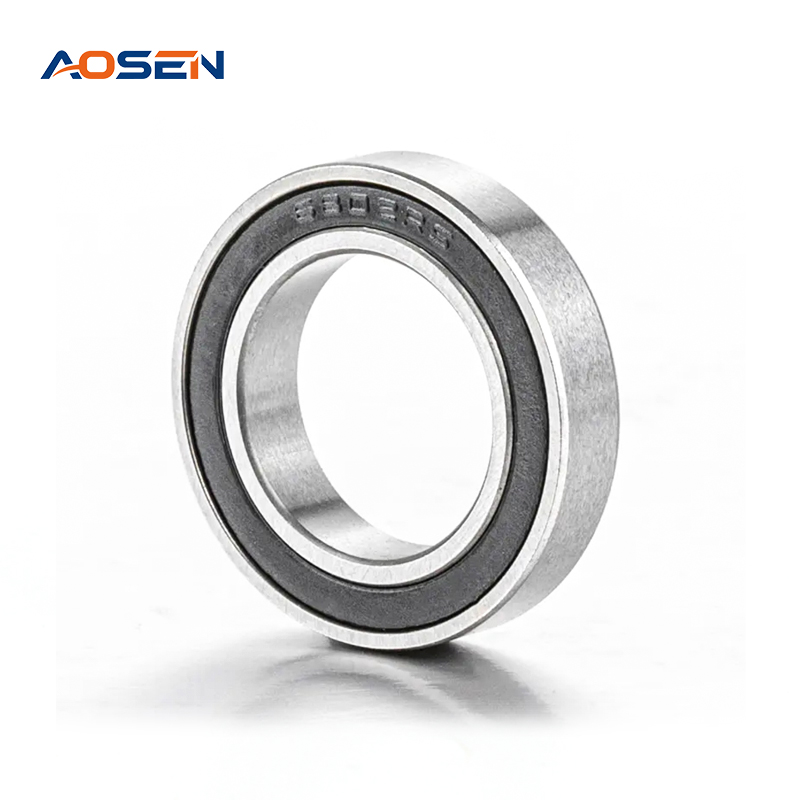
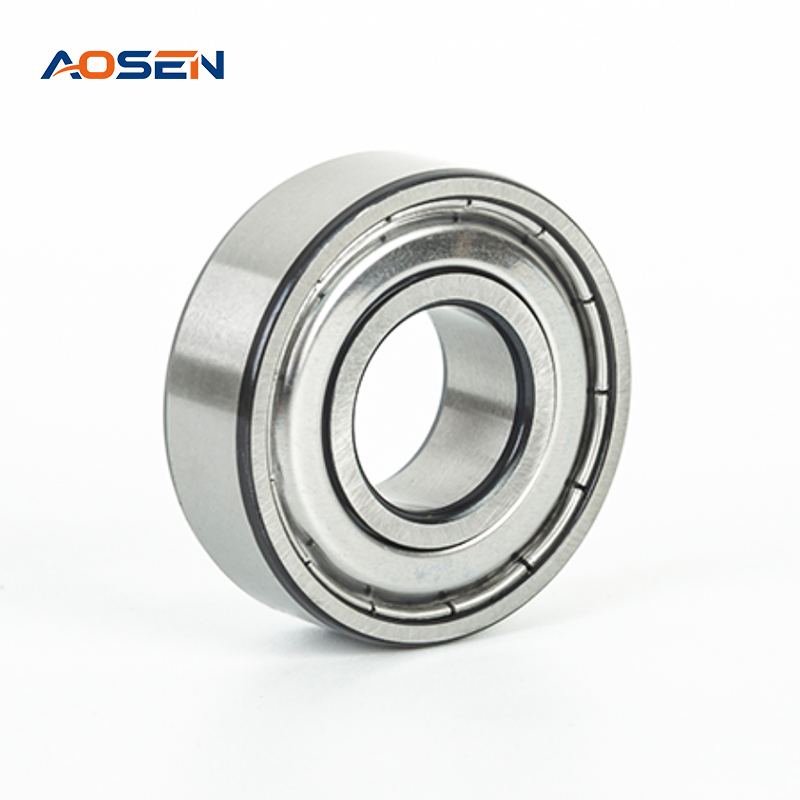
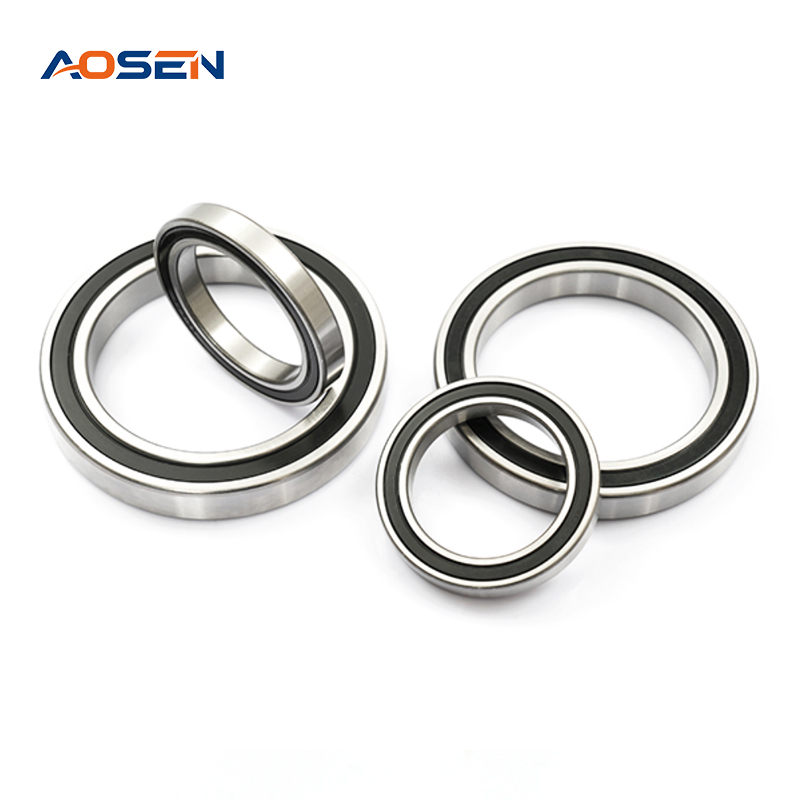
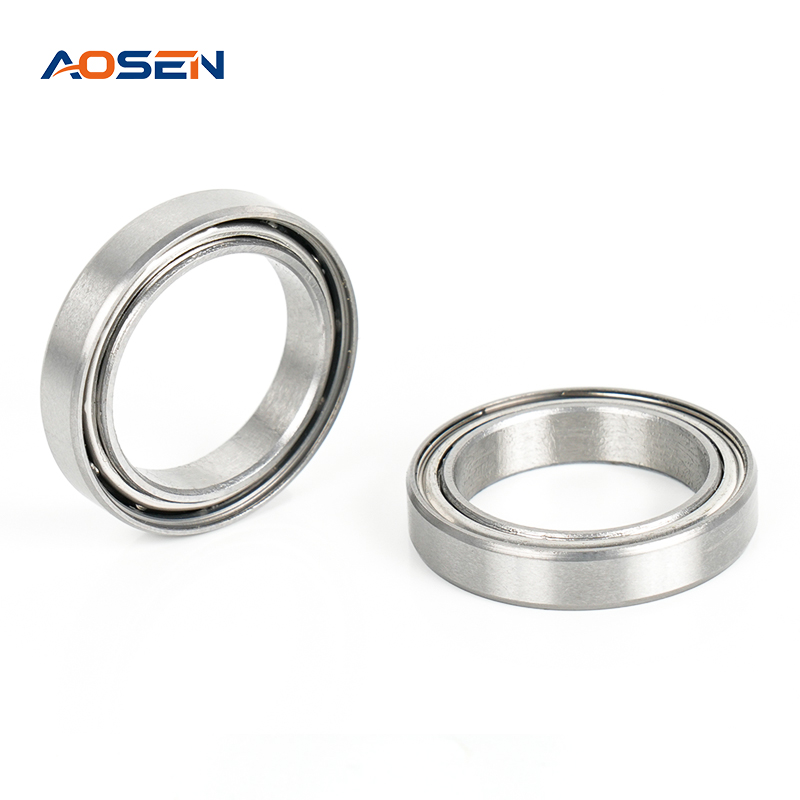
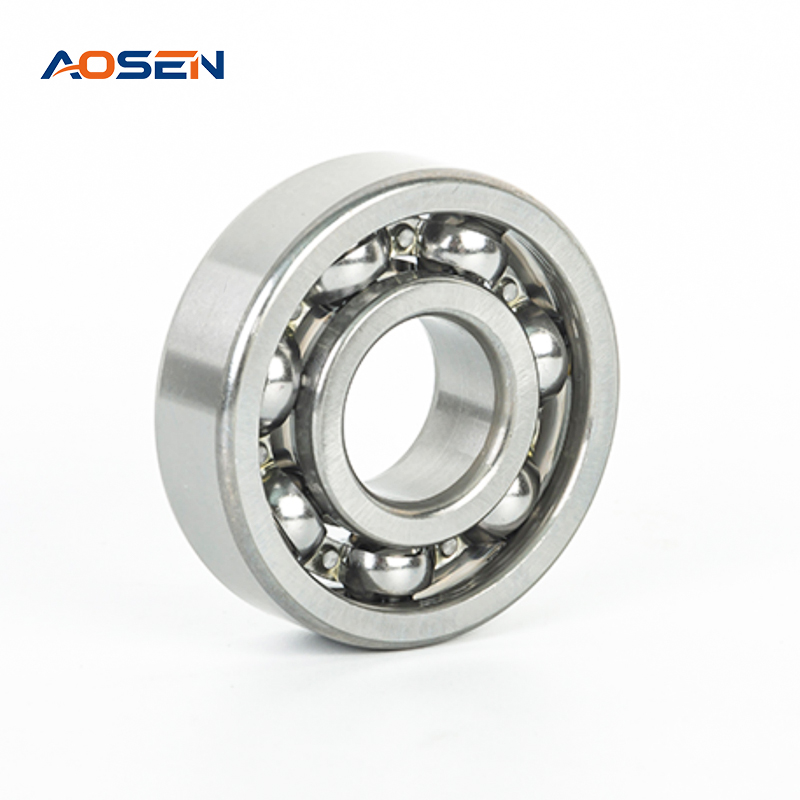
A deep groove ball bearing is the most widely used type of rolling-element bearing in the world. It consists of an inner ring, an outer ring, a set of steel balls, and a cage — designed with deep raceway grooves that allow it to handle both radial and axial loads simultaneously. Its simplicity, versatility, and low maintenance requirements make it the default choice across industries from electric motors to household appliances.
How a Deep Groove Ball Bearing Works
The defining feature of this bearing type is its deep, uninterrupted raceway grooves machined into both the inner and outer rings. When the balls roll within these grooves, they maintain consistent contact under load, distributing stress evenly around the raceway circumference. This geometry enables the bearing to support:
- Radial loads — forces perpendicular to the shaft axis (the primary load direction)
- Axial (thrust) loads — forces parallel to the shaft axis, in both directions
- Combined loads — simultaneous radial and axial forces
Unlike angular contact bearings, which are optimized for one load direction, the deep groove design accommodates axial loads in both directions without any special arrangement, making it inherently more flexible.
Key Components and Their Functions
Understanding each component helps in selecting the right bearing and diagnosing failure modes:
- Inner Ring: Mounted on the rotating shaft; the inner raceway groove is machined into its outer surface.
- Outer Ring: Fits into the housing; the outer raceway groove is machined into its inner surface.
- Balls: Precision-ground steel spheres that roll between the two raceways, transmitting loads with minimal friction.
- Cage (Retainer): Keeps balls evenly spaced, preventing contact between them and reducing heat generation. Common materials include steel, brass, and polyamide (PA66).
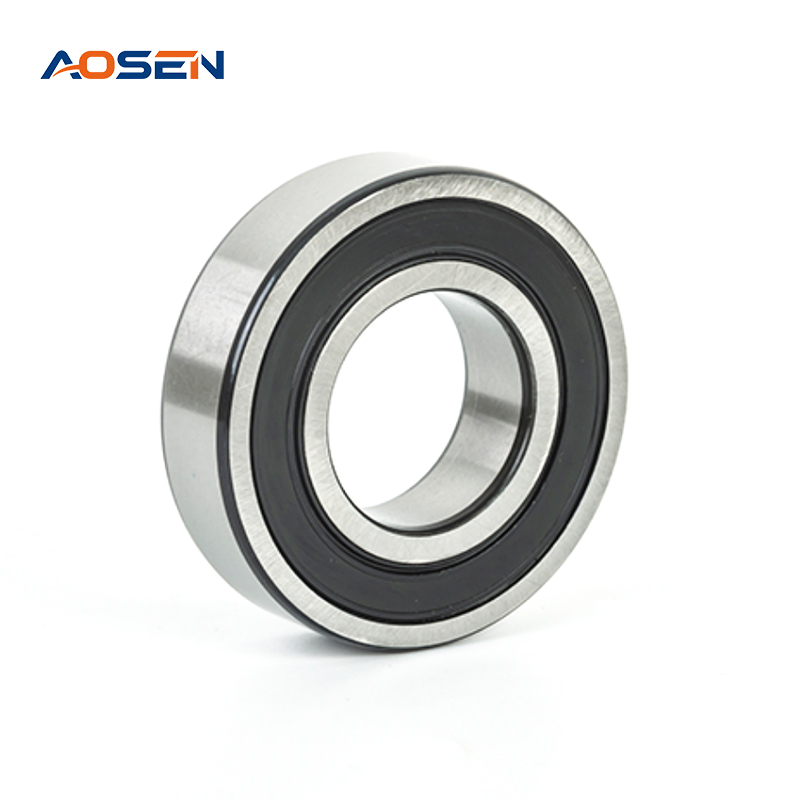
- Seals or Shields: Optional closures that retain lubricant and exclude contaminants. Shields (metal) allow higher speeds; seals (rubber) offer better protection.
Standard Dimensions and Load Ratings
Deep groove ball bearings follow ISO 15 dimensional standards, ensuring global interchangeability. The most common series are the 6000, 6200, and 6300 series, each with increasing outer diameter and load capacity for the same bore size.
| Bearing No. |
Bore (mm) |
OD (mm) |
Width (mm) |
Dynamic Load Rating C (kN) |
Max Speed (rpm) |
| 6004 |
20 |
42 |
12 |
9.95 |
18,000 |
| 6204 |
20 |
47 |
14 |
12.7 |
15,000 |
| 6304 |
20 |
52 |
15 |
15.9 |
13,000 |
| 6008 |
40 |
68 |
15 |
16.8 |
11,000 |
| 6208 |
40 |
80 |
18 |
29.1 |
9,500 |
Representative deep groove ball bearing dimensions and load ratings (ISO 6x series)
Stainless Steel Deep Groove Ball Bearing: When and Why
A stainless steel deep groove ball bearing uses AISI 440C martensitic stainless steel for its rings and balls instead of the standard chrome steel (AISI 52100). This material choice is not a mere upgrade — it is a deliberate engineering decision suited to specific environments.
Advantages of Stainless Steel
- Corrosion resistance: 440C stainless withstands moisture, mild acids, and many chemicals. Standard chrome steel bearings rust rapidly in wet environments.
- Hygienic compliance: Meets food-grade and pharmaceutical standards (FDA, EHEDG) where lubricant contamination must be minimized.
- Cleanroom suitability: Used in semiconductor and optical equipment where particles from rust are unacceptable.
- Chemical process compatibility: Resists dilute acids, saline solutions, and many solvents that would destroy chrome steel bearings within days.
Trade-offs to Consider
- Lower hardness: 440C reaches approximately 58–62 HRC vs. 62–66 HRC for 52100 chrome steel, resulting in roughly 20–30% lower load ratings for the same size.
- Higher cost: Stainless steel bearings typically cost 2–4× more than equivalent chrome steel versions.
- Lower maximum speed: The material properties limit operating speed compared to chrome steel in the same series.
Typical Application Environments
- Food and beverage processing machinery (washdown areas)
- Marine and offshore equipment
- Medical and dental instruments
- Chemical pumps and valves
- Semiconductor fabrication tools
Seal and Shield Options Explained
The suffix on a bearing designation tells you about its closure type — a critical selection factor:
| Suffix |
Type |
Contact |
Speed Limit |
Best For |
| Open (no suffix) |
No closure |
— |
Highest |
Clean, oil-lubricated environments |
| Z / ZZ |
Metal shield(s) |
Non-contact |
High |
Moderate contamination, higher speed |
| RS / 2RS |
Rubber seal(s) |
Contact |
Moderate |
Dusty/wet conditions, long service life |
| RZ / 2RZ |
Low-friction seal(s) |
Near-contact |
High |
Combining sealing with speed performance |
Deep groove ball bearing suffix codes and their sealing characteristics
Common Applications Across Industries
Deep groove ball bearings account for approximately 80% of all bearing sales globally, a figure that reflects their adaptability. Key application sectors include:
- Electric motors: Found in virtually every AC and DC motor, from fractional-horsepower fans to industrial drives rated at hundreds of kilowatts.
- Automotive: Alternators, water pumps, idler pulleys, and electric power steering units — a single passenger car may contain 50 or more deep groove ball bearings.
- Agricultural machinery: Gearboxes, conveyors, and harvesting equipment where reliable performance under vibration is essential.
- Consumer appliances: Washing machine drums, vacuum motors, and power tools rely on 6200 and 6300 series bearings.
- Robotics and automation: Joint actuators and servo motors use precision-class (P5, P4) deep groove ball bearings for repeatable positioning.
How to Select the Right Deep Groove Ball Bearing
Choosing incorrectly leads to premature failure. Follow this structured approach:
- Define load magnitude and direction. Calculate both radial and axial loads in Newtons. If axial load exceeds 30% of radial load, consider whether an angular contact bearing is more appropriate.
- Determine the required speed. Compare your operating rpm against the bearing's speed limit. Grease-lubricated bearings typically have a speed limit 65–80% of oil-lubricated equivalents.
- Assess the environment. Wet, chemically aggressive, or food-contact environments call for a stainless steel deep groove ball bearing. Dusty environments require sealed (2RS) versions.
- Calculate required service life. Use the L10 life formula: L10 = (C/P)³ × 10⁶ / (60 × n), where C = dynamic load rating, P = equivalent dynamic load, and n = speed in rpm.
- Choose the tolerance class. Standard (Normal/PN) suits most applications. Precision classes P6, P5, and P4 provide tighter dimensional tolerances for high-speed spindles or precision instruments.
- Select lubrication. Pre-greased (2RS, ZZ) bearings simplify maintenance. Open bearings in oil baths achieve higher speeds and longer life when properly managed.
Lubrication: Grease vs. Oil
Lubrication is the single biggest factor in bearing service life. More than 36% of premature bearing failures are attributed to improper lubrication according to industry studies.
- Grease lubrication: Suitable for most applications up to about ndm = 300,000 (speed × mean diameter). Lithium-based grease is standard; PTFE or silicone grease is used for extreme temperatures or food contact.
- Oil lubrication: Preferred above ndm = 300,000, in high-temperature environments above 120°C, or where heat dissipation is critical. Oil bath and oil jet methods are common.
- Grease quantity: Fill bearing internal space to 30–50% capacity. Over-greasing generates excessive heat and accelerates degradation.
Failure Modes and How to Prevent Them
Recognizing failure patterns enables proactive maintenance:
| Failure Mode |
Symptom |
Root Cause |
Prevention |
| Fatigue spalling |
Pitting on raceway |
Overload or end of life |
Correct load sizing; replace at L10 life |
| Corrosion pitting |
Rust spots, noise |
Moisture ingress |
Use 2RS seals; consider stainless steel |
| False brinelling |
Indentations at ball pitch |
Vibration during standstill |
Rotate shaft during storage; use VCI packaging |
| Misalignment damage |
Uneven wear pattern |
Shaft/housing misalignment |
Precision alignment; use self-aligning bearings if needed |
| Electrical erosion |
Frosted surface texture |
Stray electrical currents |
Insulated bearings or grounding |
Common deep groove ball bearing failure modes, causes, and preventive actions
Deep Groove Ball Bearing vs. Other Bearing Types
Knowing when not to use a deep groove ball bearing is as important as knowing when to use one:
- Angular contact bearings: Better for high axial loads or paired arrangements requiring axial preload (e.g., machine tool spindles). Not a drop-in replacement due to single-direction thrust design.
- Cylindrical roller bearings: Superior for heavy radial loads but cannot support axial loads. Used in large motors and gearboxes where shaft deflection is predictable.
- Tapered roller bearings: Handle combined loads with high axial stiffness but require more complex mounting and preload management.
- Self-aligning ball bearings: Tolerate shaft misalignment up to 2–3°; suitable where housing alignment cannot be guaranteed, but load capacity is lower.
For the vast majority of general industrial and commercial applications with moderate loads, moderate speeds, and reasonable operating environments, the deep groove ball bearing remains the optimal and most cost-effective solution.

 Español

 +86-15990593443
 No. 558 Huancheng West Road, Zhouxiang Town, Cixi City, Ningbo Province, Zhejiang Province