
 Español
Understanding How Ball Bearings Reduce Friction in Machinery for Better Performance
A maintenance engineer recently described a strange problem. A 15 kW motor on a conveyor line kept running 12 K above its nameplate temperature. Grease around the shaft seal had discolored, and monthly energy readings were climbing. The motor was fine; the bearings were not. When properly sized deep groove ball bearings replaced the worn sleeve bushings, the motor temperature returned to normal within hours. That is what the question "how do ball bearings reduce friction in machinery" looks like in real life.
The short answer is that ball bearings replace sliding friction with rolling friction. Because the rolling contact between balls and raceways has a coefficient of friction roughly one hundredth that of a lubricated sliding surface, a ball bearing cuts frictional losses dramatically. That translates into less wasted energy, less heat, slower wear, and longer machine life.
Why Rolling Contact Beats Sliding Contact
Any two surfaces that move against each other generate friction. When two flat or cylindrical surfaces slide, the contact area is relatively large, and the force required to keep them moving depends on the coefficient of friction between the materials. A plain shaft rotating in a sleeve bearing, even when well lubricated, typically has a coefficient of friction between 0.08 and 0.15. If lubrication breaks down, that value rises to 0.4 or higher.
A ball bearing changes the picture completely. The load is carried by hardened steel balls that roll inside curved raceways. Instead of scraping over a large area, each ball rolls across a small contact patch. This is why the coefficient of friction for a properly lubricated deep groove ball bearing is typically 0.001 to 0.005, one to two orders of magnitude lower than sliding contact.
| Contact condition | Friction coefficient | Where it appears |
|---|---|---|
| Dry steel sliding | 0.40-0.60 | Unlubricated shafts, worn bushings |
| Lubricated sliding | 0.08-0.15 | Sleeve bearings, journal bearings |
| Rolling contact with ball bearing | 0.001-0.005 | Deep groove ball bearings, angular contact bearings |
What Actually Happens Inside a Ball Bearing
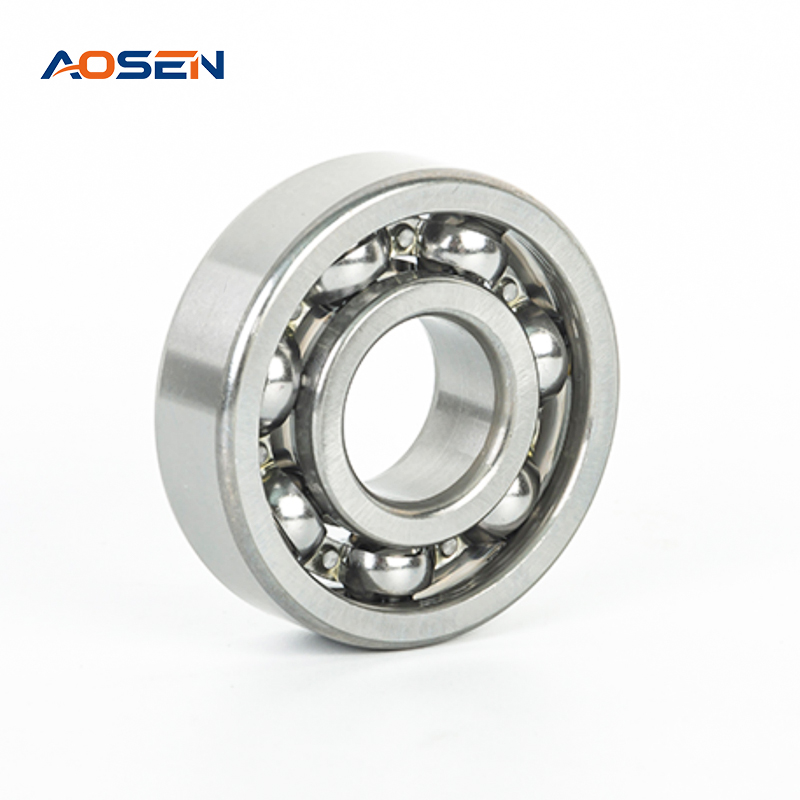
To understand why ball bearings reduce friction so effectively, it helps to look at the parts in motion. A ball bearing has four functional groups: an inner ring, an outer ring, a set of balls, and a cage. The inner ring is pressed onto the shaft; the outer ring sits in the housing. When the shaft rotates, the inner ring turns and the balls roll along the raceway grooves of both rings.
The contact between each ball and the raceway is not a single point but a small elliptical area formed by elastic deformation under load, commonly called Hertzian contact. Even at moderate loads, that area is tiny compared to the sliding contact area of a plain bearing. Because the ball rolls rather than slides, the relative velocity at the contact is much lower, and the energy dissipated as friction drops sharply.
A ball bearing is not completely friction-free. Rolling resistance comes from elastic hysteresis in the steel, micro-slip between balls and raceways, cage friction, and the shearing of the lubricant film. Those components are small, but they matter in precision applications. This is why the geometry, surface finish, and material quality of the bearing have a direct effect on how much friction it produces.
Factors That Raise or Lower Bearing Friction
The difference between a smooth-running bearing and one that overheats often comes down to a handful of operating factors. Understanding them helps engineers choose the right bearing and avoid premature failures.
Load and Speed
As load increases, the deformed contact area grows and rolling resistance rises. Axial load is especially influential: forcing a deep groove bearing to handle continuous thrust load raises friction noticeably. At higher speeds, centrifugal force pushes the balls outward, adding internal load and increasing friction torque.
Lubrication
The right grease maintains a thin film between balls and raceways, separating the surfaces and reducing both friction and wear. Over-greasing is a common mistake: filling the bearing cavity beyond roughly 30 percent at low speed, or 20 percent at high speed, causes churning and raises operating temperature.
Seals and Shields
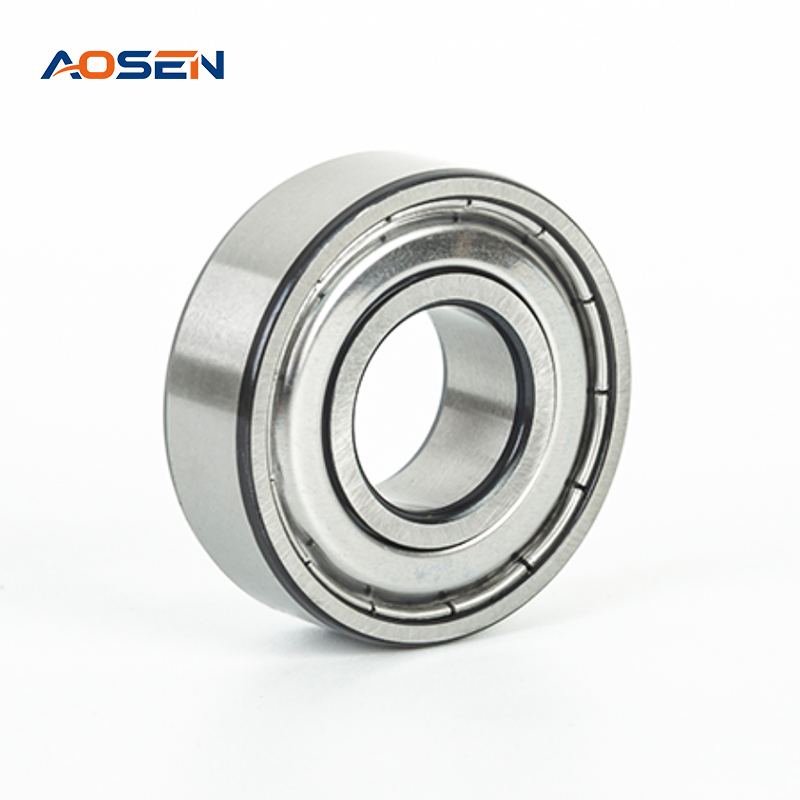
Non-contact metal shields, designated ZZ, keep out large particles and add almost no friction. Contact rubber seals, designated 2RS, provide stronger protection against moisture and fine dust but rub against the inner ring and add drag. In humid or washdown environments, the extra friction is usually a fair price for protection.
Mounting and Preload
Misalignment between the housing bore and the shaft, or distortion of the outer ring during press-fit installation, increases internal stress and friction. Preloaded bearings are intentionally tightened to remove clearance, improving rigidity but adding friction. Only apply preload when the application genuinely requires it.
Choosing the Right Bearing Design
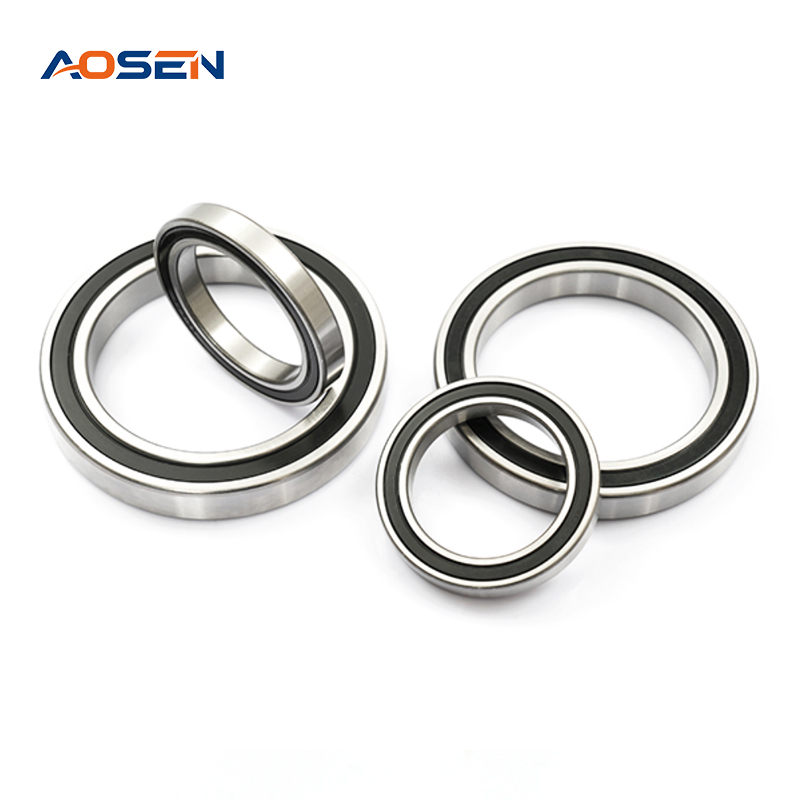
For most industrial rotating equipment, a deep groove ball bearing is the first choice because it offers the lowest friction of any common rolling bearing while carrying both radial and moderate axial loads. It is also the most economical option, and the series covers a wide range of bore sizes and load ratings for motors, pumps, gearboxes, and conveyor rollers. In a typical machine design, 6200 series deep groove ball bearings serve as the dependable baseline.
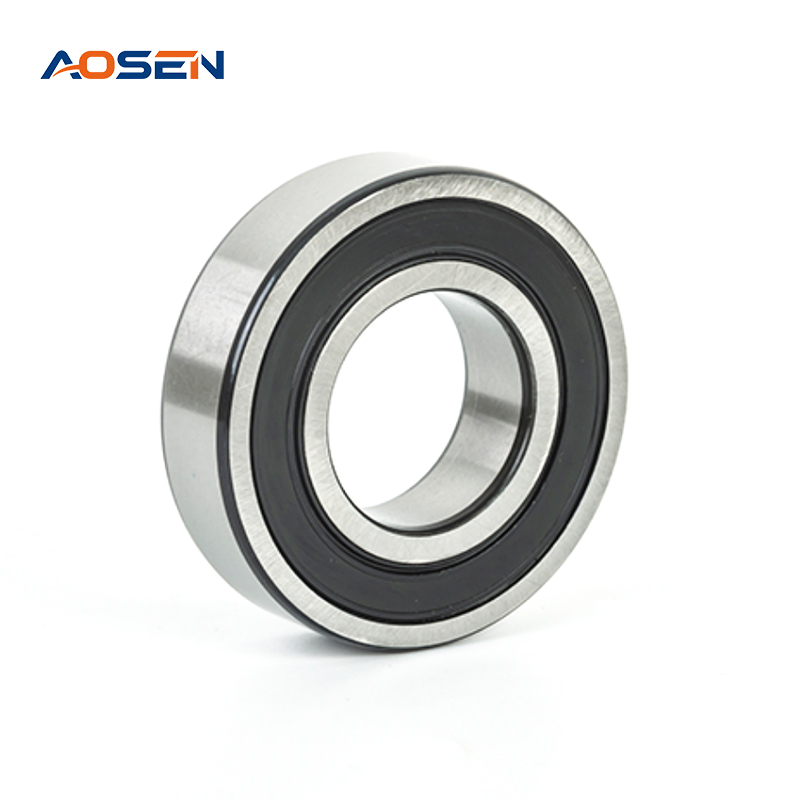 6200 ZZ/2RS Deep Groove Ball Bearings Manufacturers, SuppliersNingbo Aosen Bearing Co., Ltd. is China 6200 series deep groove ball bearing manufacturers and 6200zz bearings suppliers, we wholesale 62...View Product →
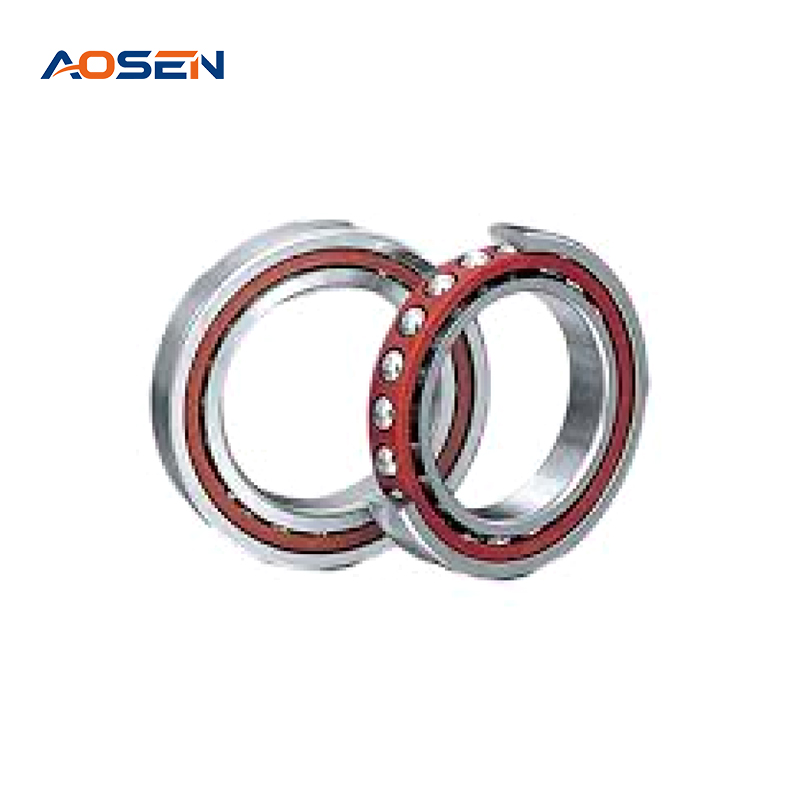
Applications with continuous axial load, or with a combined thrust and radial loading pattern, call for an angular contact bearing. The internal contact angle improves axial capacity in one direction, but the angled geometry also increases friction compared with a deep groove bearing. Designers accept that trade-off because a correctly loaded bearing produces less friction than an overloaded one. 7000 series angular contact ball bearings are the standard choice for these conditions.
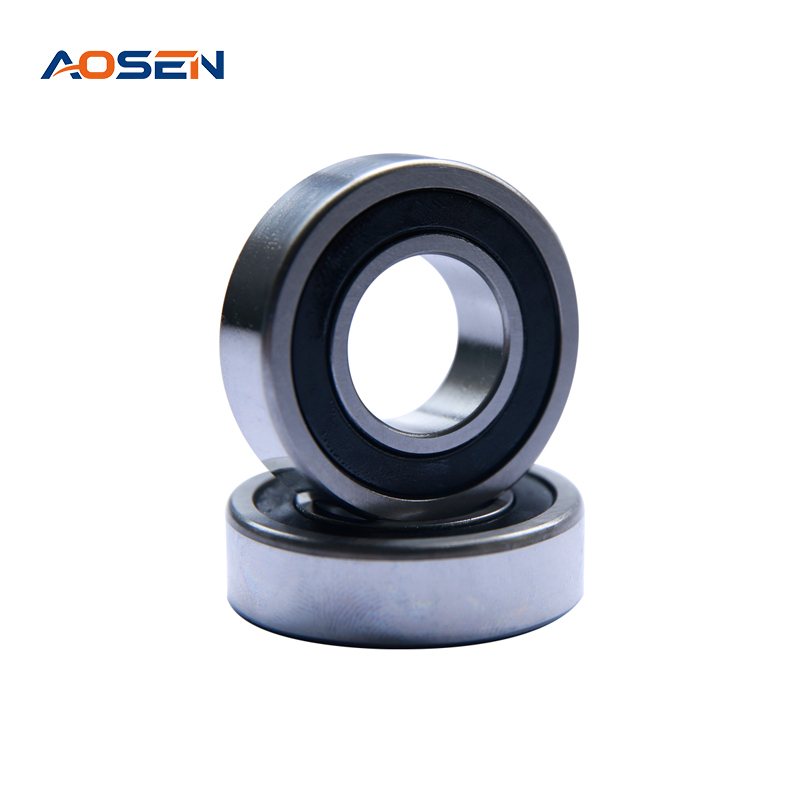 Wholesale 7000 Series Angular Contact Ball Bearings Exporter, Suppliers, FactoryNingbo Aosen Bearing Co., Ltd. is China wholesale 7000 Series Angular Contact Ball Bearings suppliers,exporter and bearings factory, The ...View Product →
Material selection adds another layer to the friction story. Corrosion roughens standard chrome steel raceways in a matter of weeks when the machine is exposed to chemical vapors, washdown cleaning, seawater, or high humidity. A rough surface means higher friction, so material choice can dominate the long-term performance of the bearing.
What Lower Friction Means in Practice
Low bearing friction shows up in measurable ways: lower power consumption, lower running temperature, slower grease degradation, and longer bearing life. A rule of thumb used by many maintenance teams is that every 10 K reduction in bearing temperature doubles grease life and significantly extends bearing fatigue life. The energy saving is more modest but still real. In a machine with six or eight bearings, the difference between a high-loss sliding bearing and a quality ball bearing can account for several percent of the total motor power draw.
This is why bearing selection is an economic decision as much as a mechanical one. Bearings with poor geometry, rough raceways, or undersized balls increase friction, generate heat, and fail early. When a bearing fails, the replacement part is only a fraction of the total cost of downtime, labor, and damage to connected equipment.
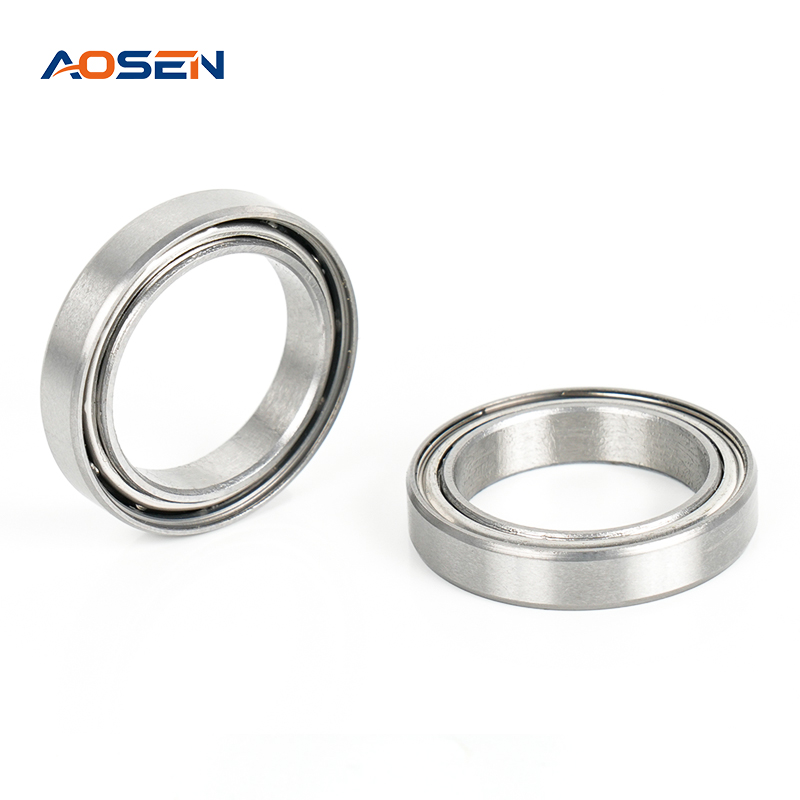
Application environment is one of the strongest signals for choosing the right bearing family. In food processing lines, pharmaceutical plants, water treatment facilities, and chemical plants, washdown fluids and corrosive vapors will ruin a standard carbon steel bearing in weeks. The raceways pit and roughen, friction rises, and the motor draws more current. For those conditions, the practical answer is a stainless steel bearing with contact seals. The conditions we plan around in those industries are described in our chemical and electroplating application notes. Where washdown and hygiene standards are the defining factor, SS 6200 series stainless steel deep groove ball bearings keep raceways smooth far longer than chrome steel under corrosive attack.
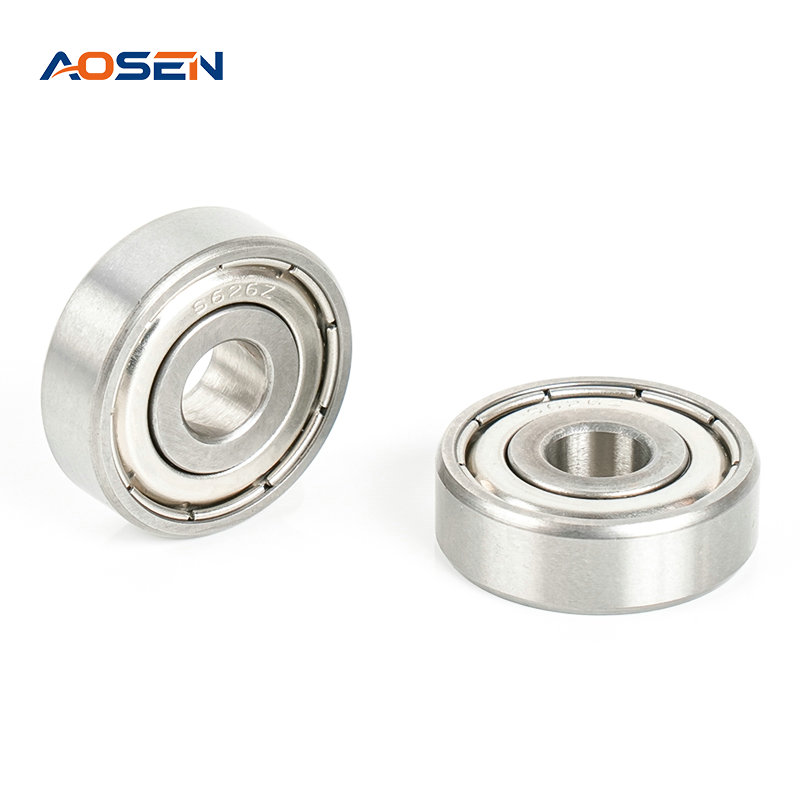 6200 ZZ/2RS Stainless Steel Deep Groove Ball Bearings ManufacturersAs China SS 6200 ZZ/2RS stainless steel deep groove ball bearing manufacturers and suppliers, Ningbo Aosen Bearing custom 6200 series sta...View Product →
For a broader look at how rolling contact cuts friction across different bearing families, our guide to deep groove and angular contact ball bearings explains the differences in detail.
Conclusion
Friction in machinery is not a mystery, and ball bearings reduce it for a simple reason: rolling contact dissipates far less energy than sliding contact. Getting the full benefit requires choosing the right bearing type, material, seal, and lubrication, then installing it without misalignment. When all of those things come together, a ball bearing does its job almost unnoticed, which is exactly how a well-designed machine should run.

-

-
 +86-15990593443
 -
 No. 558 Huancheng West Road, Zhouxiang Town, Cixi City, Ningbo Province, Zhejiang Province

- Quick Links
- Product Categories
- Deep Groove Ball Bearings
- Stainless Steel Deep Groove Ball Bearings
- Angular Contact Ball Bearings
- Flange Bearings

Message Us Now !