How Ball Bearings Work: The Core Principle
Ball bearings reduce rotational friction and support radial and axial loads by placing hardened steel balls between two concentric rings — the inner race and the outer race. As the shaft rotates, the balls roll rather than slide, converting sliding friction into much lower rolling friction. This fundamental mechanism enables everything from electric motors spinning at 20,000 RPM to bicycle wheels carrying a rider's full weight.
The efficiency gain is dramatic: rolling friction coefficients typically fall between 0.001 and 0.005, compared to 0.1–0.3 for plain sliding bearings. In practical terms, a well-lubricated ball bearing can reduce energy losses by up to 90% versus an unlubricated plain bushing under the same load conditions.
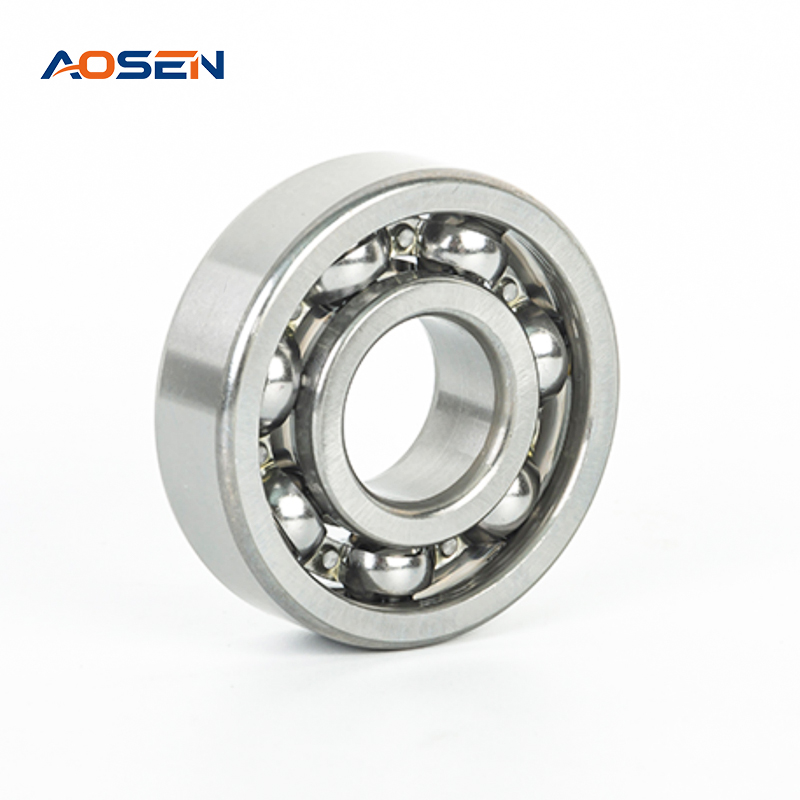
Every ball bearing assembly contains four essential components:
- Inner race — press-fitted onto the rotating shaft
- Outer race — seated in the housing or bracket
- Balls — the rolling elements that transmit load between races
- Cage (retainer) — evenly spaces the balls to prevent contact with each other and reduce heat
Among the many bearing designs available, Deep Groove Ball Bearings (DGBB) and Angular Contact Ball Bearings (ACBB) are the two most widely specified types in industrial and mechanical engineering. Understanding their structural differences is the key to selecting the right bearing for a given application.
Deep Groove Ball Bearings: Structure, Load Capacity, and Applications
Deep Groove Ball Bearings are the most commonly used bearing type worldwide, accounting for roughly 40–50% of all bearing sales globally. Their name comes from the deep, continuous raceway grooves machined into both the inner and outer races, which allow the balls to seat deeply and support loads in multiple directions.
Structural Design
The raceway groove radius is typically 51.5–53% of the ball diameter. This close conformity between ball and groove maximizes contact area, distributing load across a larger surface and enabling the bearing to handle not just radial loads but significant axial (thrust) loads in both directions — without any modification to the design.
The contact angle of a DGBB under pure radial load is nominally 0°, but under axial load it shifts to up to approximately 15°. This versatility is the key advantage: a single bearing can handle combined loading scenarios without requiring additional thrust bearings.
Load Ratings and Speed Capabilities
Deep Groove Ball Bearings are available in standardized series. The table below compares representative basic dynamic and static load ratings for the widely used 6200 and 6300 series:
Typical load ratings for common Deep Groove Ball Bearing sizes (ISO 15:2017 series)
| Bearing No. |
Bore (mm) |
OD (mm) |
Dynamic C (kN) |
Static C₀ (kN) |
Limiting Speed (rpm) |
| 6204 |
20 |
47 |
12.7 |
6.55 |
17,000 |
| 6304 |
20 |
52 |
15.9 |
7.8 |
15,000 |
| 6208 |
40 |
80 |
29.0 |
17.8 |
10,000 |
| 6308 |
40 |
90 |
41.0 |
24.0 |
9,000 |
Typical Applications
Because DGBBs are simple, low-noise, and capable across a wide speed range, they appear in virtually every mechanical system:
- Electric motors (AC induction, servo, BLDC) — by far the largest consumption segment
- Household appliances — washing machines, fans, pumps
- Agricultural equipment — conveyor rollers, gearboxes
- Bicycles and motorcycles — wheel hubs, bottom brackets
- Medical devices — dental drills, imaging equipment
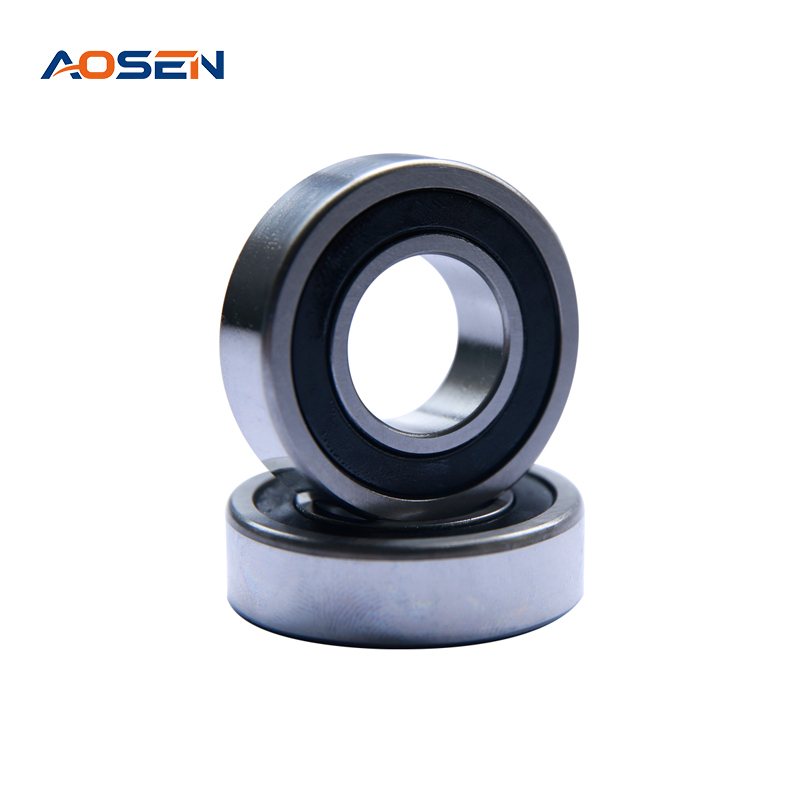
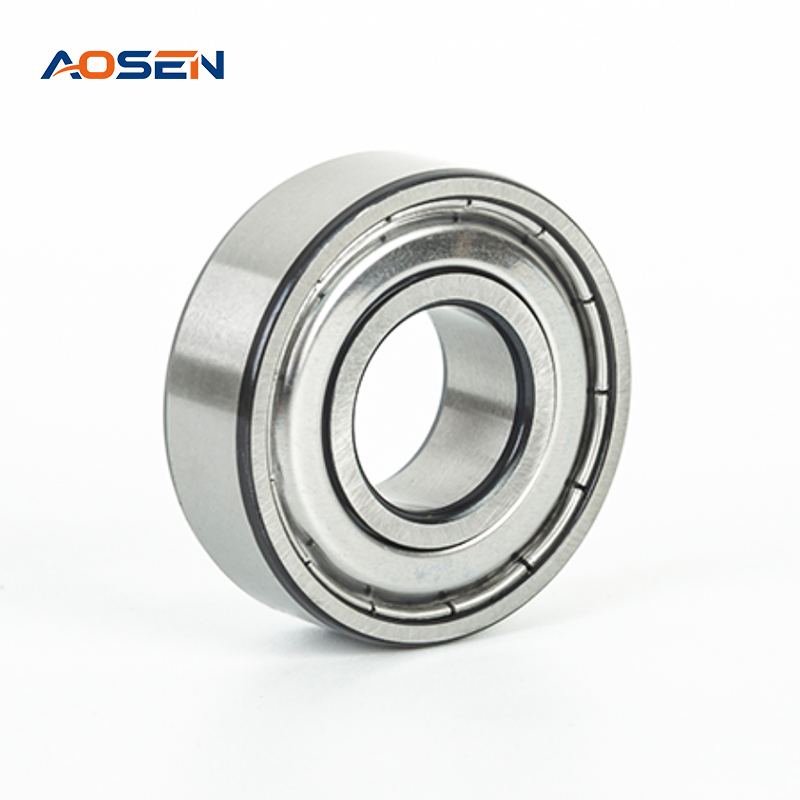
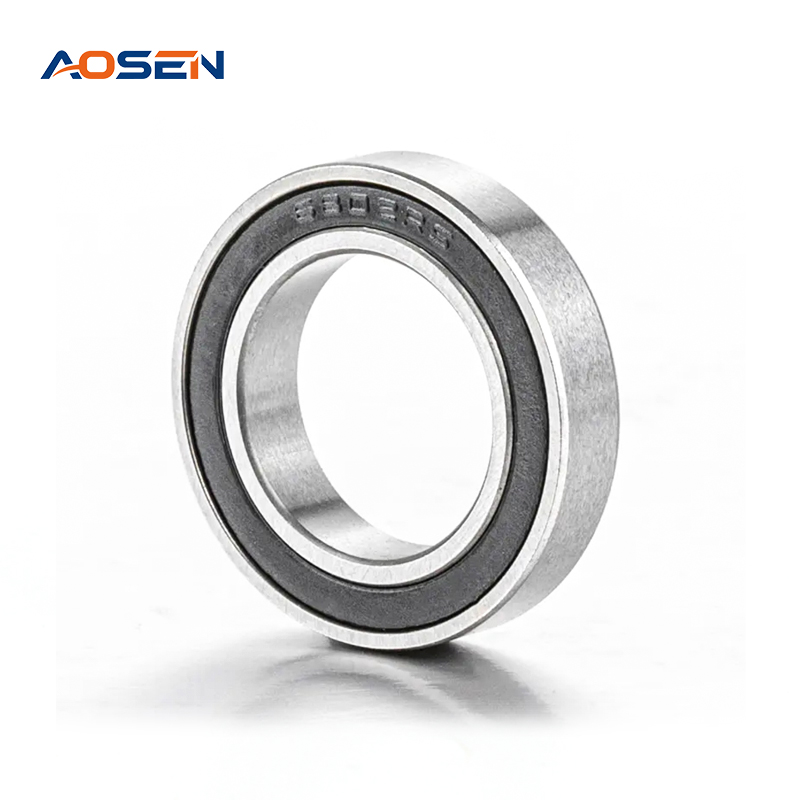
Shielded (ZZ) or sealed (2RS) variants are used wherever contamination or grease retention is a concern, eliminating the need for external seals and reducing maintenance intervals significantly.
Angular Contact Ball Bearings: How the Contact Angle Changes Everything
Angular Contact Ball Bearings are engineered specifically to handle combined radial and axial loads simultaneously, with a defined contact angle between the ball and the raceway. This angle — typically 15°, 25°, or 40° — is the single most important design parameter, and it fundamentally alters how the bearing transmits force compared to a DGBB.
The Geometry of the Contact Angle
The contact angle is defined as the angle between the line of action of the ball load and a plane perpendicular to the bearing axis. Because the inner and outer raceways are offset axially, the load line runs diagonally through the ball. This geometry means:
- Larger contact angle (e.g., 40°) → higher axial load capacity, lower radial capacity, suited for thrust-dominant applications
- Smaller contact angle (e.g., 15°) → higher radial capacity, lower axial capacity, better for high-speed applications
- 25° contact angle — a practical middle ground used in most machine tool spindles and precision gearboxes
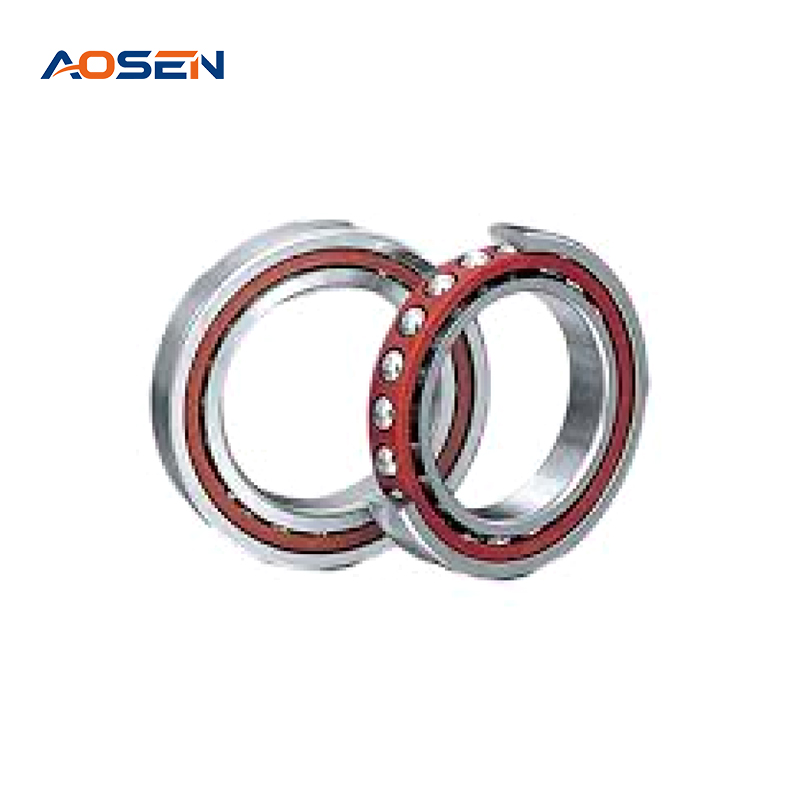
Because ACBBs generate an axial reaction force when subjected to radial loading, they are almost always mounted in pairs — either face-to-face (O-arrangement), back-to-back (X-arrangement), or tandem — to counteract this induced thrust and maintain shaft position under varying load directions.
Contact Angle Comparison Table
Effect of contact angle on Angular Contact Ball Bearing performance characteristics
| Contact Angle |
Axial Load Capacity |
Radial Load Capacity |
Max Speed |
Typical Use Case |
| 15° |
Moderate |
High |
Very High |
High-speed spindles, turbines |
| 25° |
High |
Moderate–High |
High |
CNC spindles, gearboxes |
| 40° |
Very High |
Moderate |
Moderate |
Screw drives, wheel hubs |
Single-Row vs. Double-Row Designs
Single-row ACBBs can only support axial load in one direction; pairing is mandatory for bidirectional axial loads. Double-row ACBBs incorporate two rows of balls with opposing contact angles built into a single unit, providing bidirectional axial capacity and higher stiffness in a more compact envelope — commonly used in automotive wheel hub units and machine tool headstocks.
For example, a duplex pair of 7208 ACBBs (40 mm bore, 25° contact angle) mounted back-to-back can provide a combined dynamic radial load rating of approximately 64 kN and an axial rating of roughly 30 kN — making them a practical choice for spindle heads operating at up to 8,000 RPM under cutting forces.
Deep Groove vs. Angular Contact: Side-by-Side Comparison
Choosing between a DGBB and an ACBB requires evaluating load direction, speed, stiffness, and mounting constraints. The table below summarizes the key differences:
Key differences between Deep Groove and Angular Contact Ball Bearings
| Parameter |
Deep Groove Ball Bearing |
Angular Contact Ball Bearing |
| Contact Angle |
~0° (nominal) |
15°, 25°, or 40° |
| Radial Load |
Excellent |
Good–Excellent |
| Axial Load (single direction) |
Moderate |
High to Very High |
| Speed Capability |
Very High |
High (lower at 40°) |
| Axial Stiffness |
Low |
High |
| Mounting Complexity |
Simple (single unit) |
Often requires paired arrangement |
| Cost |
Low |
Moderate–High |
| Primary Application |
General machinery, motors |
Machine tools, wheel hubs, screw drives |
As a general rule: if your application has purely radial loads or modest bidirectional axial loads at high speed, a DGBB is the right choice. If significant unidirectional axial loads are present, or if shaft positioning accuracy under load is critical, an ACBB paired arrangement is the correct solution.
Materials, Tolerances, and Lubrication: What Determines Bearing Life
The theoretical bearing life is calculated using the ISO 281 L10 life formula: L₁₀ = (C/P)³ × 10⁶ revolutions (for ball bearings), where C is the dynamic load rating and P is the equivalent dynamic load. In practice, actual service life is influenced by three additional factors: material, precision grade, and lubrication quality.
Material Grades
- AISI 52100 chrome steel — the industry standard. Hardness of 60–64 HRC after heat treatment, excellent fatigue resistance at moderate temperatures (up to ~120°C continuous).
- 440C stainless steel — corrosion-resistant, commonly used in food processing and medical applications. Roughly 20% lower load capacity than 52100.
- Silicon nitride (Si₃N₄) ceramic balls — used in hybrid bearings. 60% lighter than steel, 30–50% harder, thermally stable to over 800°C, and electrically non-conductive (critical in VFD-driven motors to prevent electrical erosion).
Precision Grades (ISO 492)
ISO precision grades range from P0 (Normal) to P2 (Super Precision). Each step up tightens dimensional tolerances significantly:
- P0 (Normal) — general industrial use, bore tolerance ±8 µm for 40 mm shaft
- P6 (Class 6) — reduced noise, used in electric motors and pumps
- P5 / P4 / P2 — machine tool spindles, measuring instruments; P4 bore tolerance can be as tight as ±2.5 µm
Lubrication Requirements
Studies show that over 36% of premature bearing failures are attributed to improper lubrication (either the wrong type, too little, or too much). The lubricant forms a thin elastohydrodynamic film — typically 0.05–1 µm thick — that prevents metal-to-metal contact between balls and raceways.
- Grease — preferred for sealed bearings, low-maintenance applications; typically fills 30–50% of free space to balance lubrication and heat generation
- Oil — required at very high speeds (DN values above 500,000 mm·rpm) or high temperatures; oil mist, oil-jet, and oil-air systems are used in precision spindle applications
Practical Selection Guide: Choosing the Right Ball Bearing
Selecting a ball bearing involves a structured decision process. Follow these steps to narrow down the right type and size:
- Define the load direction and magnitude. Radial-only or combined? Axial load in one or both directions? Calculate the equivalent dynamic load P = X·Fr + Y·Fa using the bearing manufacturer's X and Y factors.
- Determine the required life. Use the L10 formula. Industrial gearboxes typically target 20,000–30,000 hours; automotive wheel hubs aim for 150,000–200,000 km.
- Check the operating speed. Calculate the DN value (bore diameter in mm × speed in rpm). Values above 300,000 mm·rpm often require ACBB with 15° contact angle or hybrid ceramic bearings.
- Consider environmental conditions. Contamination, moisture, and temperature dictate whether to use sealed DGBBs, stainless steel, or special cage materials (polyamide for wet environments, brass for high temperatures).
- Select the precision grade. Standard P0 for general machinery; P5 or better for spindles and precision instruments.
- Specify lubrication and sealing. Greased-for-life sealed bearings (2RS) for low-maintenance; re-lubrication fittings for large or critical bearings.
A common example: a conveyor drive shaft with a 30 mm bore, 1,500 RPM operating speed, and a combined radial load of 4 kN with a moderate axial load of 1.2 kN in one direction. A standard 6206-2RS DGBB (dynamic rating 19.5 kN) would provide well over 20,000 hours of L10 life under these conditions — a cost-effective and straightforward solution. Only if the axial load exceeded roughly 30% of the radial load continuously would upgrading to an ACBB arrangement be warranted.
Common Failure Modes and How to Prevent Them
Understanding why bearings fail is as important as knowing how they work. The most frequent failure modes, their causes, and preventive measures are:
- Fatigue spalling — subsurface cracks propagating to the surface after cyclic loading. Prevention: select bearing with adequate C rating; avoid shock loads exceeding 3× rated load.
- Brinelling (false and true) — indentations on the raceway from static overload or vibration while stationary. Prevention: use adequate preload during transport; avoid hammer installation.
- Electrical erosion (fluting) — washboard pattern on raceways from stray currents in VFD-driven motors. Prevention: use hybrid ceramic bearings or insulated bearing sleeves (e.g., SKF INSOCOAT).
- Corrosion and fretting — surface rust or fretting wear at the fit interface. Prevention: use appropriate interference fits; store bearings in original packaging until installation.
- Overheating — caused by excessive preload, overspeed, or lubricant breakdown. Prevention: monitor bearing temperature with thermocouples; replace grease at manufacturer-recommended intervals.
Vibration signature analysis and acoustic emission monitoring can detect early-stage bearing damage weeks before catastrophic failure, enabling condition-based maintenance rather than costly unplanned downtime. Characteristic defect frequencies — ball pass frequency outer race (BPFO), inner race (BPFI), and ball spin frequency (BSF) — are calculable from bearing geometry and operating speed, making frequency-domain analysis a reliable diagnostic tool.

 Español

 +86-15990593443
 No. 558 Huancheng West Road, Zhouxiang Town, Cixi City, Ningbo Province, Zhejiang Province