To install flange bearings correctly, you must clean the housing and shaft, verify dimensional fit tolerances, press or tap the bearing squarely into the housing bore without applying force through the rolling elements, secure it against axial movement, and lubricate appropriately before operation. Flanged radial ball bearings are among the most widely used bearing types in light machinery, conveyor systems, and power transmission equipment — their integrated flange simplifies mounting and axial location compared to standard cylindrical bearings. A correct installation takes less than 30 minutes with the right tools and knowledge; an incorrect one can reduce bearing service life from tens of thousands of hours to just a few hundred. This guide covers every step in detail.
What Are Flange Bearings and How Do They Differ From Standard Bearings
A flange bearing is a rolling element bearing with an integral flange — a projecting rim or collar — on the outer ring. This flange serves as a positive axial locating feature, allowing the bearing to be seated against a machined face on the housing rather than relying on snap rings, circlips, or press fits alone for axial retention.
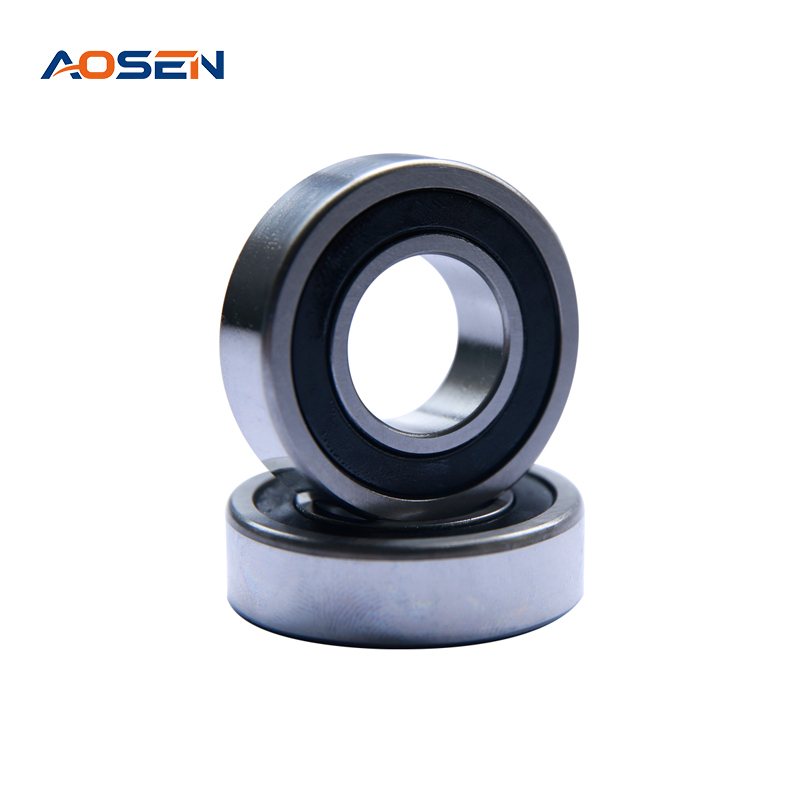
The most common variant is the flanged radial ball bearing, which combines a deep groove ball bearing with a flange on the outer ring. These bearings handle primarily radial loads — forces perpendicular to the shaft axis — with moderate axial (thrust) load capacity. They are available in both metric and imperial dimensions and are produced by major manufacturers including SKF, NSK, FAG, INA, and Timken.
Key Advantages of Flanged Radial Ball Bearings
- Simplified axial location: The flange bears against the housing face, eliminating the need for separate retaining hardware in many applications
- Easier installation and removal: The bearing can be pushed from one side and located without internal access to the housing bore
- Thinner housing walls permitted: The flange provides retention without requiring deep housing bores or thick shoulders
- Compact axial footprint: Particularly valuable in space-constrained assemblies like small gearboxes and medical equipment
- Wide availability: Flanged radial ball bearings are stocked globally in hundreds of size combinations from 3mm bore to 50mm+ bore
Common Flange Bearing Configurations
Overview of common flange bearing types and their typical mounting applications
| Type |
Flange Position |
Seal/Shield Options |
Typical Application |
| Flanged Deep Groove Ball Bearing |
Outer ring, one side |
Open, single/double shield or seal |
Small motors, gearboxes, office equipment |
| Flanged Miniature Ball Bearing |
Outer ring, one side |
Open or double-shielded |
Medical devices, instruments, RC models |
| Flanged Inch (Imperial) Ball Bearing |
Outer ring, one side |
Open or shielded |
North American machinery, conveyors |
| Pillow Block / Housed Unit with Flange |
Integrated housing flange |
Sealed in housing |
Agricultural equipment, heavy conveyors |
| Flanged Linear Ball Bearing |
Outer cylinder, one end |
Open or sealed |
CNC machines, 3D printers, linear stages |
Tools and Materials Required for Flange Bearing Installation
Gathering the correct tools before starting prevents improvised methods that damage bearings during installation. Bearing damage from incorrect installation is a leading cause of premature failure — according to SKF, over 16% of early bearing failures are caused by incorrect fitting.
- Bearing installation tool set or fitting tool: Matched to the bearing OD — applies force to the correct ring during pressing
- Arbor press or hydraulic press: For interference fit installations; preferred over hammering for controlled, even force application
- Soft-faced mallet and bearing installation sleeve: For light press fits when a press is unavailable — the sleeve must contact only the ring being fitted
- Digital calipers or micrometer: To verify shaft diameter, housing bore diameter, and bearing dimensions before installation
- Bearing heater or hot plate (induction heater preferred): For heating the bearing to ease installation onto shafts with interference fit inner rings
- Clean lint-free cloths and solvent (isopropyl alcohol or brake cleaner): For cleaning housing bore, shaft, and bearing surfaces
- Appropriate grease or oil: Matching the bearing's operating speed, temperature range, and load conditions
- Torque wrench: For tightening flange mounting fasteners to the specified torque values
- Feeler gauges: To verify axial clearance and flange seating against the housing face
Understanding Fit Tolerances Before Installation
Fit tolerance is the most technically critical aspect of flange bearing installation. The wrong fit causes either bearing creep (loose fit) or excessive internal stress and reduced radial clearance (over-tight fit) — both leading to premature failure.
Housing Bore Fit (Outer Ring)
For flanged radial ball bearings installed in housings, the outer ring typically uses a transition or clearance fit. Because the flange itself provides axial location, the housing bore fit does not need to be a heavy interference. The most common housing bore tolerance for flanged bearings is H7 (ISO standard), which gives a slight clearance to transition fit with the bearing's standard outer diameter tolerance (js6 or k6 on the outer ring OD).
For example, a flanged radial ball bearing with a 35mm outer diameter installed in an H7 housing bore would have a bore diameter of 35.000mm to 35.025mm, resulting in a fit ranging from 0.009mm clearance to 0.016mm interference depending on actual bearing OD within its tolerance band.
Shaft Fit (Inner Ring)
The shaft fit depends on whether the inner ring rotates relative to the load. For rotating inner ring applications (the most common case where the shaft rotates), an interference fit is required to prevent inner ring creep. Typical shaft tolerances are j5, k5, or m5 for light to normal radial loads on small to medium flanged radial ball bearings.
Recommended shaft and housing fit tolerances for flanged radial ball bearings under common loading conditions
| Load Condition |
Rotating Ring |
Shaft Tolerance |
Housing Bore Tolerance |
Fit Result |
| Light radial load, rotating shaft |
Inner |
j5 or k5 |
H7 |
Slight interference on shaft; clearance in housing |
| Normal radial load, rotating shaft |
Inner |
k5 or m5 |
H7 |
Moderate interference on shaft; transition in housing |
| Light load, stationary shaft |
Outer |
g6 or h6 |
K7 or M7 |
Clearance on shaft; interference in housing |
| Easy removal required |
Either |
h6 |
H7 |
Sliding fit — flange provides all axial retention |
Step-by-Step: How to Install Flange Bearings
Follow this procedure for installing a flanged radial ball bearing into a housing bore with a rotating shaft. Adapt steps where your specific configuration differs.
Step 1 — Inspect and Clean All Mating Surfaces
Clean the housing bore, the flange seating face on the housing, and the shaft journal with a lint-free cloth and solvent. Remove all traces of old grease, corrosion inhibitor, machining chips, and debris. Even a 0.01mm particle of debris trapped under a bearing ring can cause misalignment and stress concentration. Inspect the housing bore for burrs, raised edges, or surface damage — dress any imperfections with a fine file or emery cloth before proceeding.
Do not open the bearing packaging until immediately before installation to minimize contamination exposure. Handle the bearing with clean, dry hands or clean gloves.
Step 2 — Verify Dimensions with Measuring Tools
Measure the housing bore diameter, shaft diameter, and bearing bore and OD with a calibrated micrometer or digital caliper. Compare against the bearing's specification and the required tolerances. A housing bore measured at 35.030mm for a bearing OD of 35.000–35.011mm indicates excessive clearance — the housing must be re-machined or a bearing with a larger OD tolerance selected. Never attempt to compensate for an oversized housing with adhesive alone; this is a temporary fix that fails under load.
Step 3 — Apply a Light Film of Oil or Assembly Lubricant
Apply a thin film of clean machine oil to the housing bore bore surface and the bearing OD. This reduces the installation force required and prevents galling of the bearing outer ring surface during pressing. Do not use grease for this purpose — its viscosity can create a hydraulic resistance effect that impedes bearing seating.
Step 4 — Press the Bearing Into the Housing
Orient the bearing with the flange facing outward (toward you), so it will seat against the housing face upon full installation. Use a correctly sized installation sleeve or bearing fitting tool that contacts only the outer ring — never press through the balls or cage. Apply force gradually and evenly using an arbor press or, for smaller bearings in light-interference housings, a soft-faced mallet with a bearing sleeve.
Press the bearing until the flange makes full, flat contact with the housing seating face. You will feel and hear a distinct change in resistance when the bearing is fully seated. Never strike the bearing directly with a hammer — even a single blow to the cage or rolling elements can create brinelling indentations on the raceways that cause vibration and premature failure.
Step 5 — Install the Shaft Through the Inner Ring
For interference fit inner rings, heat the bearing to 80°C–100°C (176°F–212°F) using an induction heater or oil bath before sliding onto the shaft. At 80°C, a bearing inner ring with a 20mm bore expands by approximately 0.014mm — sufficient to slide onto most k5 or m5 tolerance shafts without force. Never exceed 120°C for standard bearings with grease lubrication, as higher temperatures degrade the grease and can affect bearing steel properties.
Push the heated bearing fully onto the shaft until it contacts the shaft shoulder. Hold it firmly against the shoulder until it cools sufficiently to grip the shaft — typically 2 to 5 minutes. If the inner ring must be pressed cold, use an installation sleeve contacting the inner ring face only and press with an arbor press.
Step 6 — Verify Flange Seating and Axial Clearance
After installation, verify that the flange is fully and uniformly seated against the housing face using feeler gauges. A gap of more than 0.05mm at any point around the flange indicates the bearing is cocked or not fully pressed home. Correct this before proceeding — a cocked flanged radial ball bearing will generate uneven raceway loading that significantly reduces service life.
Check that the shaft rotates freely by hand. The bearing should turn smoothly without roughness, binding, or excessive axial play. Some hand-tight drag is normal in a correctly fitted interference fit bearing.
Step 7 — Secure the Flange and Apply Final Lubrication
If the application uses bolted flange retention (common in pillow block-style flanged units), install and torque the mounting fasteners in a cross pattern to the manufacturer's specified torque. For a typical M8 flanged bearing housing bolt, tightening torque is generally 18–25 Nm depending on thread grade and housing material.
For open (unshielded) flanged radial ball bearings, pack the bearing with the correct grease quantity before closing the housing. The general guideline for grease-lubricated bearings is to fill 30–50% of the free space within the bearing and housing. Overfilling causes excess heat generation from churning. Pre-greased sealed bearings require no additional lubrication at installation.
Special Considerations for Flanged Radial Ball Bearing Installation
Installing in Thin-Walled or Soft Housings
Aluminum and plastic housings are common in light machinery where weight saving is a priority. These materials have significantly lower yield strength than steel — pressing a flanged radial ball bearing into an aluminum housing with an interference fit risks deforming the housing bore or cracking the material. For soft housings, use a transition fit (H7/js6) combined with a thin layer of bearing retaining compound (such as Loctite 638 or equivalent) on the outer ring OD. This achieves adequate retention without mechanical stress. Allow the retaining compound to cure fully — typically 24 hours at room temperature — before applying operational loads.
Through-Hole vs. Blind Hole Housing Installation
Flanged bearings installed in through-hole housings benefit from the easiest installation access — the bearing can be pressed from the flange side until seated. In blind hole housings (where the bore has a closed bottom), ensure the housing depth is machined to accommodate the bearing width exactly, leaving 0.1–0.2mm clearance at the bottom to prevent the non-flanged end of the bearing from bottoming out before the flange seats fully on the face.
Paired or Duplex Flange Bearing Mounting
Some shaft assemblies use two flanged radial ball bearings in opposing configurations to handle bidirectional axial loads. In this arrangement, one bearing locates the shaft axially (fixed end) while the other allows slight axial float (floating end). The fixed-end flanged bearing is fully retained by its flange and a shaft shoulder or snap ring. The floating-end bearing uses a slightly looser housing fit — typically H8 tolerance — to permit thermal expansion of the shaft without inducing axial stress in the bearing.
Common Flange Bearing Installation Mistakes and How to Avoid Them
The following errors account for the majority of premature flanged bearing failures encountered in field maintenance and engineering practice.
Common flange bearing installation errors, their consequences, and correct practice
| Mistake |
Consequence |
Correct Practice |
| Hammering directly on bearing ring |
Brinelling of raceways; immediate noise and vibration |
Always use an installation sleeve or press |
| Applying force through rolling elements |
Raceway damage; rapid failure under load |
Force must only contact the ring being fitted |
| Incorrect fit (too loose on shaft) |
Inner ring creep; fretting corrosion; shaft damage |
Measure and verify shaft tolerance before installation |
| Flange not fully seated against housing face |
Misalignment; uneven load distribution; noise |
Verify seating with feeler gauge; re-press if gapped |
| Overheating bearing during hot mounting |
Grease degradation; altered steel properties |
Keep heating temperature below 120°C; use induction heater |
| Contamination during installation |
Abrasive wear; reduced service life by up to 50% |
Clean all surfaces; open bearing packaging just before fitting |
| Over-greasing the bearing cavity |
Churning; overheating; seal failure |
Fill 30–50% of free space only |
Lubrication Selection for Flanged Radial Ball Bearings
Most flanged radial ball bearings used in light to medium duty applications come pre-greased and double-shielded from the factory, requiring no additional lubrication at installation. However, open bearings and re-lubricated sealed types require careful lubricant selection.
- General purpose applications (0°C to 80°C, moderate speeds): Lithium-based NLGI Grade 2 grease — the industry standard for most flanged radial ball bearings
- High-speed applications (above 70% of bearing's limiting speed): NLGI Grade 1 or low-viscosity oil lubrication to reduce churning losses
- High-temperature applications (above 120°C): Polyurea or synthetic ester-based greases with high-temperature rating
- Food processing or medical equipment: NSF H1-rated food-grade grease (white mineral oil base, aluminum complex thickener)
- Low-temperature environments (below -20°C): Synthetic PAO or silicone-based grease rated for low-temperature operation
How to Remove Flange Bearings for Replacement
One of the advantages of flanged radial ball bearings is that they are generally easier to remove than standard press-fit cylindrical bearings, since the flange provides a grip surface.
- Remove the shaft first if possible — withdraw the shaft through the inner ring before attempting to remove the bearing from the housing.
- Use a bearing puller or blind hole puller to apply withdrawal force to the outer ring or flange face — never pull on the inner ring or cage when removing a bearing from a housing.
- For bearings bonded with retaining compound, apply localized heat to the housing (not the bearing) to soften the adhesive — typically 150°C to 200°C is sufficient for most bearing retaining compounds.
- Inspect the removed bearing for signs of raceway wear, pitting, spalling, or discoloration before deciding whether to reuse or replace. In general, always replace bearings removed from service in critical applications — the cost of a new bearing is far less than the cost of a second removal due to reused bearing failure.
- Inspect and recondition the housing bore and shaft journal before installing the replacement bearing — damage to these surfaces from the failed bearing is a common cause of repeat failures if not addressed.

 Español

 +86-15990593443
 No. 558 Huancheng West Road, Zhouxiang Town, Cixi City, Ningbo Province, Zhejiang Province