Installing bike headset bearings correctly is straightforward once you understand the process: clean the cups, press or seat the bearings, reassemble the fork and stem, and adjust preload until there's zero play with smooth rotation. Most installations take 20–40 minutes with basic tools. Getting it right means a responsive front end, precise steering, and bearings that last thousands of miles instead of failing within months.
Whether you're replacing worn bicycle headset bearings on a road bike or fitting new bike headset ball bearings to a mountain bike, this guide covers every step in detail — from identifying your headset standard to torquing the stem bolts correctly.
Understanding Headset Standards Before You Buy Bearings
The single most common installation mistake is purchasing the wrong bicycle headset bearings. There are several incompatible standards, and mixing them guarantees failure or an impossible fit.
The Four Main Headset Types
- Threaded (1-inch): Found on older road and city bikes. Uses a locknut and cone to adjust bearing preload. Increasingly rare on new builds.
- Ahead-set / Threadless: The modern standard on most bikes since the 1990s. A star nut or expander plug inside the steerer sets preload via the stem cap bolt.
- Integrated (IS): Bearings sit directly in machined recesses in the head tube — no pressed cups. Common on carbon frames. Bearings are easy to remove and replace.
- Zero-Stack (EC/ZS): External cups pressed into the head tube; the bearing sits lower to minimize stack height. Popular on performance MTB and gravel frames.
Critical Dimensions to Measure
Before ordering bike headset ball bearings, measure or confirm these three numbers:
Table 1: Key headset dimensions and where to measure them
| Dimension |
Common Sizes |
Where to Measure |
| Head tube inner diameter |
44 mm, 49.6 mm, 56 mm |
Inside the head tube with calipers |
| Steerer tube diameter |
1″, 1-1/8″, 1-1/4″, 1.5″ |
Outside the fork steerer |
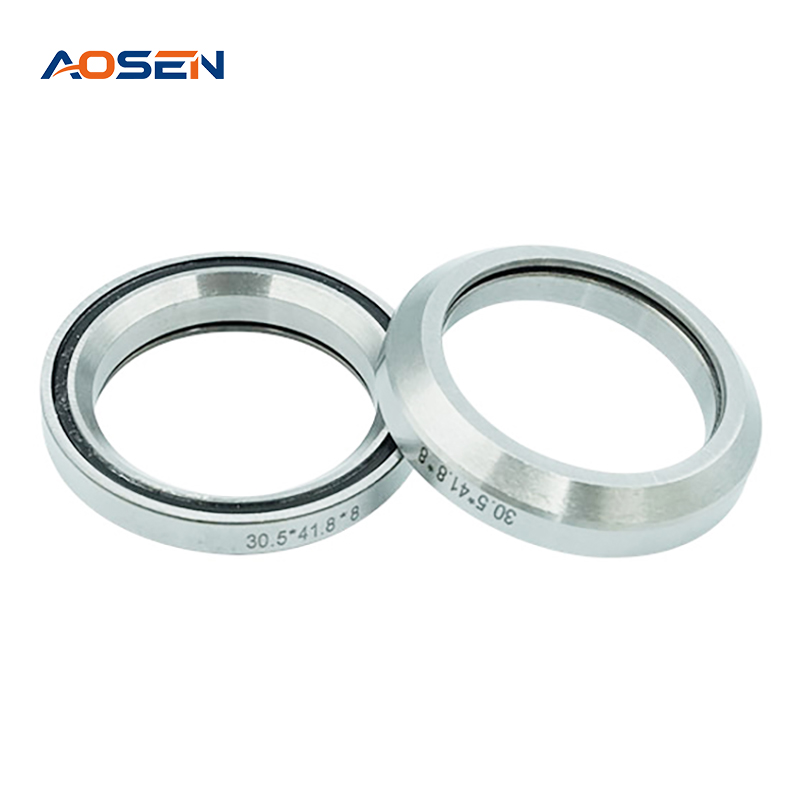
| Bearing seat angle |
36°/45°, 45°/45° |
Stamped on old bearing or frame spec sheet |
Using the wrong seat angle — say, a 36° bearing in a 45° cup — creates point contact instead of full-race contact, and the bearing will develop pitting within a few hundred miles.
Tools and Materials You'll Need
Having the right equipment before you start saves time and protects the frame. For most threadless installs, you won't need a workshop press — a headset press tool (around $30–$60) handles the job cleanly.
- Headset press (for cup-style headsets): a threaded rod with sized discs that draws cups in squarely
- Headset cup remover / punch: a stepped drift that knocks old cups out without damaging the head tube
- Star nut setter (for threadless steerers): drives the star nut to the correct depth, typically 15–20 mm below the steerer top
- Torque wrench: stem bolts typically require 5–6 Nm; top cap bolt 4–5 Nm
- Bearing grease: a waterproof, medium-weight grease such as Phil Wood or Park Tool PolyLube 1000
- Degreaser and clean rags: to remove old grease and inspect races for pitting
- Vernier calipers: to confirm bearing dimensions before pressing
If you're working with an integrated headset — the type where bearings drop directly into the frame — no press is required at all, and the entire job can be done with only an Allen key and grease.
Step-by-Step: How to Install Bike Headset Bearings
The following sequence applies to a standard 1-1/8″ threadless headset, the most common setup on modern road, gravel, and mountain bikes. Adapt steps 3–5 for integrated or tapered systems as noted.
Step 1 — Strip the Front End Down
- Loosen the stem clamp bolts (typically two or four M5 bolts) and remove the stem from the steerer.
- Unscrew the top cap bolt and lift the cap off.
- Slide the fork down and out through the head tube, catching the bearings and any spacers as they fall free.
- Note the order: top bearing, top cover/seal, spacers, stem, top cap — in reverse for reassembly.
Step 2 — Remove Old Cups (External Cup Headsets Only)
Insert the headset cup remover from the opposite end and tap firmly with a mallet, alternating sides to keep the cup exiting evenly. Never use a standard punch directly against the cup edge — you risk deforming or scarring the head tube bore, which can cause the new cup to sit crooked.
For integrated headsets, there are no cups to remove. Simply wipe the bearing seats clean.
Step 3 — Inspect and Prep the Head Tube
Clean the inside of the head tube with degreaser. Run your finger around the bore — the surface should be smooth with no burrs, high spots, or corrosion. On steel frames, a thin coat of anti-corrosion grease on the bore extends cup life significantly. Carbon frames should be cleaned dry; grease can cause creaking between composite and metal.
Step 4 — Press in New Cups
Select the correct press discs — they must bear only on the outer edge of the cup, not on the bearing race itself. Thread the headset press rod through the head tube, seat both discs, and tighten the nut by hand first to align everything.
Then slowly tighten with a wrench, checking visually that both cups are advancing evenly. Stop pressing the moment each cup is fully flush or recessed to the correct depth — over-pressing distorts the cup and ruins the bearing seat angle. You'll feel a sudden increase in resistance when the cup bottoms out.
For integrated systems, skip this step entirely — the bearing simply drops into the frame recess.
Step 5 — Grease and Install the Bearings
Apply a thin film of waterproof grease to:
- The bearing cup race surface
- The crown race on the fork (the lower bearing seat)
- The outer edges of sealed cartridge bearings if used
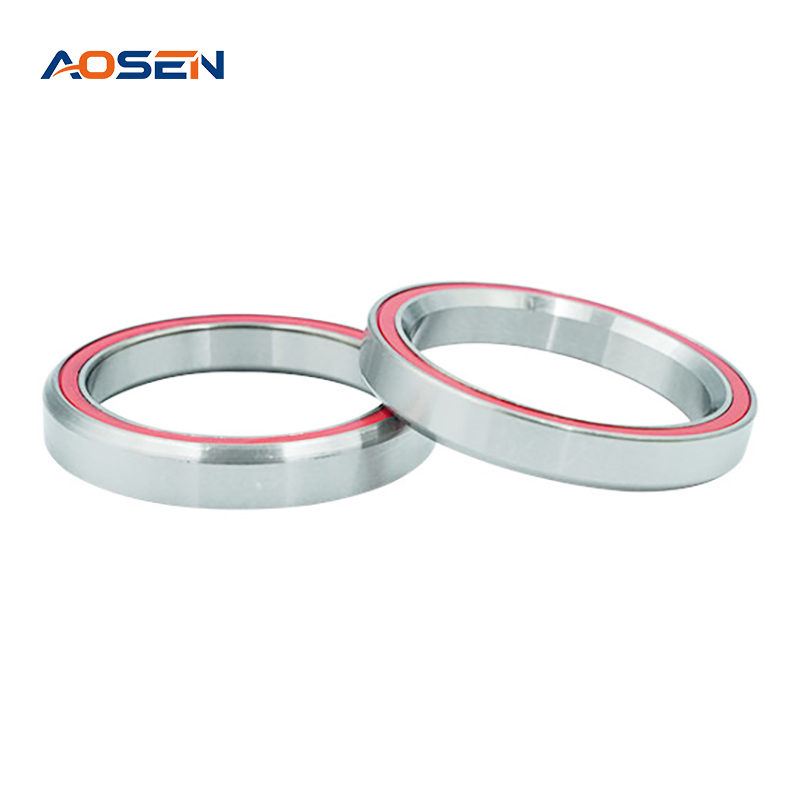
Loose ball bearings need grease packed into the retainer; sealed cartridge bike headset ball bearings already have internal grease and only need a light coat on the contact faces. Orient bearings so the sealed side faces outward (away from the frame) for better water resistance.
Step 6 — Reassemble the Fork and Steerer
Slide the fork back up through the head tube. Place the upper bearing, then any seals or covers, then spacers in your preferred stack height, then the stem. The stem must sit at least 2–3 mm below the top of the steerer — if the steerer is flush or lower than the stem, you cannot create proper preload.
Check that the star nut (if present) is seated correctly — use a star nut setter to drive it to 15 mm below the steerer top. If you're using an expander plug, finger-tighten it at this stage.
Step 7 — Set Bearing Preload and Check for Play
This is the most critical adjustment. Thread the top cap bolt in until you feel light resistance — roughly finger tight. Then:
- Align the stem with the front wheel.
- Apply the front brake and rock the bike forward and back. Any clunking or movement felt in the head tube means the preload is insufficient — tighten the top cap bolt by 1/8 turn increments and retest.
- Lift the front wheel and turn the bars left and right. The steering should glide with zero stiffness or notchiness. If it drags, the preload is too tight — back the top cap bolt off slightly.
- Once preload is correct, tighten the stem clamp bolts to the manufacturer's torque spec (typically 5–6 Nm for aluminum, 4–5 Nm for carbon). Tighten in a cross pattern if there are multiple bolts.
- Recheck for play — tightening the stem can subtly alter preload, so run the brake rock test one more time.
Installing a Crown Race on the Fork
The crown race is the lower bearing race that presses onto the fork crown. It's often overlooked but must be fully seated — a gap of even 0.5 mm can cause the lower bearing to run misaligned and fail quickly.
Use a crown race setter (a split collar that slides down the steerer) and tap it down firmly with a mallet. Alternatively, a spare length of PVC pipe of the right diameter works in a pinch. The race should sit flat with no visible gap between its underside and the fork crown surface.
Integrated headsets do not use a crown race — the lower bearing has its own shaped cup that seats against the fork crown directly.
Sealed Cartridge vs. Loose Ball Bearings: Which Should You Install?
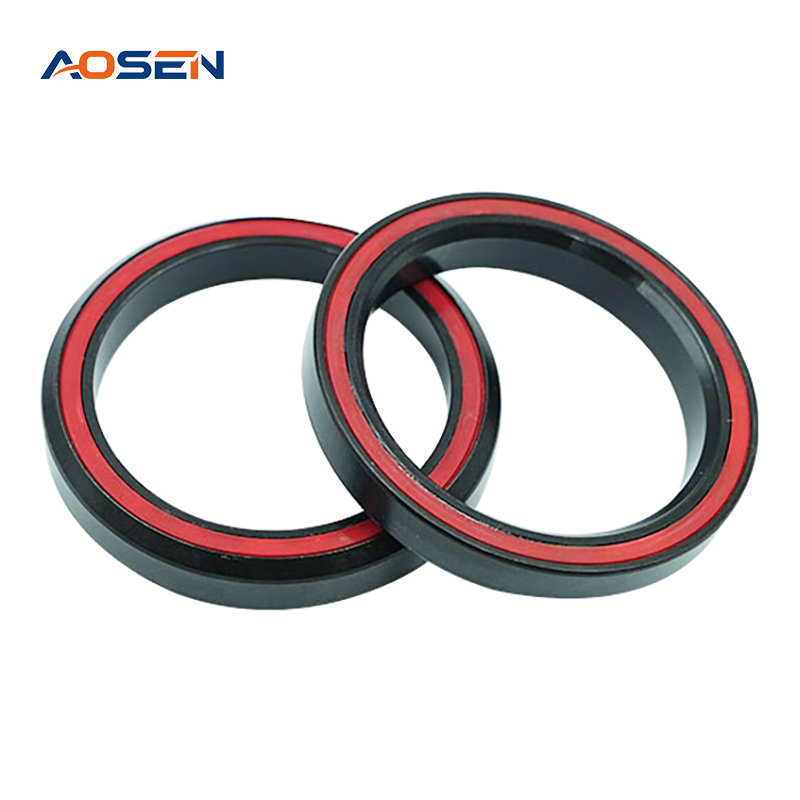
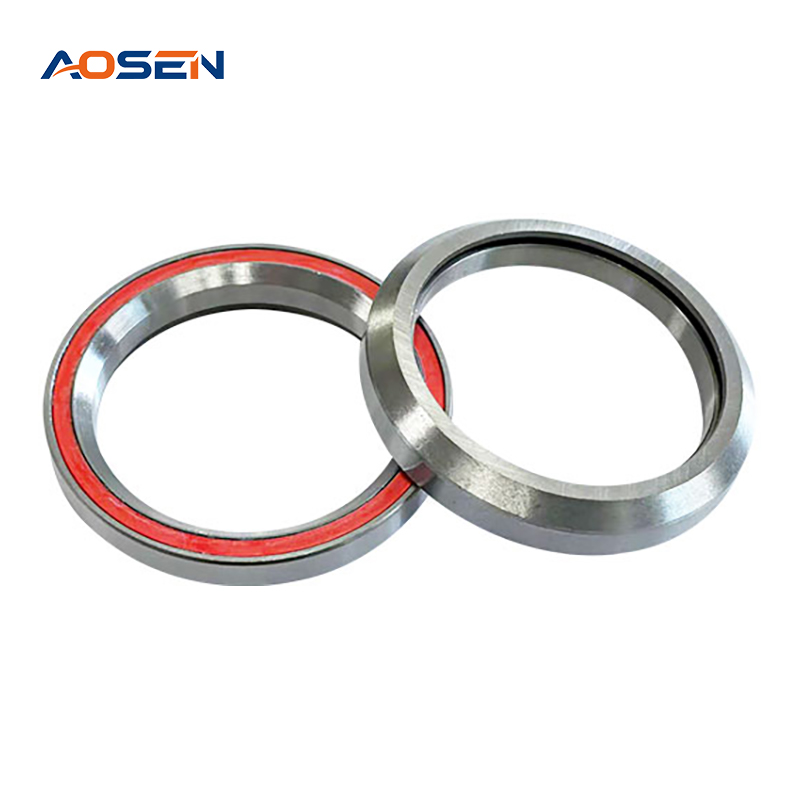
Most modern bicycle headset bearings are sealed cartridge units, and for good reason. Here's how they compare:
Table 2: Comparison of sealed cartridge vs. loose ball bicycle headset bearings
| Feature |
Sealed Cartridge |
Loose Ball (Cup-and-Cone) |
| Water resistance |
High (factory-sealed) |
Moderate (grease-dependent) |
| Rebuild / re-grease |
Usually not practical |
Fully rebuildable |
| Installation ease |
Very easy |
Moderate (ball placement) |
| Typical lifespan (road) |
10,000–20,000 km |
Variable; rebuildable indefinitely |
| Cost |
$8–$30 per bearing |
$15–$50 full set |
For wet-weather commuters and mountain bikers, sealed cartridges win on convenience and durability. For touring and vintage road bikes where long-term repairability matters, loose ball systems are still a sensible choice — but they require re-greasing every 3,000–5,000 km or annually, whichever comes first.
Common Installation Mistakes and How to Avoid Them
Even experienced mechanics encounter issues during headset bearing installation. These are the most frequently reported problems and their solutions:
Cups Pressed in at an Angle
Caused by starting the press without aligning the cup perpendicular to the bore. Prevention: start both cups by hand, then use the press tool to draw them in simultaneously, checking squareness every few turns.
Persistent Headset Play After Adjustment
The steerer top is flush with or below the stem top. If the steerer is at the same height as the top of your spacer/stem stack, there is no room for the top cap to apply downward preload. Cut the steerer shorter or reduce the spacer stack so the steerer protrudes 3–5 mm above the highest component.
Stiff Steering After Installation
Over-tightened top cap bolt is the usual cause. Loosen the stem bolts first, then back the top cap off by a quarter turn increments until steering flows freely, then re-tighten the stem bolts.
Creaking from the Headset
Often caused by inadequate grease on the crown race or the bearing contact faces. Disassemble, clean thoroughly, and re-grease all contact surfaces. On carbon steerers, a very thin application of carbon assembly compound at the stem interface eliminates most creaking without over-torquing the clamp.
Rapid Bearing Wear (Pitting Within 500 km)
Usually a seat angle mismatch (36° bearing in a 45° cup) or a cup that was pressed in crooked. Inspect the old bearing — if the wear track is a narrow line rather than a wide band, the bearing was running on a point contact. Replace with correctly specced bicycle headset bearings and ensure cups are square.
How to Tell When Bicycle Headset Bearings Need Replacing
Catching bearing wear early prevents damage to the frame's head tube and fork crown race. Watch for these signs:
- Clunking or clicking when braking: The classic sign of loose or pitted bearings. Rock the bike over the front brake — any movement in the head tube confirms play.
- Notchy steering: Spin the handlebars slowly with the front wheel lifted. Indexed detents — feeling like the bars want to snap to straight — indicate pitting on the bearing races from repeated impact loading.
- Rough or gritty rotation: Disassemble and spin a bearing between your fingers. It should rotate glassily. Any grinding or rough spots means replacement is overdue.
- Visible rust or contamination: Discolored grease or orange streaks when you pull the bearing out signal moisture ingress. Even if the bearing still feels smooth, replace it — rust begins to form on the races within days of water contamination.
As a general maintenance interval, inspect headset bearings every 5,000 km on road bikes and every 1,000–2,000 km on mountain bikes used in wet or muddy conditions. Sealed cartridge bike headset ball bearings in road use routinely last 15,000–20,000 km before needing replacement if kept clean and dry.
Tapered Head Tubes and Mixed-Standard Headsets
Many modern mountain bike and gravel frames use tapered head tubes: 1.5″ at the bottom and 1-1/8″ at the top. These require two different bearing sizes in the same headset — a larger lower bearing and a standard upper bearing. Buying a matched headset set from a single manufacturer eliminates the guesswork.
Some frames, particularly enduro and DH bikes, use oversized lower cups (56 mm or 62 mm) to accommodate super-oversized forks. If you're unsure of your frame's spec, photograph the old headset cups and search the part number, or contact the frame manufacturer directly — they typically publish headset compatibility charts.
Maintenance Tips to Extend Bearing Life
Proper installation is only part of the equation. How you maintain the headset after installation determines how long bicycle headset bearings actually last.
- Avoid directing a pressure washer at the headset. High-pressure water strips grease from sealed bearings faster than normal riding. Use a low-pressure hose or damp rag instead.
- Check preload every 3–6 months. Stems can loosen slightly over time and allow headset play to develop. The brake rock test takes five seconds and identifies the problem before any damage occurs.
- Re-grease loose ball systems annually. Disassemble, clean with degreaser, inspect races for pitting, and repack with fresh waterproof grease.
- Use rubber seals or dust covers. Many headset kits include rubber seals that sit between the bearing and the outside environment. Ensure these are correctly seated during reassembly.
- After crashes or hard impacts, inspect immediately. A single large impact — dropping the bike or a hard front-wheel landing — can create indentations in the bearing races. If steering feels notchy post-crash, pull the headset and check.

 Español

 +86-15990593443
 No. 558 Huancheng West Road, Zhouxiang Town, Cixi City, Ningbo Province, Zhejiang Province