
 Español
How to Measure a Bearing: Bore (ID), Outer Diameter (OD) and Width (W)
The motor drops out of the production line, and when the failed bearing is pulled from the housing, the stamped part number on the outer ring has worn away. In maintenance, this happens often, and the most reliable way to order the correct replacement is to measure the bearing directly. A standard ball bearing is completely defined by three dimensions: the inside diameter (ID or bore), the outside diameter (OD) and the width (W). Taking these three readings with a digital caliper gives you everything needed to identify the bearing, even when the original marking is gone.
Why ID, OD and Width Define a Bearing
Bearing sizes are written as ID x OD x W, all in millimetres. A typical 6203 deep groove ball bearing is 17 x 40 x 12 mm, meaning a 17 mm bore, a 40 mm outside diameter and a 12 mm width. Each dimension controls a different fit: the bore seats on the shaft, the outside diameter fits into the housing bore, and the width positions the bearing axially between shoulders, spacers or retaining rings. If any one of these values is wrong, the replacement will fail quickly. A tight bore is difficult to mount and distorts the rings, a loose OD lets the outer ring creep and spin in the housing, and an incorrect width prevents the bearing from being clamped or supported correctly.
Tools You Need Before Measuring
A digital caliper is the most practical tool for bearing measurement. A standard 150 mm (6 in) caliper covers the vast majority of deep groove ball bearing sizes used in machinery, and the digital display avoids the parallax errors that come with reading a vernier scale. Clean the bearing with a dry cloth before measuring, close the caliper jaws and confirm the display reads 0.00 mm, and work on a flat, well-lit surface.
- Digital caliper with a 150 mm (6 in) measuring range
- Micrometer for small bearings under about 10 mm OD
- Dry cloth to remove grease and loose particles
- Flat workbench with good lighting
Step 1: Measure the Inside Diameter (Bore)
Use the upper, smaller jaws of the caliper for the bore. Insert the jaws into the bearing hole, open them until they make light contact with the inner ring surface, and read the value. Take a second reading at about 90 degrees around the bore, because service wear can make the ring slightly out of round. Standard metric tolerances are a few hundredths of a millimetre; for example, a bore that measures between 16.99 mm and 17.04 mm is still a 17 mm bearing. If the two readings differ by more than about 0.02 mm, the bearing is worn or deformed, and the larger value should be compared with the actual shaft diameter.
Step 2: Measure the Outside Diameter
Use the larger jaws of the caliper for the outside diameter. Close them over the outer ring until they just touch the surface, then read the value. Do not squeeze hard, because thin outer rings deflect elastically and produce a false low reading. Rotate the caliper 90 degrees, measure again, and record the maximum value. The OD is the most critical dimension for installation: on small series bearings, a difference of 0.05 mm is enough to shift a housing fit from sliding to light interference.
Step 3: Measure the Width
Measure the width across the two faces of the outer ring, parallel to the bore axis, using the outer jaws of the caliper. Take readings at three or four points around the circumference, because edge wear is common on bearings that have run with contaminated lubricant. For open bearings, the measured width should match the catalogue value within a few hundredths of a millimetre. For shielded (ZZ) or sealed (2RS) bearings, the width across the metal rings is still the standard value, but a damaged seal that bulges outward will increase the reading. In that case, use the published width for the series rather than the deformed seal.
Turning Measurements Into a Bearing Number
Once you have the three measurements, match them against the standard metric series. The last two digits of a deep groove ball bearing number encode the bore: 00 means 10 mm, 01 means 12 mm, 02 means 15 mm, 03 means 17 mm, and for bores of 20 mm or larger, the code is the bore divided by 5. The digits before the bore code define the series, which sets the OD and width. The most common metric series are 6800, 6900, 6000, 6200 and 6300.
| Series | Example | Bore (ID) | Outside Diameter (OD) | Width |
|---|---|---|---|---|
| 6800 | 6800 | 10 mm | 19 mm | 5 mm |
| 6900 | 6900 | 10 mm | 22 mm | 6 mm |
| 6000 | 6000 | 10 mm | 26 mm | 8 mm |
| 6200 | 6200 | 10 mm | 30 mm | 9 mm |
| 6300 | 6300 | 10 mm | 35 mm | 11 mm |
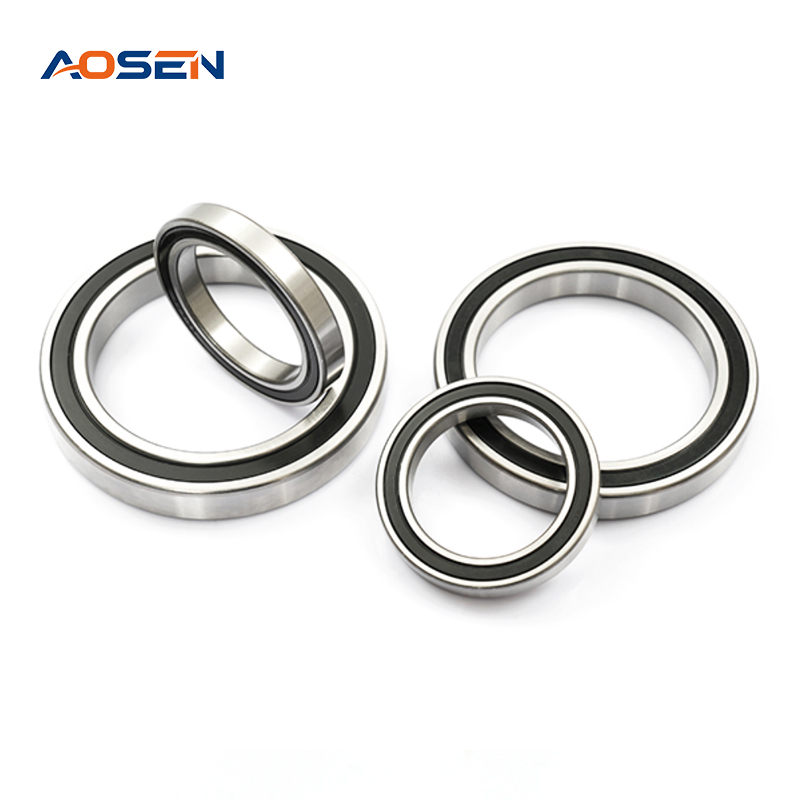
The table shows why all three dimensions are needed: a 10 mm bore exists in every series, and only the OD and width separate one series from another. A measured OD near 30 mm and a width near 9 mm put the bearing in the 6200 series, the most widely used series for electric motors and general industrial machinery. You can compare your measured values with the catalogue dimensions of the 6200 series deep groove ball bearings to confirm the exact part number.
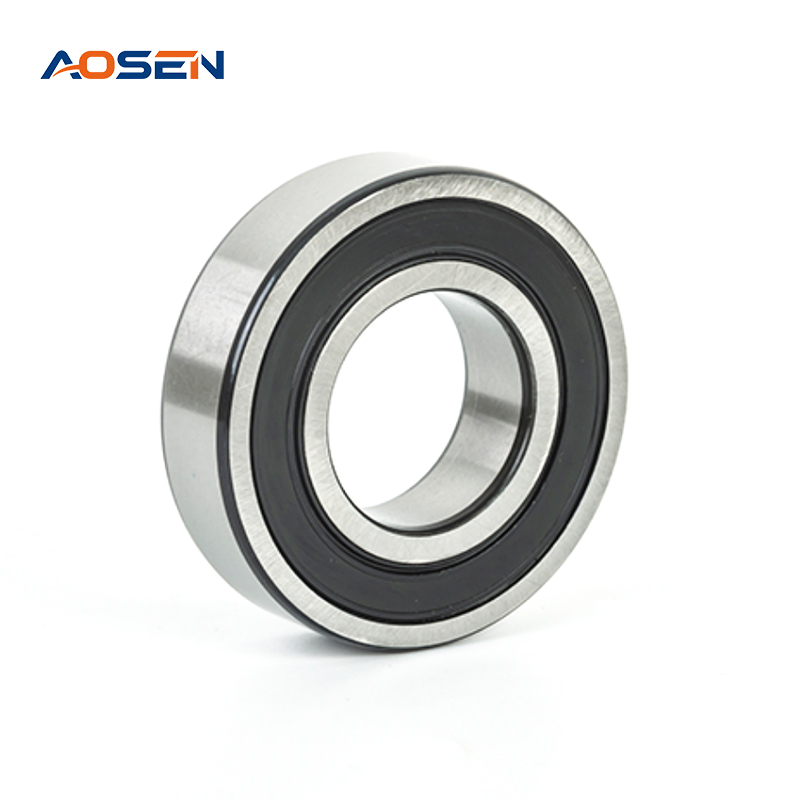 6200 ZZ/2RS Deep Groove Ball Bearings Manufacturers, SuppliersNingbo Aosen Bearing Co., Ltd. is China 6200 series deep groove ball bearing manufacturers and 6200zz bearings suppliers, we wholesale 62...View Product →
When the Markings Are Damaged
The stamped number on a bearing sits on a face of the outer ring, which is often the first surface destroyed by wear, corrosion or careless handling. When the marking is unreadable, cross-check the bearing against the parts that fit it: measure the shaft with the caliper to confirm the bore, and measure the housing bore to confirm the OD. The shaft and housing wear far less than the bearing, so they provide a dependable reference. If the bearing is still mounted, use the exposed outer ring face for the width and confirm the bore directly on the shaft.
Measuring Other Bearing Types
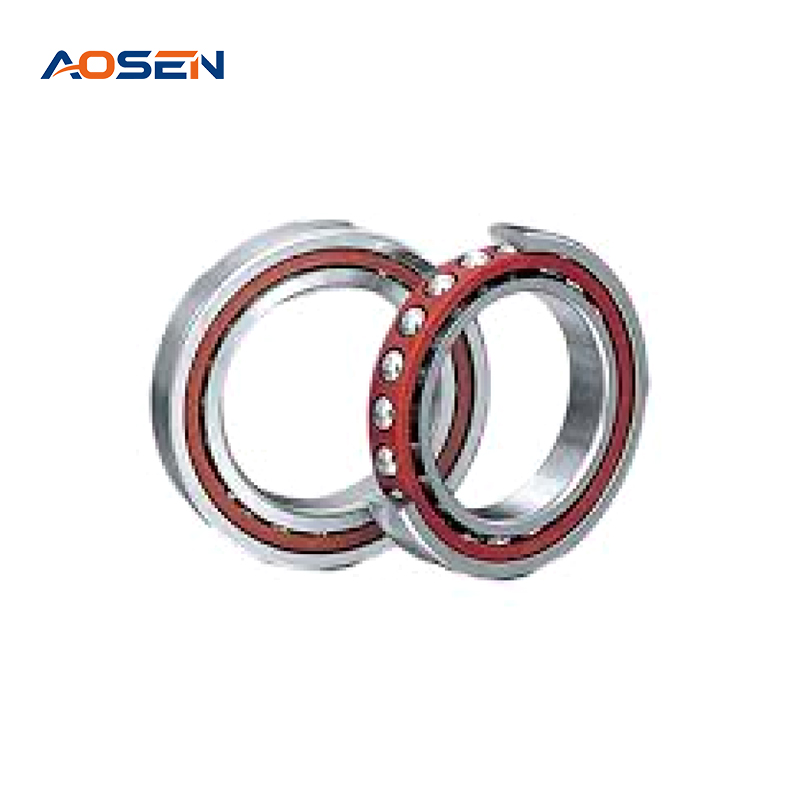
The same three dimensions apply to most radial ball bearings, but a few types need extra attention. Angular contact bearings, such as the 7000 series, are still specified by ID, OD and width, but their load rating depends on the contact angle, which cannot be measured with a caliper. The angle appears in the marking or in the component documentation, so a size measurement alone will not guarantee a correct replacement. You can confirm the size range of the 7000 series angular contact ball bearings and pair it with the original part number for the angle and cage design.
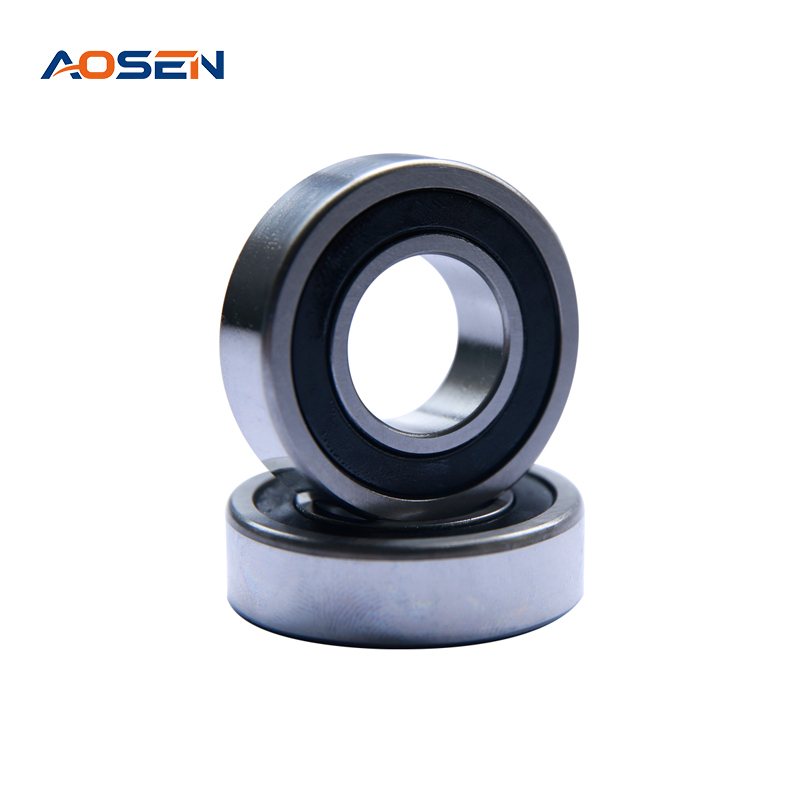 Wholesale 7000 Series Angular Contact Ball Bearings Exporter, Suppliers, FactoryNingbo Aosen Bearing Co., Ltd. is China wholesale 7000 Series Angular Contact Ball Bearings suppliers,exporter and bearings factory, The ...View Product →
Flange bearings follow a different convention. A flange bearing such as the SF623 has a flange on the outer ring, so it has two outside diameters: the outer ring OD and the larger flange OD. The flange diameter is not part of the standard bearing number and must be recorded separately when ordering a replacement.
Before You Order: Check Material and Seals
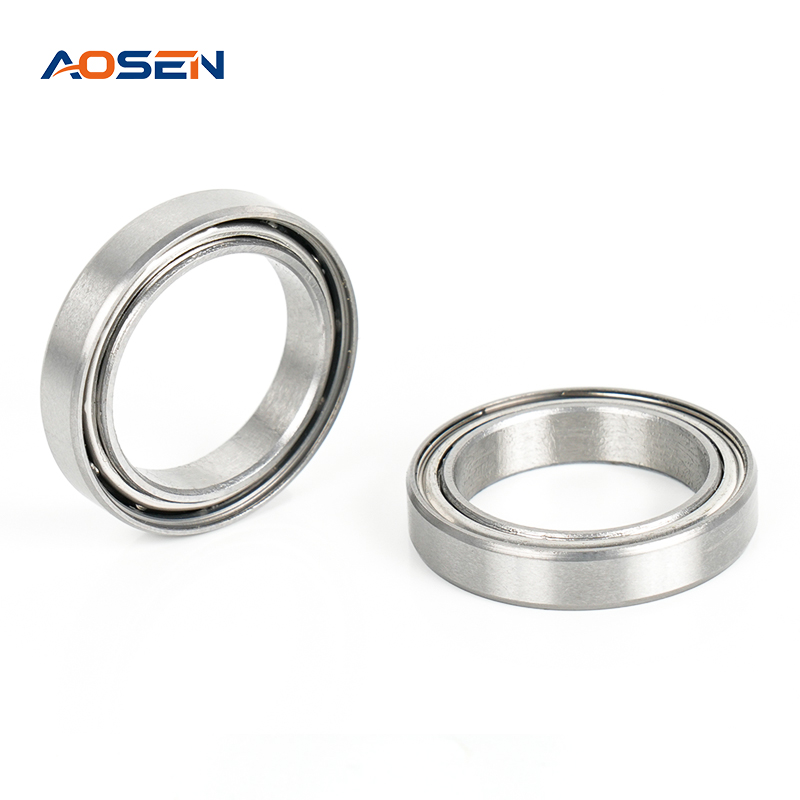
Identifying the size is only the first half of a correct replacement order. Bearings with the same ID, OD and width are manufactured in chrome steel and stainless steel, with metal shields (ZZ), with rubber seals (2RS), and with different internal clearances. Chrome steel suits clean, dry industrial environments, while stainless steel is the safer choice for chemical, food, marine or water-treatment applications, where corrosion attacks the raceways long before normal fatigue would. If the measured size belongs to the 6200 series and you need corrosion resistance, an SS 6200 stainless steel deep groove ball bearing in the same dimensions is the direct equivalent. For a broader view, the guide to deep groove ball bearing types and stainless steel selection explains how material and seal choices affect service life, and the application pages list the industries that normally require corrosion-resistant bearings.
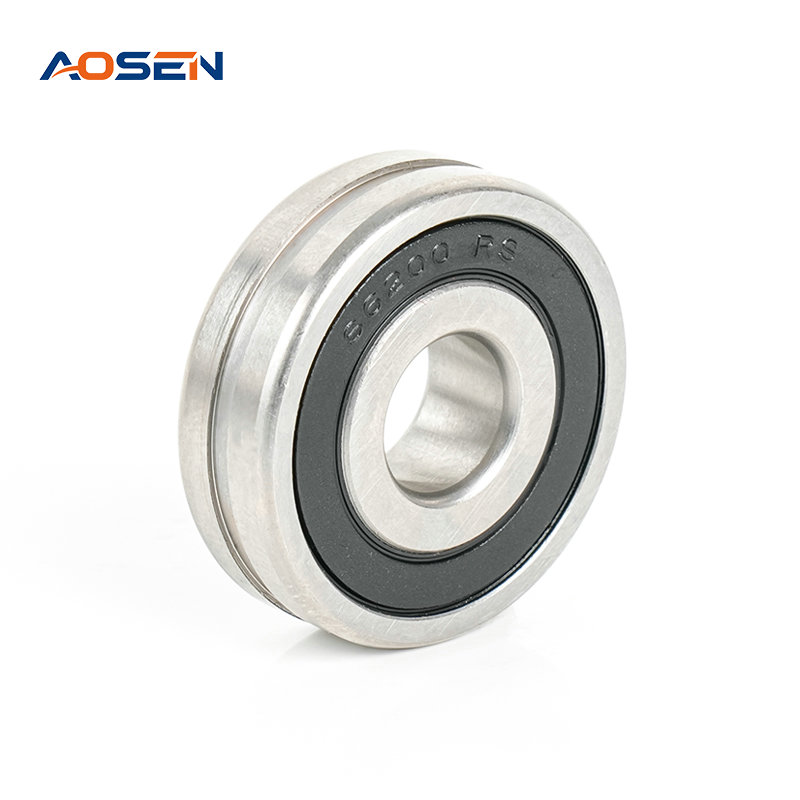 Wholesale SS 6200 ZZ/2RS stainless steel deep groove ball bearings Exporter, SupNingbo Aosen Bearing Co., Ltd. is China wholesale SS 6200 ZZ/2RS stainless steel deep groove ball bearings suppliers,exporter and bearing...View Product →
Measuring a bearing is straightforward once you have the correct tools: measure the bore, the outside diameter and the width, take more than one reading for each value, and compare the results against the standard series tables. Those three numbers, together with the right material and seal choice, are all you need to specify a replacement with confidence.

-

-
 +86-15990593443
 -
 No. 558 Huancheng West Road, Zhouxiang Town, Cixi City, Ningbo Province, Zhejiang Province

- Quick Links
- Product Categories
- Deep Groove Ball Bearings
- Stainless Steel Deep Groove Ball Bearings
- Angular Contact Ball Bearings
- Flange Bearings

Message Us Now !