
- Home
- Products
- Deep Groove Ball Bearings
- Stainless Steel Deep Groove Ball Bearings
- SS 6000 Series Stainless Steel Deep Groove Ball Bearings
- SS 6200 Series Stainless Steel Deep Groove Ball Bearings
- SS 6300 Series Stainless Steel Deep Groove Ball Bearings
- SS 6700 Series Stainless Steel Deep Groove Ball Bearings
- SS 6800 Series Stainless Steel Deep Groove Ball Bearings
- SS 6900 Series Stainless Steel Deep Groove Ball Bearings
- Angular Contact Ball Bearings
- Flange Bearings
- Bicycle Headset Bearings
- About Us
- Application
- News
- Contact Us

 Español
Menu
- Home
- Products
- Deep Groove Ball Bearings
- Stainless Steel Deep Groove Ball Bearings
- SS 6000 Series Stainless Steel Deep Groove Ball Bearings
- SS 6200 Series Stainless Steel Deep Groove Ball Bearings
- SS 6300 Series Stainless Steel Deep Groove Ball Bearings
- SS 6700 Series Stainless Steel Deep Groove Ball Bearings
- SS 6800 Series Stainless Steel Deep Groove Ball Bearings
- SS 6900 Series Stainless Steel Deep Groove Ball Bearings
- Angular Contact Ball Bearings
- Flange Bearings
- Bicycle Headset Bearings
- About Us
- Application
- News
- Contact Us
Industry News
Home / News / Industry News / Deep Groove Ball Bearing: Types, Uses & Stainless Steel Guide
Deep Groove Ball Bearing: Types, Uses & Stainless Steel Guide
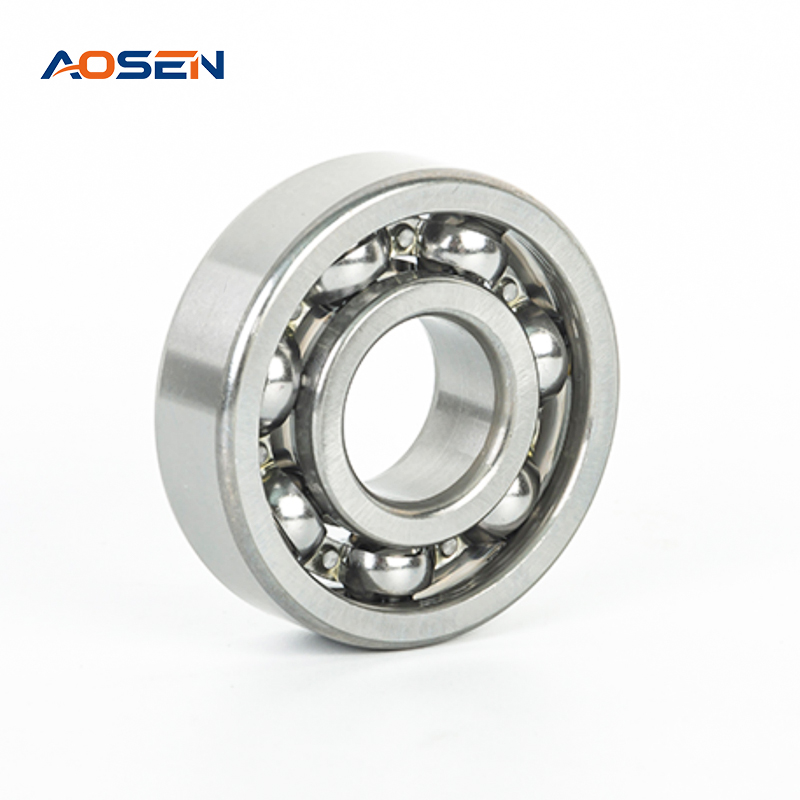
A deep groove ball bearing is a rolling element bearing characterized by deep raceway grooves on both the inner and outer rings, allowing it to accommodate radial loads as well as moderate axial (thrust) loads in both directions. It is the most widely used bearing type in the world, accounting for roughly 70–80% of all ball bearings produced globally. Whether found in electric motors, household appliances, automotive components, or industrial machinery, the deep groove ball bearing delivers outstanding performance across a vast range of applications — and when made from stainless steel, it extends that performance into corrosive, hygienic, or high-moisture environments.
This article explains what deep groove ball bearings are, how they work, what differentiates stainless steel variants, and how to select, install, and maintain them for maximum service life.
What Is a Deep Groove Ball Bearing?
The term "deep groove" refers to the depth of the raceway — the curved channel machined into both the inner and outer rings. Compared to a shallow-groove or angular contact bearing, a deep groove ball bearing has a raceway radius of approximately 51.5–53% of the ball diameter, providing a larger contact area and enabling the bearing to handle both radial and bi-directional axial loads without requiring paired mounting arrangements.
The fundamental components are:
- Inner ring — fits on the rotating shaft
- Outer ring — fits in the housing
- Steel balls — roll between the rings, transmitting load
- Cage (retainer) — keeps balls evenly spaced to prevent contact and reduce friction
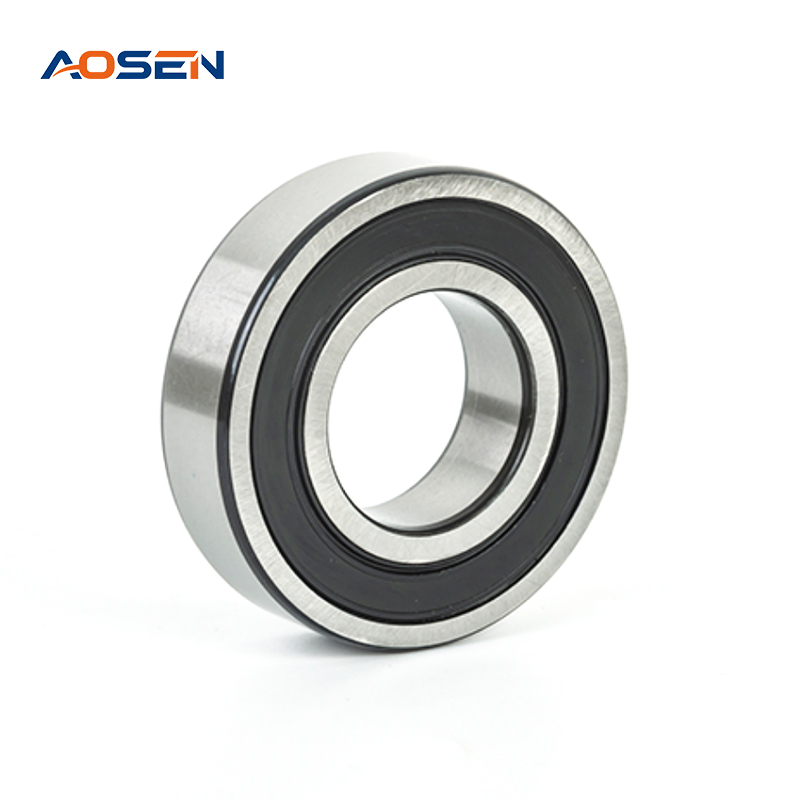
- Seals or shields (optional) — protect internal components from contamination and retain lubricant
The international standard governing deep groove ball bearings is ISO 15:2017 (radial internal clearance) and the dimensional series follows ISO 355 and ABMA standards. The most common series are 6000, 6200, 6300, and 6400, where the first digit indicates the series and the following digits indicate the bore size.
Nomenclature Example
Take the bearing designation 6205-2RS1:
- 6 — deep groove ball bearing
- 2 — medium (200) series (wider section than 6000 series)
- 05 — bore diameter: 05 × 5 = 25 mm
- 2RS1 — two rubber contact seals, one on each side
How Deep Groove Ball Bearings Work: The Engineering Principle
When a shaft rotates inside a machine, it generates radial forces (perpendicular to the shaft axis) and often axial forces (parallel to the shaft axis). A deep groove ball bearing reduces friction at the interface between the rotating and stationary components by replacing sliding contact with rolling contact.
The balls make point contact with the raceways under no load. As load increases, elastic deformation creates an elliptical contact patch (Hertzian contact). The deep groove geometry means the contact angle under axial load can shift to approximately 35°–45°, which is why these bearings handle thrust loads reasonably well — typically up to 50% of the static radial load rating (C₀).
Friction and Efficiency
Rolling friction is far lower than sliding friction. A well-lubricated deep groove ball bearing has a coefficient of friction of approximately 0.001–0.0015, compared to 0.08–0.12 for plain (sleeve) bearings. This translates directly into energy savings — in large-scale applications such as electric motors, switching from plain bearings to deep groove ball bearings can reduce friction losses by up to 80%.
Load Ratings and Life Calculation
Bearing life is calculated using the L10 life formula (ISO 281), which predicts the number of revolutions that 90% of a group of identical bearings will complete or exceed before the first signs of fatigue:
L10 = (C / P)³ × 10⁶ revolutions
Where C is the dynamic load rating (kN) and P is the equivalent dynamic bearing load (kN). For example, a 6205 bearing has a dynamic load rating C of approximately 14.0 kN and a static load rating C₀ of 6.95 kN. Running at a load of 3 kN, the L10 life would be:
L10 = (14.0 / 3.0)³ × 10⁶ ≈ 101 million revolutions
At 1,000 RPM, this equals roughly 1,683 operating hours — before any advanced life modification factors are applied.
Types and Variants of Deep Groove Ball Bearings
Deep groove ball bearings come in numerous configurations to suit different application requirements. Understanding these variants is essential for correct specification.
Open, Shielded, and Sealed Variants
| Configuration | Suffix | Description | Best For |
|---|---|---|---|
| Open | (none) | No protection; lowest friction | Clean, re-lubricatable systems |
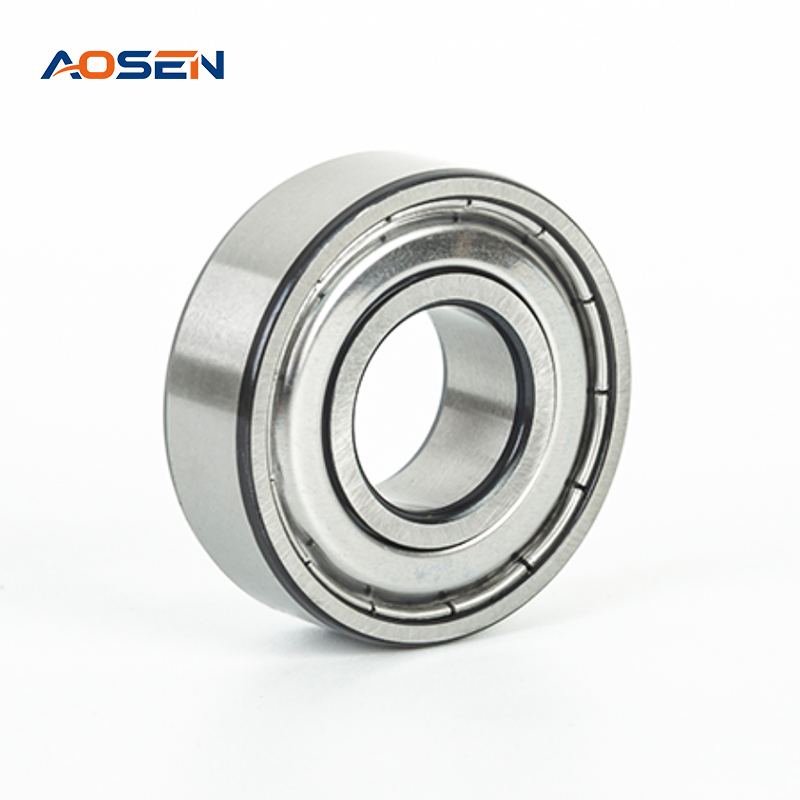
| Metal Shielded | Z / ZZ | Non-contact metal shield; low friction, partial contamination protection | Moderate-speed, dusty environments |
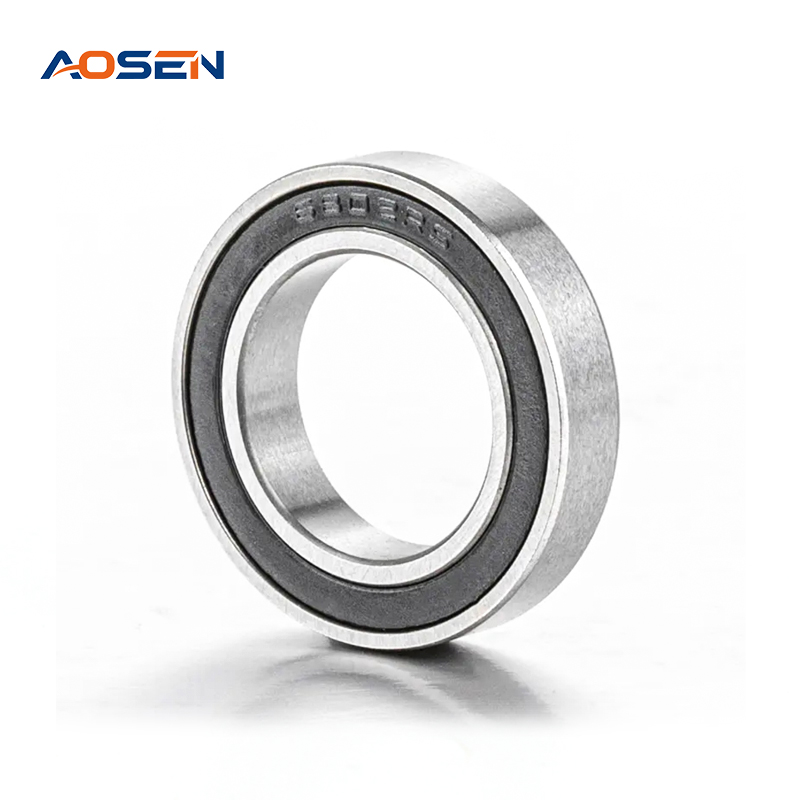
| Rubber Sealed | RS / 2RS | Contact rubber seal; highest contamination protection, slightly higher friction | Wet, dirty, food/pharma applications |
| PTFE Sealed | 2RSL | Low-friction contact seal; suitable for higher speeds than standard rubber seal | High-speed sealed applications |
Single-Row vs. Double-Row
The standard deep groove ball bearing is a single-row design. Double-row variants (e.g., 4200 series) accommodate heavier radial loads or combined loads where a wider bearing footprint is acceptable. Double-row bearings have approximately 40–60% higher radial load capacity than comparable single-row bearings of the same outer diameter.
Miniature and Thin-Section Bearings
Miniature deep groove ball bearings (bore diameters from 1 mm to 9 mm) are used in precision instruments, medical devices, dental handpieces, and micro-motors. Thin-section bearings maintain a constant cross-section regardless of bore diameter, enabling compact design in robotics, semiconductor equipment, and aerospace actuators.
Snap Ring and Flanged Configurations
Bearings with a snap ring groove (suffix N) on the outer ring allow axial location in the housing without requiring a shoulder, simplifying housing design. Flanged bearings (suffix F) have a flange on the outer ring for mounting on flat surfaces, common in conveyor systems and agricultural equipment.
Stainless Steel Deep Groove Ball Bearings: Properties and Advantages
A stainless steel deep groove ball bearing uses stainless steel for the rings and balls, offering corrosion resistance far beyond standard chrome steel (52100 / GCr15) bearings. This makes them indispensable in environments where moisture, chemicals, saline solutions, or hygiene standards preclude the use of standard carbon steel bearings.
Common Stainless Steel Grades Used
| Grade | Designation | Cr Content | Key Properties | Typical Use |
|---|---|---|---|---|
| AISI 440C | X105CrMo17 | 16–18% | Highest hardness (~58–62 HRC), good corrosion resistance | Most standard SS bearings; food, marine, medical |
| AISI 316 | X5CrNiMo17-12-2 | 16–18% | Excellent chemical resistance (Mo), lower hardness (~25 HRC) | Aggressive chemical environments, pharma |
| AISI 304 | X5CrNi18-10 | 18–20% | Good general corrosion resistance, economical | Housing components, cages; rarely for rings/balls |
| 17-4PH | X5CrNiCuNb16-4 | 15–17% | Precipitation hardened; high strength + corrosion resistance | Aerospace, high-load corrosive environments |
AISI 440C: The Gold Standard for Bearing Rings and Balls
AISI 440C stainless steel is by far the most common material for stainless steel deep groove ball bearing rings and rolling elements. With a carbon content of 0.95–1.20% and chromium content of 16–18%, it achieves hardness levels of 58–62 HRC after heat treatment — approaching the hardness of standard 52100 chrome steel (60–64 HRC). This makes it capable of carrying significant loads while providing excellent resistance to atmospheric corrosion, fresh water, mild acids, and steam.
However, 440C has limitations in chloride-rich environments (e.g., seawater or concentrated hydrochloric acid), where austenitic grades like AISI 316 — though softer — provide better resistance due to their molybdenum content.
Load Capacity Comparison: Stainless vs. Chrome Steel
A key engineering consideration is that stainless steel bearings have approximately 20–30% lower load ratings than equivalent-sized chrome steel bearings. This is because 440C, despite its high hardness, is slightly less hard and has lower fatigue strength than 52100 steel. For example:
- Chrome steel 6205 (25mm bore): Dynamic C = 14.0 kN
- Stainless steel 6205 (25mm bore): Dynamic C ≈ 10.2–11.0 kN
Engineers specifying stainless steel deep groove ball bearings in load-critical applications should upsize by at least one bearing size to compensate for the reduced load rating, or apply an appropriate derating factor during L10 life calculations.
Key Applications of Deep Groove Ball Bearings
The versatility of deep groove ball bearings has made them ubiquitous across virtually every industry. Below are the major application sectors and specific use cases.
Electric Motors and Generators
Electric motors are the single largest consumer of deep groove ball bearings globally. Over 90% of electric motors use deep groove ball bearings as the primary rotor support. In AC induction motors from 0.1 kW to several hundred kW, bearings at the drive end (DE) and non-drive end (NDE) must handle radial loads from belt tension and axial loads from thermal expansion. The 6200 and 6300 series are particularly common in fractional and integral horsepower motors.
Automotive Industry
A single passenger vehicle contains 100–150 ball bearings of various types. Deep groove ball bearings appear in:
- Alternators and starter motors
- Power steering pumps
- Air conditioning compressors
- Transmission idler pulleys
- Electric vehicle traction motors (often high-speed, requiring precision class P5 or P4 bearings)
Food Processing and Pharmaceutical Equipment
Stainless steel deep groove ball bearings dominate this sector. FDA 21 CFR and EU 10/2011 compliance requirements, frequent washdowns with aggressive cleaning agents, and the risk of product contamination rule out chrome steel. Common applications include:
- Conveyor systems in meat, dairy, and bakery production
- Pumps handling sauces, beverages, and pharmaceutical fluids
- Mixers and blenders
- Packaging and bottling machinery
- Tablet press machines in pharmaceutical manufacturing
In these applications, bearings are often supplied pre-lubricated with food-grade grease (H1 classification under NSF/ANSI 51) and fitted with FDA-compliant PTFE or silicone seals.
Marine and Offshore Applications
Salt spray, seawater immersion, and high humidity create an extremely hostile environment for standard chrome steel bearings, which can rust within hours of exposure. Stainless steel deep groove ball bearings — ideally in AISI 316 for high chloride resistance — are used in deck winches, marine pumps, fishing equipment, and navigation instruments where corrosion is an ongoing threat.
Medical and Dental Equipment
Dental handpieces require miniature deep groove ball bearings (bore diameters as small as 2–4 mm) that operate at speeds of 300,000–500,000 RPM while being sterilized via autoclaving at 134°C and 2.1 bar pressure repeatedly. Stainless steel bearings with ceramic balls (silicon nitride, Si₃N₄) have largely replaced all-steel versions in high-speed dental applications because ceramic balls have lower density (40% lighter than steel), producing less centrifugal force and lower heat generation at extreme speeds.
Household Appliances and Power Tools
Washing machines, vacuum cleaners, electric fans, power drills, and angle grinders all rely on deep groove ball bearings. The global home appliance market uses billions of bearings per year, with the 6000 and 6200 series dominating due to their compact dimensions and low cost. In washing machines alone, the drum bearing (typically a 6305 or 6306 sealed unit) must survive 10,000–15,000 operating hours under combined radial and axial loads from the drum's eccentric motion.
Bearing Series and Dimensional Standards
Deep groove ball bearings are produced in standardized dimensional series that allow interchangeability between manufacturers worldwide. The series is defined by the relationship between bore diameter, outer diameter, and width.
| Series | ISO Width Series | Bore Range (mm) | Characteristics |
|---|---|---|---|
| 6000 | 0 (Extra Light) | 10–150 | Smallest OD for given bore; lightest; low load capacity |
| 6200 | 2 (Light) | 10–150 | Most common general-purpose series; good balance of size and load |
| 6300 | 3 (Medium) | 10–150 | Higher load capacity than 6200; larger OD and wider section |
| 6400 | 4 (Heavy) | 20–100 | Highest load capacity; large OD; heavy applications |
| 600 | — | 1–9 | Miniature series; instruments and precision devices |
The 6200 series is the most universally specified series, striking an ideal balance between compactness, load capacity, and cost. Within each series, bore sizes follow a standardized code: bores from 20 mm upward have a bore code equal to the bore diameter divided by 5 (e.g., bore code 05 = 25 mm). Below 20 mm, manufacturers use specific codes (00 = 10 mm, 01 = 12 mm, 02 = 15 mm, 03 = 17 mm).
Precision Classes and Tolerance Grades
Bearing precision affects running accuracy, vibration, and noise. Deep groove ball bearings are manufactured to tolerance grades defined by ISO 492 and ABMA standards. The standard precision classes, from normal to ultra-precision, are:
- P0 (Normal / CN) — Standard commercial grade; suitable for most general applications; running accuracy within 15–30 µm
- P6 (Class 6) — Higher precision; used in machine tool spindles and precision electric motors; accuracy within 8–15 µm
- P5 (Class 5) — Very high precision; required for CNC spindles and precision instruments; accuracy within 5–10 µm
- P4 (Class 4) — Ultra-high precision; grinding machine spindles, high-frequency motors; accuracy within 3–5 µm
- P2 (Class 2) — The highest commercial precision; gyroscopes, precision instrument spindles; accuracy within 1–2.5 µm
For most industrial applications, P0 (Normal) grade is entirely adequate. Specifying higher precision grades significantly increases cost — a P4 bearing can cost 5–10 times more than the same bearing in P0 grade — so precision class should only be elevated when the application genuinely demands it.
Lubrication: The Foundation of Long Bearing Life
Lubrication failures account for approximately 36% of all premature bearing failures (according to SKF and NSK field studies), making it the single most critical maintenance parameter for deep groove ball bearings. Proper lubrication forms an elastohydrodynamic (EHD) film between the rolling elements and raceways, preventing metal-to-metal contact, reducing friction, dissipating heat, and inhibiting corrosion.
Grease vs. Oil Lubrication
Grease is used in approximately 90% of deep groove ball bearing applications because it is self-contained, requires no circulation system, and adheres to the bearing surfaces even during start-stop cycling. Modern polyurea or lithium complex greases provide excellent performance across temperatures of -40°C to +180°C. Sealed and shielded bearings are typically factory-filled with 25–35% of their internal free space volume with grease — overfilling causes churning, heat buildup, and accelerated seal wear.
Oil lubrication (bath, splash, jet, or mist) is preferred for very high speeds (where grease churning becomes problematic), high temperatures, or where heat removal is critical. The oil viscosity at operating temperature should meet the bearing's minimum required kinematic viscosity ν₁ for adequate EHD film thickness (typically 7–15 mm²/s at operating temperature for medium-speed applications).
Relubrication Intervals
For open bearings, the grease relubrication interval can be calculated using SKF's or FAG's published algorithms, which account for bearing size, speed, temperature, and grease type. As a general guideline:
- A 6205 bearing running at 1,000 RPM at 70°C with a standard lithium grease: relubrication interval ≈ 8,000–10,000 hours
- At 3,000 RPM and 90°C: interval drops to approximately 2,000–3,000 hours
- At 100°C or above: interval is halved for every additional 15°C of temperature rise
Special Lubricants for Stainless Steel Bearings
In corrosive environments where stainless steel deep groove ball bearings are used, the lubricant must also be corrosion-inhibiting and chemically compatible with process fluids. Key options include:
- Food-grade H1 greases (e.g., NSF-listed white mineral oil base with polyurea thickener): mandatory in direct food contact zones
- PFPE (perfluoropolyether) greases: for aggressive chemical environments where hydrocarbon-based greases would degrade
- Corrosion-inhibited synthetic greases: for marine or outdoor applications with stainless steel bearings
Installation Best Practices for Deep Groove Ball Bearings
Incorrect installation is responsible for 16% of premature bearing failures. Following correct mounting procedures is as important as selecting the right bearing.
Fit Selection: Shaft and Housing Tolerances
Deep groove ball bearings are interference-fit on the rotating ring and clearance-fit on the stationary ring. For a shaft-mounted inner ring with normal radial loads:
- Inner ring (rotating load): shaft tolerance typically js5, k5, or m5 (light to heavy interference depending on load)
- Outer ring (stationary load): housing tolerance typically H7 or J7 (clearance to slight interference)
A loose fit on the rotating ring causes fretting corrosion (creep marks on the shaft) within a few thousand hours; an excessive interference fit on the stationary ring eliminates internal clearance and generates dangerous preload. Measuring shaft diameter with a micrometer to ±0.001 mm before mounting is essential.
Mounting Methods
- Cold pressing: Use a bearing fitting tool (sleeve) that contacts only the ring being press-fitted. Never strike the outer ring to mount the inner ring — this transmits impact loads through the balls, causing brinelling (indentations) on the raceways.
- Thermal mounting (induction heating): Heating the bearing to 80–100°C (never exceeding 120°C for standard bearings, or 125°C for bearings with rubber seals) expands the bore for easy sliding onto the shaft. Induction heaters are preferred over oil bath heating to avoid contamination and uncontrolled temperature.
- Hydraulic mounting: Used for large bearings; oil is injected under pressure into the fit to reduce friction during mounting/dismounting.
Internal Clearance Adjustment
Internal clearance (the total movement of one ring relative to the other in the radial direction under zero load) must be appropriate for the application. Standard radial internal clearance groups are:
- C2: Below normal clearance — for precision spindles with controlled preload
- CN (Normal): For general applications at room temperature
- C3: Greater than normal — for applications with temperature differentials between rings, or heavy interference fits
- C4, C5: For applications with large temperature gradients or heavy external heating
The interference fit required to secure the inner ring on the shaft reduces internal clearance. For example, a 6205 bearing in CN clearance has a radial clearance of 5–20 µm. After pressing onto a shaft with a k5 tolerance (interference of ~5 µm), operating clearance drops to approximately 3–15 µm — still adequate for normal operation.
Failure Modes and Condition Monitoring
Understanding how deep groove ball bearings fail enables proactive maintenance and prevents costly unplanned downtime.
Common Failure Modes
| Failure Mode | Visual Signs | Root Cause | Prevalence |
|---|---|---|---|
| Fatigue Spalling | Pitting and flaking on raceways | End of service life; overload | 34% |
| Lubrication Failure | Smearing, adhesive wear, discoloration | Insufficient grease, wrong lubricant, contamination | 36% |
| Contamination | Abrasive wear scratches, rust spots | Inadequate sealing, ingress of particles or moisture | 14% |
| Misalignment | Abnormal wear pattern on raceway (one side) | Shaft deflection, housing bore misalignment | 10% |
| Improper Installation | Brinell marks, fretting corrosion | Incorrect mounting forces, wrong fit | 16% |
Vibration Analysis and Condition Monitoring
Vibration analysis is the most effective condition monitoring technique for deep groove ball bearings. Each failure mode generates characteristic vibration frequencies related to the bearing's geometry:
- BPFO (Ball Pass Frequency, Outer race): Defect on outer ring raceway
- BPFI (Ball Pass Frequency, Inner race): Defect on inner ring raceway
- BSF (Ball Spin Frequency): Defect on rolling element surface
- FTF (Fundamental Train Frequency): Cage defect or uneven ball spacing
Modern vibration analyzers can identify bearing defects when the defect is still sub-millimeter in size, providing advance warning of weeks to months before catastrophic failure. Ultrasound monitoring (SDT, UE Systems) is complementary, detecting early-stage lubrication issues through changes in ultrasound emission levels.
Selecting the Right Deep Groove Ball Bearing: A Step-by-Step Approach
Correct bearing selection requires a systematic approach that considers load, speed, environment, required life, and installation constraints. Here is a practical selection framework:
Step 1: Define the Load
Calculate the equivalent dynamic bearing load P using:
P = X·Fr + Y·Fa
Where Fr is radial load, Fa is axial load, and X, Y are load factors from the bearing manufacturer's catalog. For deep groove ball bearings, when Fa/Fr ≤ e (the axial load factor), X = 1 and Y = 0 (pure radial load). When Fa/Fr > e, X and Y depend on the Fa/C₀ ratio.
Step 2: Determine Required Life
Establish the minimum acceptable L10 life in hours based on application category:
- Household appliances: 1,000–5,000 hours
- Industrial electric motors: 20,000–30,000 hours
- Continuous industrial machinery: 40,000–50,000 hours
- Critical machinery (offshore, power generation): 100,000+ hours
Step 3: Calculate Required Dynamic Load Rating C
Rearranging the L10 formula:
C = P × (L10h × n × 60 / 10⁶)^(1/3)
Where L10h is required life in hours and n is rotational speed in RPM. Select from the catalog a bearing with C ≥ calculated value.
Step 4: Check Speed Rating
Verify the operating speed does not exceed the bearing's reference speed (for grease-lubricated) or limiting speed (for oil-lubricated). The ndm value (product of speed in RPM and mean bearing diameter in mm) is a useful speed parameter — for deep groove ball bearings with standard grease, ndm typically should not exceed 500,000–1,000,000 mm·rpm.
Step 5: Choose Material (Standard vs. Stainless Steel)
If the environment involves moisture, corrosive chemicals, washdowns, or hygienic requirements, specify a stainless steel deep groove ball bearing. Apply the load derating factor (~0.7–0.8 on dynamic capacity) when calculating stainless steel bearing life. For the highest corrosion resistance in chloride environments, specify AISI 316 rings or consider ceramic ball upgrades (hybrid bearing).
Step 6: Specify Sealing, Clearance, and Precision
Complete the specification by selecting the appropriate suffix for seals/shields (2RS for contaminated environments, ZZ for moderate dust), internal clearance (C3 for high-temperature or heavy-interference applications), and precision class (P5 or P4 only when running accuracy truly demands it).
Advanced Variants: Hybrid and Ceramic Deep Groove Ball Bearings
Hybrid deep groove ball bearings use steel rings combined with ceramic (silicon nitride, Si₃N₄) rolling elements. These represent the frontier of bearing technology in applications demanding extreme speed, temperature, or electrical insulation.
Why Silicon Nitride Balls?
Silicon nitride balls offer several significant advantages over steel:
- 40% lower density (3.2 g/cm³ vs. 7.85 g/cm³ for steel) — dramatically reduces centrifugal forces at high speeds
- 50% higher hardness (Vickers ~1,500 HV vs. ~800 HV for 52100) — superior wear resistance
- Electrical insulation — breaks the path for electrical discharge machining (EDM) damage in VFD-driven motors
- Lower coefficient of thermal expansion — less sensitivity to temperature changes, maintaining clearance and preload stability
- Higher stiffness modulus — stiffer Hertzian contact, improving system dynamic stiffness
Hybrid bearings are now standard in high-performance CNC machine tool spindles (where they enable speeds up to 3× higher than all-steel equivalents), EV traction motors, and turbomachinery. Their cost — typically 3–5 times that of all-steel bearings — is justified by dramatically longer service life and the ability to eliminate the speed limitation that would otherwise require larger, more expensive spindle designs.
Full Ceramic Bearings
Full ceramic deep groove ball bearings (silicon nitride or zirconia rings and balls) are used in the most extreme conditions: cryogenic temperatures approaching absolute zero (where steel bearings seize due to differential thermal contraction), ultra-high vacuum, highly corrosive acid baths, and non-magnetic requirements (MRI scanner components). Full ceramic bearings have no metallic components and can run without lubricant in vacuum environments, though their load capacity is lower and they require precision handling due to brittleness under impact.
Market Overview and Leading Manufacturers
The global bearing market is valued at approximately USD 120–135 billion (2024), with deep groove ball bearings representing the largest single product segment. The market is dominated by a handful of global manufacturers who set the quality and innovation benchmarks:
- SKF (Sweden) — World's largest bearing manufacturer; innovator in sealed and contamination-resistant bearings
- Schaeffler / FAG (Germany) — Renowned for precision and automotive bearings
- NSK (Japan) — Leader in high-precision and ultra-quiet bearing technology
- NTN (Japan) — Strong in automotive and industrial applications
- JTEKT / Koyo (Japan) — Integrated automotive bearing and steering system manufacturer
- Timken (USA) — Specialists in high-performance bearings for aerospace and industry
- C&U Group, ZWZ, LYC (China) — Major volume producers, increasingly competitive in standard grade applications
When specifying bearings for critical applications, sourcing from established manufacturers with full traceability documentation is strongly recommended. The counterfeit bearing market is estimated at USD 1–2 billion annually and poses serious safety and reliability risks — counterfeit bearings often fail at 10–20% of the rated life of genuine products.
Frequently Asked Questions About Deep Groove Ball Bearings
Can a deep groove ball bearing handle thrust (axial) loads?
Yes — deep groove ball bearings can accommodate axial loads in both directions simultaneously, unlike angular contact bearings which only support axial loads in one direction per bearing. However, the axial load should not exceed approximately 50% of C₀ (the static load rating). For predominantly axial loading, angular contact or thrust ball bearings are more appropriate.
What is the maximum misalignment a deep groove ball bearing can tolerate?
Standard deep groove ball bearings tolerate very limited misalignment — typically only 2–10 arc minutes (0.03–0.16°) of angular misalignment before life is significantly reduced. For applications with shaft deflection or housing misalignment, self-aligning ball bearings (which tolerate up to 3°) or spherical roller bearings (up to 2.5°) should be considered.
How long do deep groove ball bearings last?
Service life varies enormously by application. A washing machine drum bearing may last 10–15 years in home use. An industrial electric motor bearing running 24/7 may achieve 50,000+ hours (over 5 years of continuous operation) with proper lubrication and maintenance. The theoretical L10 life should always be combined with a1 (reliability) and aSKF (life modification) factors for accurate real-world predictions.
Are stainless steel deep groove ball bearings magnetic?
AISI 440C stainless steel is weakly magnetic (martensitic structure). Austenitic grades 304 and 316 are non-magnetic in the annealed condition, though cold working can induce slight magnetism. For applications requiring strictly non-magnetic bearings (MRI, sensitive instruments, naval mine countermeasures), specify full ceramic or confirm grade and processing with the bearing manufacturer.
What is the difference between shielded (ZZ) and sealed (2RS) bearings?
Metal shields (ZZ) are non-contact — they stop large particles but leave a small gap and do not retain grease as effectively as seals. They generate virtually no additional friction. Rubber contact seals (2RS) physically contact the inner ring, providing much better protection against fine contaminants and moisture, but add slight friction and limit maximum speed by approximately 20–30% compared to open or shielded equivalents.
References
- International Organization for Standardization. (2017). ISO 15:2017 — Rolling bearings — Radial bearings — Boundary dimensions, general plan. ISO.
- SKF Group. (2018). SKF Rolling Bearings Catalogue (PUB BU/P1 10000/2 EN). SKF.
- Schaeffler Technologies AG & Co. KG. (2019). FAG Rolling Bearing Catalogue (WL 41520/4 EA). Schaeffler Group.
- NSK Ltd. (2020). NSK Rolling Bearing Catalogue (Cat. No. E1102m). NSK.
- Hamrock, B. J., Schmid, S. R., & Jacobson, B. O. (2004). Fundamentals of Fluid Film Lubrication (2nd ed.). Marcel Dekker.
- Harris, T. A., & Kotzalas, M. N. (2006). Rolling Bearing Analysis: Essential Concepts of Bearing Technology (5th ed.). CRC Press / Taylor & Francis.
- Shigley, J. E., Mischke, C. R., & Budynas, R. G. (2004). Mechanical Engineering Design (7th ed., pp. 566–621). McGraw-Hill.
- Bhushan, B. (2013). Introduction to Tribology (2nd ed., Chapter 8: Friction). John Wiley & Sons.
- ASM International. (2002). ASM Handbook, Volume 18: Friction, Lubrication, and Wear Technology. ASM International.
- Brändlein, J., Eschmann, P., Hasbargen, L., & Weigand, K. (1999). Ball and Roller Bearings: Theory, Design and Application (3rd ed.). John Wiley & Sons.
- SKF Group. (2014). Bearing damage and failure analysis (PUB SE/P1 14219/1 EN). SKF.
- Schaeffler Technologies. (2016). Mounting of Rolling Bearings (Publ. No. TPI 167 GB-D). Schaeffler Group.
- American Bearing Manufacturers Association. (2020). ABMA Standard 9: Load Ratings and Fatigue Life for Ball Bearings. ABMA.
- American Bearing Manufacturers Association. (2015). ABMA Standard 20: Radial Bearings of Ball, Cylindrical Roller and Spherical Roller Types — Metric Design. ABMA.
- Palmgren, A. (1959). Ball and Roller Bearing Engineering (3rd ed.). SKF Industries / Burbank.
- Johnson, K. L. (1985). Contact Mechanics (Chapter 4: Normal contact of elastic solids — Hertz theory). Cambridge University Press.
- NSF International. (2021). NSF/ANSI 51 — Food Equipment Materials. NSF International.
- ASTM International. (2021). ASTM A276/A276M — Standard Specification for Stainless Steel Bars and Shapes. ASTM International.
- Klocke, F., & Brinksmeier, E. (2011). Ceramic rolling elements in hybrid bearings for machine tool spindles. CIRP Annals — Manufacturing Technology, 60(1), 369–372.
- Zaretsky, E. V. (Ed.). (1992). STLE Life Factors for Rolling Bearings (SP-34). Society of Tribologists and Lubrication Engineers.
Product Categories
Content
- 1 What Is a Deep Groove Ball Bearing?
- 2 How Deep Groove Ball Bearings Work: The Engineering Principle
- 3 Types and Variants of Deep Groove Ball Bearings
- 4 Stainless Steel Deep Groove Ball Bearings: Properties and Advantages
- 5 Key Applications of Deep Groove Ball Bearings
- 6 Bearing Series and Dimensional Standards
- 7 Precision Classes and Tolerance Grades
- 8 Lubrication: The Foundation of Long Bearing Life
- 9 Installation Best Practices for Deep Groove Ball Bearings
- 10 Failure Modes and Condition Monitoring
- 11 Selecting the Right Deep Groove Ball Bearing: A Step-by-Step Approach
- 12 Advanced Variants: Hybrid and Ceramic Deep Groove Ball Bearings
- 13 Market Overview and Leading Manufacturers
- 14 Frequently Asked Questions About Deep Groove Ball Bearings
- 14.1 Can a deep groove ball bearing handle thrust (axial) loads?
- 14.2 What is the maximum misalignment a deep groove ball bearing can tolerate?
- 14.3 How long do deep groove ball bearings last?
- 14.4 Are stainless steel deep groove ball bearings magnetic?
- 14.5 What is the difference between shielded (ZZ) and sealed (2RS) bearings?
- 15 References
-

-
 +86-15990593443
 -
 No. 558 Huancheng West Road, Zhouxiang Town, Cixi City, Ningbo Province, Zhejiang Province

- Quick Links
- Product Categories
- Deep Groove Ball Bearings
- Stainless Steel Deep Groove Ball Bearings
- Angular Contact Ball Bearings
- Flange Bearings
