
- Home
- Products
- Deep Groove Ball Bearings
- Stainless Steel Deep Groove Ball Bearings
- SS 6000 Series Stainless Steel Deep Groove Ball Bearings
- SS 6200 Series Stainless Steel Deep Groove Ball Bearings
- SS 6300 Series Stainless Steel Deep Groove Ball Bearings
- SS 6700 Series Stainless Steel Deep Groove Ball Bearings
- SS 6800 Series Stainless Steel Deep Groove Ball Bearings
- SS 6900 Series Stainless Steel Deep Groove Ball Bearings
- Angular Contact Ball Bearings
- Flange Bearings
- Bicycle Headset Bearings
- About Us
- Application
- News
- Contact Us

 Español
Menu
- Home
- Products
- Deep Groove Ball Bearings
- Stainless Steel Deep Groove Ball Bearings
- SS 6000 Series Stainless Steel Deep Groove Ball Bearings
- SS 6200 Series Stainless Steel Deep Groove Ball Bearings
- SS 6300 Series Stainless Steel Deep Groove Ball Bearings
- SS 6700 Series Stainless Steel Deep Groove Ball Bearings
- SS 6800 Series Stainless Steel Deep Groove Ball Bearings
- SS 6900 Series Stainless Steel Deep Groove Ball Bearings
- Angular Contact Ball Bearings
- Flange Bearings
- Bicycle Headset Bearings
- About Us
- Application
- News
- Contact Us
Industry News
Home / News / Industry News / What Makes SS420 Stainless Steel Ball Bearings the Best Choice for Corrosive Environments
What Makes SS420 Stainless Steel Ball Bearings the Best Choice for Corrosive Environments
What Is SS420 Stainless Steel and Why It Matters for Ball Bearings
SS420 stainless steel is a martensitic-grade stainless alloy widely used in the precision bearing industry. Its unique combination of hardness, moderate corrosion resistance, and machinability makes it one of the most specified materials for SS420 Stainless Steel Ball Bearing production worldwide.
The relatively high carbon content compared to SS304 or SS316 is what allows SS420 to achieve significant surface hardness after heat treatment, a critical requirement for bearing balls that must resist contact fatigue and wear. Unlike austenitic grades such as SS304 and SS316, SS420 is magnetic and hardenable, which places it in a distinct performance category.
SS316 offers superior corrosion resistance but cannot be hardened to the same degree, making it unsuitable for high-load bearing applications. SS440C achieves higher hardness but is more brittle and significantly more expensive. SS420 sits in a practical middle ground — hard enough for reliable bearing performance, corrosion-resistant enough for moderately demanding environments, and cost-effective enough for large-volume production.
This balance is why SS420 Stainless Steel Ball Bearing products are extensively used across food processing, marine, medical, and agricultural industries where both mechanical strength and hygiene or environmental resistance are required.
Chemical Composition of SS420 Stainless Steel
| Element | Content (%) |
|---|---|
| Chromium (Cr) | 12.0 – 14.0 |
| Carbon (C) | 0.15 – 0.40 |
| Manganese (Mn) | 1.00 max |
| Silicon (Si) | 1.00 max |
| Phosphorus (P) | 0.040 max |
| Sulfur (S) | 0.030 max |
| Iron (Fe) | Balance |
The chromium content of 12.0 to 14.0 percent provides the passive oxide layer that gives SS420 its corrosion resistance, while the elevated carbon range enables the martensitic transformation necessary for hardening. Every reputable SS420 Stainless Steel Ball Bearing manufacturer controls these composition limits tightly through spectrometer analysis at incoming inspection.
Key Material Properties of SS420 Stainless Steel Ball Bearings
Understanding the material properties of SS420 is essential for engineers and procurement teams selecting the right Stainless Steel Ball Bearing for their application. The properties that matter most in bearing service are hardness, tensile strength, corrosion resistance, magnetic behavior, and thermal stability.
Mechanical Properties Comparison — Common Bearing Steel Grades
| Property | SS420 | SS440C | SS316 | Carbon Steel 52100 |
|---|---|---|---|---|
| Hardness (HRC, heat treated) | 50 – 58 | 58 – 65 | 25 – 35 max | 60 – 67 |
| Tensile Strength (MPa) | 1,034 – 1,896 | 1,900+ | 515 – 690 | 2,000+ |
| Corrosion Resistance | Moderate | Moderate to High | Excellent | Poor |
| Magnetic | Yes | Yes | No | Yes |
| Machinability | Good | Fair | Good | Fair |
| Relative Cost | Low to Medium | Medium to High | Medium | Low |
Hardness
After proper heat treatment, SS420 Stainless Steel Ball Bearing components reach HRC 50 to 58, providing sufficient surface hardness to withstand rolling contact fatigue under typical industrial loads. This hardness level, while lower than SS440C or carbon steel 52100, is adequate for the majority of standard bearing applications and is achieved consistently by qualified manufacturers using controlled austenitizing and tempering cycles.
Corrosion Resistance
SS420 performs well in mild corrosive environments including freshwater, mild acids, and atmospheric moisture. The passive chromium oxide layer forms naturally on the surface and self-repairs when minor scratches occur in oxygen-containing environments. However, SS420 Stainless Steel Ball Bearings are not recommended for prolonged exposure to chloride-rich environments such as seawater without additional protective coatings, as pitting corrosion can initiate under these conditions.
Magnetic Properties
SS420 is ferromagnetic due to its martensitic crystal structure. This is a relevant consideration in applications involving electromagnetic fields, MRI-adjacent equipment, or food-metal-detection systems where a magnetic bearing would trigger false alarms. In such cases, SS316 non-magnetic bearings may be specified instead, accepting the trade-off in load capacity.
Temperature Range
SS420 Stainless Steel Ball Bearings operate reliably within minus 20 degrees Celsius to plus 200 degrees Celsius. Beyond this range, dimensional stability and lubricant performance become the primary limiting factors. For applications above 200 degrees Celsius, high-temperature greases and dimensional compensation must be factored into the design.
Manufacturing Process of SS420 Stainless Steel Ball Bearings
The production of a high-quality SS420 Stainless Steel Ball Bearing involves multiple precision stages, each governed by strict dimensional and metallurgical standards. Understanding this process helps buyers evaluate manufacturer capability and identify quality gaps when sourcing Stainless Steel Ball Bearings.
Stage 1 — Raw Material Verification
Wire rod or bar stock is sourced to AISI 420 and ASTM A276 standards. Every reputable SS420 Stainless Steel Ball Bearing manufacturer requires mill certificates confirming chemical composition and mechanical properties before production begins. Incoming material is verified by optical emission spectrometry to confirm compliance with AISI 420 chemistry limits.
Stage 2 — Cold Forming
Wire segments are cold-headed into rough spherical blanks. This process work-hardens the surface and establishes the approximate ball diameter with minimal material waste. Cold forming also produces a favorable grain flow pattern that contributes to fatigue resistance in the finished SS420 Stainless Steel Ball Bearing.
Stage 3 — Flash Removal
The equatorial flash line from the forming operation is removed in a grinding operation using cast iron plates. This reduces the blank to a near-net spherical shape and prepares the surface for subsequent heat treatment without interference from the flash geometry.
Stage 4 — Heat Treatment
This is the most critical metallurgical step in producing a reliable SS420 Stainless Steel Ball Bearing. Blanks are austenitized at 980 to 1,035 degrees Celsius, quenched in oil or forced air, and then tempered at 150 to 200 degrees Celsius. This cycle transforms the microstructure to martensite, achieving the target hardness of HRC 50 to 58 while maintaining sufficient toughness to resist brittle fracture under shock loads.
Stage 5 — Hard Grinding and Lapping
Multi-stage grinding progressively reduces the balls to final diameter. Lapping with fine abrasive slurries achieves surface roughness values of Ra 0.025 micrometers or better for precision-grade SS420 Stainless Steel Ball Bearings. This level of surface finish is critical for minimizing friction and noise in service.
Stage 6 — Passivation
A nitric acid passivation treatment removes free iron from the ball surface, restoring and enhancing the chromium oxide passive layer that gives SS420 its corrosion resistance. Without passivation, residual iron from machining operations would corrode rapidly and undermine the bearing's performance in wet environments.
Stage 7 — Inspection and Grading
Automated optical systems and profilometers verify diameter, roundness, surface finish, and grade classification per ISO 3290. Only balls meeting specification are advanced to assembly or dispatch as loose balls to bearing manufacturers.
Ball Grade Reference
| Grade | Max Diameter Deviation (micrometers) | Max Roundness Deviation (micrometers) | Typical Application |
|---|---|---|---|
| G10 | 0.25 | 0.25 | High-precision instruments |
| G16 | 0.40 | 0.40 | Precision spindles |
| G28 | 0.70 | 0.70 | General industrial bearings |
| G40 | 1.00 | 1.00 | Standard machinery |
| G100 | 2.50 | 2.50 | Light-duty applications |
Performance Characteristics and Load Ratings
Selecting the correct SS420 Stainless Steel Ball Bearing requires a clear understanding of load ratings, speed capabilities, and fatigue life parameters. These values are determined by bearing geometry, material hardness, and internal design, and are published by manufacturers in product catalogs based on standardized calculation methods defined in ISO 281.
Dynamic and Static Load Ratings
Dynamic Load Rating (C) defines the load at which 90 percent of a bearing population will survive one million revolutions under constant conditions. Static Load Rating (C0) defines the maximum permissible load when the bearing is stationary or rotating very slowly, without causing permanent deformation of the rolling contact surfaces. Both values are essential reference points when sizing an SS420 Stainless Steel Ball Bearing for a given application.
Load Rating Reference — SS420 6200 Series
| Bearing Series | Bore (mm) | OD (mm) | Width (mm) | C Dynamic (kN) | C0 Static (kN) |
|---|---|---|---|---|---|
| 6200 | 10 | 30 | 9 | 5.10 | 2.36 |
| 6201 | 12 | 32 | 10 | 6.82 | 3.10 |
| 6202 | 15 | 35 | 11 | 7.65 | 3.72 |
| 6203 | 17 | 40 | 12 | 9.56 | 4.75 |
| 6204 | 20 | 47 | 14 | 12.80 | 6.55 |
Speed Ratings
The limiting speed of an SS420 Stainless Steel Ball Bearing depends on bearing size, lubrication method, and cage material. Grease-lubricated bearings typically operate at 60 to 70 percent of the oil-lubricated speed limit due to increased churning resistance from the grease base. Smaller bore bearings can operate at significantly higher RPM values than larger ones, and stainless steel cage variants have lower speed limits compared to polyamide cages due to higher mass and thermal conductivity differences.
ABEC Tolerance Classes and Applications
| ABEC Class | Runout Tolerance | Typical Application |
|---|---|---|
| ABEC 1 | Standard | General machinery |
| ABEC 3 | Tight | Electric motors, pumps |
| ABEC 5 | Very tight | Precision spindles |
| ABEC 7 | Ultra-tight | Instrumentation, dental |
| ABEC 9 | Extreme | Aerospace, metrology |
Noise and Vibration
Stainless Steel Ball Bearings in the V1 to V3 vibration grades per ISO 15242 are standard for most industrial applications. Low-noise V1 grade bearings are specified for food processing and medical environments where operational quietness is required alongside hygiene compliance. Vibration grade is directly related to ball grade, raceway finish quality, and assembly cleanliness — all of which are controlled process variables for a qualified SS420 Stainless Steel Ball Bearing manufacturer.
Industry Applications of SS420 Stainless Steel Ball Bearings
The versatility of SS420 Stainless Steel Ball Bearing products across multiple sectors reflects their balanced performance profile. The combination of hardness, moderate corrosion resistance, and reasonable cost makes them the default choice in a wide range of environments where carbon steel bearings would corrode prematurely and SS440C would represent unnecessary cost.
Food and Beverage Processing
Washdown environments, steam cleaning, and incidental food contact demand bearings that resist moisture and mild chemicals without corroding or contaminating product lines. SS420 Stainless Steel Ball Bearings meet FDA-relevant material standards and withstand repeated exposure to alkaline cleaning agents, sanitizers, and water jets. They are widely used in conveyor systems, mixers, filling machines, bottling lines, and packaging equipment throughout food and beverage manufacturing facilities. When food-grade H1 lubricants are specified, these bearings fully comply with hygiene requirements for incidental food contact zones.
Marine and Offshore Equipment
Deck hardware, marine pumps, winches, outboard motor components, and navigation equipment benefit from SS420 Stainless Steel Ball Bearing resistance to freshwater and brackish water exposure. For direct and prolonged saltwater immersion, protective coatings or alternative grades are sometimes combined with SS420 depending on load requirements. The 2RS sealed configuration is standard for all marine applications to prevent water and salt crystal ingress.
Medical and Dental Instruments
Dental handpieces, surgical tools, and laboratory centrifuges demand SS420 Stainless Steel Ball Bearings at ABEC 7 or ABEC 9 precision grades. Autoclave sterilization compatibility is a key selection criterion, and SS420's passivated surface withstands repeated steam sterilization cycles at 134 degrees Celsius without significant corrosion or dimensional change. The smooth, non-porous surface also resists biofilm adhesion, a critical hygiene property in medical environments.
Chemical Processing and Pumps
In pump applications handling mild acids, alcohols, and non-chloride process fluids, SS420 Stainless Steel Ball Bearings outperform carbon steel alternatives in both service life and maintenance intervals. The bearing's passivated surface resists attack from many common industrial chemicals, reducing the frequency of bearing replacement and unplanned downtime. For highly aggressive chemical environments involving strong acids or chlorides, materials selection should involve chemical compatibility verification beyond standard SS420 ratings.
Agricultural Machinery
Soil contact, irrigation water exposure, and wide temperature swings are common in agricultural settings. SS420 Stainless Steel Ball Bearings in sealed 2RS configurations offer long service intervals without relubrication in these conditions. They are used in seed drills, irrigation pumps, harvester headers, and crop processing machinery where exposure to water, fertilizers, and biological contaminants is routine.
Textile Machinery
High-speed spindles and traverse mechanisms in textile machines require consistent, low-vibration performance over long production runs. SS420 Stainless Steel Ball Bearings in G16 or G28 grades provide the required dimensional consistency for smooth yarn handling, reduced thread breakage, and minimal maintenance downtime. The corrosion resistance of SS420 is also beneficial in humid textile mill environments where condensation is common.
Dimensional Standards and Specifications
SS420 Stainless Steel Ball Bearings are manufactured to internationally recognized standards ensuring interchangeability across suppliers and consistent functional performance in service. These standards define boundary dimensions, tolerances, and test methods that form the basis of procurement specifications worldwide.
Applicable International Standards
| Standard | Scope |
|---|---|
| ISO 15 | Boundary dimensions for radial bearings |
| ISO 492 | Tolerances for radial bearings |
| ISO 3290 | Ball grades and tolerances |
| DIN 625 | Deep groove ball bearing dimensions |
| ABEC 1 to 9 | North American tolerance classification |
| JIS B 1514 | Japanese bearing tolerance standard |
Seal and Shield Configurations
| Configuration | Code | Description | Best Use |
|---|---|---|---|
| Open | — | No seal or shield | Clean, oil-bath lubricated environments |
| Metal shielded | ZZ | Non-contact steel shield | Dusty environments, moderate speed |
| Rubber sealed | 2RS | Contact rubber seal both sides | Wet and contaminated environments |
| Single shield | Z | One side shielded | Accessible relubrication required |
Cage Material Options
| Cage Material | Temperature Limit | Chemical Resistance | Speed Suitability |
|---|---|---|---|
| Stainless Steel | 300 degrees C and above | Excellent | Moderate |
| Polyamide (Nylon) | 120 degrees C | Good | High |
| PTFE | 260 degrees C | Excellent | Moderate to High |
| Brass | 200 degrees C | Good | Moderate |
Custom specification options including non-standard bore sizes, special surface coatings such as electroless nickel or chrome plating, and application-specific lubricants are available from experienced SS420 Stainless Steel Ball Bearing manufacturers for OEM and specialized projects. Buyers should clearly communicate operating conditions and regulatory requirements when requesting custom specifications to ensure the manufacturer selects the correct design parameters.
How to Select the Right SS420 Stainless Steel Ball Bearing
A structured selection process avoids costly misapplication and premature bearing failure. Engineers and procurement teams who follow a systematic approach will identify the correct SS420 Stainless Steel Ball Bearing specification efficiently and avoid over-engineering or under-specifying for their application.
Step 1 — Define the Load Profile
Calculate both radial and axial loads acting on the bearing. Determine whether the load is constant, variable, intermittent, or involves shock loading. Reference dynamic load rating (C) and static load rating (C0) values to ensure an adequate safety factor. For combined radial and axial loads, calculate the equivalent dynamic bearing load using the formula defined in ISO 281 before comparing against rated capacity.
Step 2 — Determine Speed Requirements
Identify the operating RPM and compare against the bearing's limiting speed for the intended lubrication method. For high-speed applications above 10,000 RPM, specify higher ABEC classes with tighter tolerances to minimize heat generation from geometric imperfections. Polyamide cages are preferred for high-speed SS420 Stainless Steel Ball Bearing applications due to their lower mass and good oil retention properties.
Step 3 — Evaluate the Environment
Assess exposure to moisture, chemicals, temperature extremes, and contamination. Use 2RS sealed SS420 Stainless Steel Ball Bearings for wet or contaminated environments. Open bearings should only be selected in clean, well-lubricated conditions such as oil-bath gearbox applications. For chemical exposure, verify that the specific chemicals present are compatible with SS420 and the chosen lubricant and seal materials.
Step 4 — Choose Grade and Tolerance Class
| Application Type | Recommended Ball Grade | ABEC Class |
|---|---|---|
| General industrial machinery | G40 | ABEC 1 |
| Electric motors | G28 | ABEC 3 |
| Pumps and fans | G28 | ABEC 3 |
| Precision spindles | G16 | ABEC 5 to 7 |
| Medical and dental instruments | G10 | ABEC 7 to 9 |
Step 5 — Select Lubrication
Standard lithium-based grease suits most industrial SS420 Stainless Steel Ball Bearing applications in the temperature range from minus 20 to plus 120 degrees Celsius. Food-grade H1 lubricants are mandatory in direct food-contact environments. High-temperature applications above 120 degrees Celsius require synthetic greases with appropriate base oil viscosity and thickener chemistry. For very low-temperature environments or vacuum applications, specialized lubricants should be specified in consultation with the SS420 Stainless Steel Ball Bearing manufacturer.
Grade Comparison — When to Choose SS420
| Comparison | Recommendation |
|---|---|
| SS420 vs Carbon Steel | Choose SS420 when corrosion resistance is needed at moderate cost |
| SS420 vs SS316 | Choose SS420 when higher hardness and load capacity are required |
| SS420 vs SS440C | Choose SS440C only when maximum hardness is essential and budget allows |
| SS420 vs Ceramic | Choose ceramic only for extreme speed, electrical isolation, or dry-running needs |
What to Look for in an SS420 Stainless Steel Ball Bearing Manufacturer
Choosing a qualified SS420 Stainless Steel Ball Bearing manufacturer directly impacts product reliability, traceability, and total cost of ownership. The following criteria provide a structured framework for evaluating and qualifying suppliers before placing production orders.
Essential Certifications
| Certification | Relevance |
|---|---|
| ISO 9001 | Quality management system baseline |
| IATF 16949 | Automotive-grade quality for high-volume supply |
| RoHS Compliance | Hazardous substance control for export markets |
| REACH Compliance | Chemical safety for European Union market access |
Material Traceability
A credible SS420 Stainless Steel Ball Bearing manufacturer provides full mill certificates for each raw material batch, with third-party spectrometer verification available on request. Without traceable material documentation, there is no guarantee the steel meets AISI 420 specifications. Counterfeit or substituted materials are a documented risk in the bearing industry, particularly for lower-cost procurement channels. Traceability from raw material to finished bearing is a non-negotiable requirement for aerospace, medical, and safety-critical applications.
Manufacturing Scope
Evaluate whether the SS420 Stainless Steel Ball Bearing manufacturer performs all critical processes in-house — including forming, heat treatment, grinding, lapping, passivation, and final inspection — or outsources key stages to subcontractors. Vertically integrated manufacturers offer tighter process control, faster response to quality deviations, and more consistent output compared to assembly-only operations that purchase semi-finished components from multiple sources.
Inspection Capability
Modern SS420 Stainless Steel Ball Bearing manufacturers invest in automated vision inspection systems, Coordinate Measuring Machine verification, and surface profilometry. Ask for sample inspection reports including dimensional data, hardness test certificates, and surface roughness measurements before committing to a supplier. The quality of inspection documentation reflects the maturity of a manufacturer's quality system.
Custom Design Support
For OEM applications, the SS420 Stainless Steel Ball Bearing manufacturer should offer engineering consultation on non-standard dimensions, special coatings such as electroless nickel or hard chrome, and application-specific lubrication selection. Manufacturers with in-house engineering teams can assist with bearing selection calculations, shaft and housing fit recommendations, and integration into new equipment designs.
Questions to Ask Before Ordering
The following questions are recommended when qualifying an SS420 Stainless Steel Ball Bearing manufacturer for a new supply relationship. Can you provide material mill certificates and hardness test reports for each production batch? What ball grade per ISO 3290 do your standard SS420 bearings conform to? What is your minimum order quantity and lead time for custom specifications? How is outgoing inspection performed and documented? What packaging standards do you apply for export shipments? What is your non-conformance and corrective action process?
Red Flags When Evaluating Suppliers
Be cautious of any SS420 Stainless Steel Ball Bearing manufacturer that cannot provide material certifications on request, offers unusually low pricing without a clear explanation of how costs are managed, is unable to specify ball grade or ABEC tolerance class for their products, lacks in-house heat treatment capability, or cannot provide inspection records from a recent production run. These gaps indicate quality management weaknesses that translate directly into field failures and supply chain risk.
Installation, Maintenance, and Service Life Extension
Proper installation and maintenance routines are as important as material selection for achieving full rated service life from SS420 Stainless Steel Ball Bearings. The majority of premature bearing failures in field service are attributable to incorrect installation, inadequate lubrication, or contamination — not inherent material or manufacturing defects.
Storage and Handling
Store SS420 Stainless Steel Ball Bearings in original sealed packaging in a dry, vibration-free environment at 0 to 25 degrees Celsius and relative humidity below 60 percent. Never expose unmounted bearings to floor vibration, direct sunlight, or corrosive atmospheres. Maintain original packaging until the moment of installation to prevent contamination of raceways and rolling elements.
Mounting Methods
| Method | Description | Best For |
|---|---|---|
| Press fit (cold) | Mechanical press via mounting sleeve | Standard bore interference fits |
| Thermal fit (heat) | Heating inner ring to 80 to 100 degrees C | Tight interference fits on shaft |
| Hydraulic fit | Hydraulic nut with oil injection | Large-diameter bearings |
| Cold mounting | Freezing outer ring for housing fits | Thin-section housings |
Never apply mounting force through the rolling elements. Always transmit the mounting force directly through the ring being fitted — through the inner ring when mounting on a shaft, and through the outer ring when pressing into a housing. Applying force through the balls causes brinelling of the raceways, which immediately degrades bearing performance and service life.
Relubrication Intervals
Relubrication intervals depend on bearing size, operating speed, temperature, and contamination exposure. The following general guidelines apply to grease-lubricated SS420 Stainless Steel Ball Bearings under moderate load and standard contamination conditions.
| Operating Temperature | Approximate Relubrication Interval |
|---|---|
| Below 70 degrees C | 5,000 to 10,000 hours |
| 70 to 100 degrees C | 2,000 to 5,000 hours |
| Above 100 degrees C | 500 to 1,000 hours |
When relubricating, remove old grease before adding fresh lubricant to prevent overfilling. Overfilled bearings generate heat from grease churning, which accelerates lubricant degradation and shortens bearing life. Use only the grease type specified for the application — mixing incompatible greases can cause base oil separation and loss of lubrication film.
Common Failure Modes and Causes
| Failure Mode | Likely Cause | Corrective Action |
|---|---|---|
| Fatigue spalling | Overloading or end of design life | Verify load calculations and replace bearing |
| Brinelling | Shock load or improper mounting force | Improve mounting procedure and shock load protection |
| Corrosion pitting | Moisture ingress through inadequate sealing | Upgrade to 2RS seal and verify lubricant type |
| Abrasive wear | Solid contamination entering the bearing | Improve sealing and use filtered lubrication systems |
| Noisy operation | Damaged rolling surfaces or lubricant starvation | Inspect raceways, relubricant or replace bearing |
| Overheating | Excessive speed, overloading, or too much grease | Review application parameters and grease quantity |
Extending Service Life
Maintain correct shaft and housing fits per ISO tolerance specifications — both loose fits and excessively tight fits cause problems. Monitor operating temperature regularly using infrared thermometers or embedded sensors, as unexplained temperature rises are early indicators of lubrication breakdown or bearing damage. Replace seals at each scheduled maintenance interval on SS420 Stainless Steel Ball Bearings in wet or contaminated environments, even if the bearing itself appears serviceable. A failed seal allows contamination to reach the raceways and rapidly accelerates wear.
FAQ
Q1: What is the difference between SS420 and SS440C Stainless Steel Ball Bearings?
SS440C achieves higher hardness in the range of HRC 58 to 65 compared to HRC 50 to 58 for SS420, and carries higher load ratings as a result. This makes SS440C suitable for the most demanding precision applications where maximum load capacity is the priority. However, SS420 Stainless Steel Ball Bearings are more cost-effective, easier to manufacture, and adequate for the majority of standard industrial applications. SS440C is typically specified only when load or precision requirements genuinely cannot be met by SS420.
Q2: Can SS420 Stainless Steel Ball Bearings be used in saltwater environments?
SS420 provides moderate corrosion resistance suitable for freshwater and mildly corrosive environments. For direct or prolonged saltwater exposure, pitting corrosion can initiate on SS420 surfaces. Protective coatings or alternative stainless grades may be more appropriate depending on load requirements and exposure duration. Always specify 2RS sealed configurations in any marine environment to prevent water ingress into the bearing cavity, regardless of material grade.
Q3: Are SS420 Stainless Steel Ball Bearings food-grade safe?
SS420 stainless steel is compatible with food processing environments in terms of material composition and passivated surface characteristics. However, full food-grade compliance also depends on the lubricant used inside the bearing. Only H1-rated food-grade lubricants should be specified for SS420 Stainless Steel Ball Bearings installed in equipment with incidental food contact. Confirm with the SS420 Stainless Steel Ball Bearing manufacturer that both material and lubrication specifications meet the applicable food safety regulations for your market.
Q4: What ABEC grade should I specify for high-speed applications?
For speeds above 10,000 RPM in precision equipment, ABEC 5 or ABEC 7 is typically recommended. Dental handpiece bearings and high-speed machining spindles often require ABEC 7 or ABEC 9 precision grades. Higher ABEC classes carry tighter dimensional tolerances, which reduces vibration, heat generation, and noise at elevated speeds. The benefit of specifying higher ABEC grades diminishes for low-speed applications, so matching the tolerance class to the actual speed requirement avoids unnecessary cost.
Q5: How do I verify the authenticity of material from an SS420 Stainless Steel Ball Bearing manufacturer?
Request ISO 9001 certificates, material mill certificates, and independent hardness test reports for each production batch. Reputable SS420 Stainless Steel Ball Bearing manufacturers provide third-party test documentation and welcome factory audits. Verifying optical emission spectrometry analysis results against AISI 420 chemistry limits is the most reliable method to confirm correct material grade. For high-value or safety-critical applications, independent laboratory verification of samples from each shipment is standard practice.
Q6: What is the typical load rating for a standard SS420 bearing in the 6200 series?
A standard SS420 Stainless Steel Ball Bearing in the 6200 series with a 10mm bore and 30mm outer diameter carries a dynamic load rating of approximately 5.10 kN and a static load rating of 2.36 kN. Ratings increase progressively through the series as bore diameter and bearing cross-section increase. Always confirm load ratings with the specific SS420 Stainless Steel Ball Bearing manufacturer, as internal design variations between suppliers can result in slightly different published values for nominally identical bearing designations.
Q7: Can SS420 Stainless Steel Ball Bearings run without lubrication?
Standard SS420 Stainless Steel Ball Bearings are not designed for dry running. Without lubrication, rolling contact surfaces generate excessive heat rapidly and wear accelerates to failure within a short operating period. For dry or contamination-sensitive environments where conventional lubricants are prohibited, ceramic ball variants or PTFE-cage configurations with pre-applied solid lubricant coating are available as specialty options from some SS420 Stainless Steel Ball Bearing manufacturers. These alternatives require careful application review before specification.
References
ASTM International. ASTM A276/A276M — Standard Specification for Stainless Steel Bars and Shapes. ASTM International.
ASTM International. ASTM A580/A580M — Standard Specification for Stainless Steel Wire. ASTM International.
International Organization for Standardization. ISO 281:2007 — Rolling Bearings: Dynamic Load Ratings and Rating Life. ISO Geneva.
International Organization for Standardization. ISO 492:2014 — Rolling Bearings: Radial Bearings — Tolerances. ISO Geneva.
International Organization for Standardization. ISO 3290-1:2014 — Rolling Bearings: Balls — Part 1: Steel Balls. ISO Geneva.
International Organization for Standardization. ISO 15:2017 — Rolling Bearings: Boundary Dimensions. ISO Geneva.
Annular Bearing Engineers' Committee. ABEC Tolerance Standards for Ball Bearings. American Bearing Manufacturers Association.
ASM International. ASM Handbook, Volume 1: Properties and Selection — Irons, Steels, and High-Performance Alloys. ASM International.
ASM International. ASM Handbook, Volume 4: Heat Treating. ASM International.
Deutsches Institut fur Normung. DIN 625 — Deep Groove Ball Bearings: Dimensions and Tolerances. DIN.
Japanese Industrial Standards Committee. JIS B 1514 — Rolling Bearings: Tolerances. Japanese Standards Association.
International Organization for Standardization. ISO 15242:2015 — Rolling Bearings: Measuring Methods for Vibration. ISO Geneva.
Product Categories
Content
- 1 What Is SS420 Stainless Steel and Why It Matters for Ball Bearings
- 2 Key Material Properties of SS420 Stainless Steel Ball Bearings
- 3 Manufacturing Process of SS420 Stainless Steel Ball Bearings
- 4 Performance Characteristics and Load Ratings
- 5 Industry Applications of SS420 Stainless Steel Ball Bearings
- 6 Dimensional Standards and Specifications
- 7 How to Select the Right SS420 Stainless Steel Ball Bearing
- 8 What to Look for in an SS420 Stainless Steel Ball Bearing Manufacturer
- 9 Installation, Maintenance, and Service Life Extension
- 10 FAQ
- 10.1 Q1: What is the difference between SS420 and SS440C Stainless Steel Ball Bearings?
- 10.2 Q2: Can SS420 Stainless Steel Ball Bearings be used in saltwater environments?
- 10.3 Q3: Are SS420 Stainless Steel Ball Bearings food-grade safe?
- 10.4 Q4: What ABEC grade should I specify for high-speed applications?
- 10.5 Q5: How do I verify the authenticity of material from an SS420 Stainless Steel Ball Bearing manufacturer?
- 10.6 Q6: What is the typical load rating for a standard SS420 bearing in the 6200 series?
- 10.7 Q7: Can SS420 Stainless Steel Ball Bearings run without lubrication?
- 11 References
Related Products
-
 View More
-
 View More
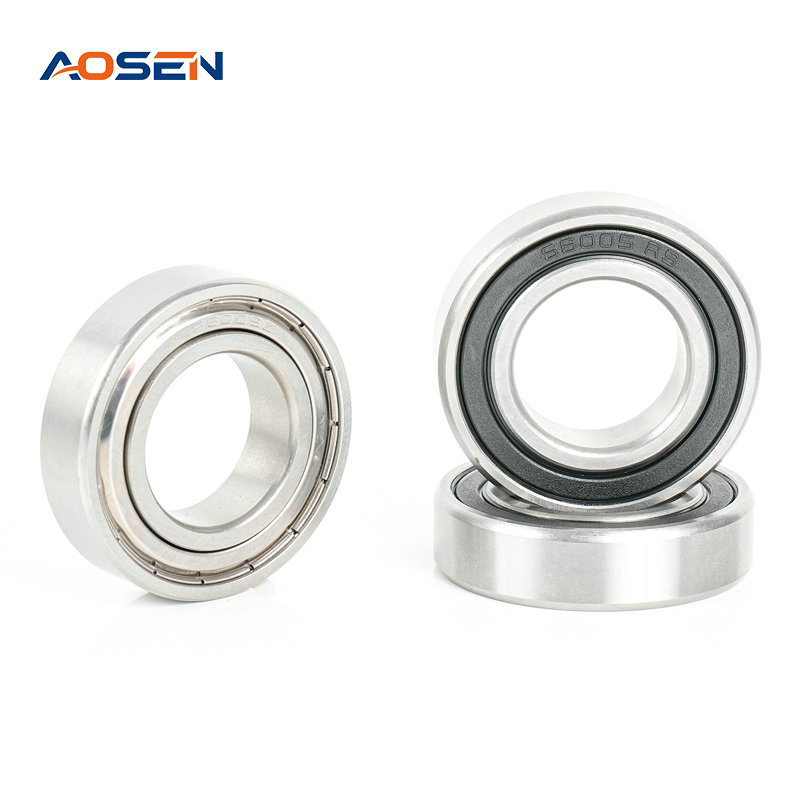
SS 6005 ZZ/2RS stainless steel deep groove ball bearings
-
 View More
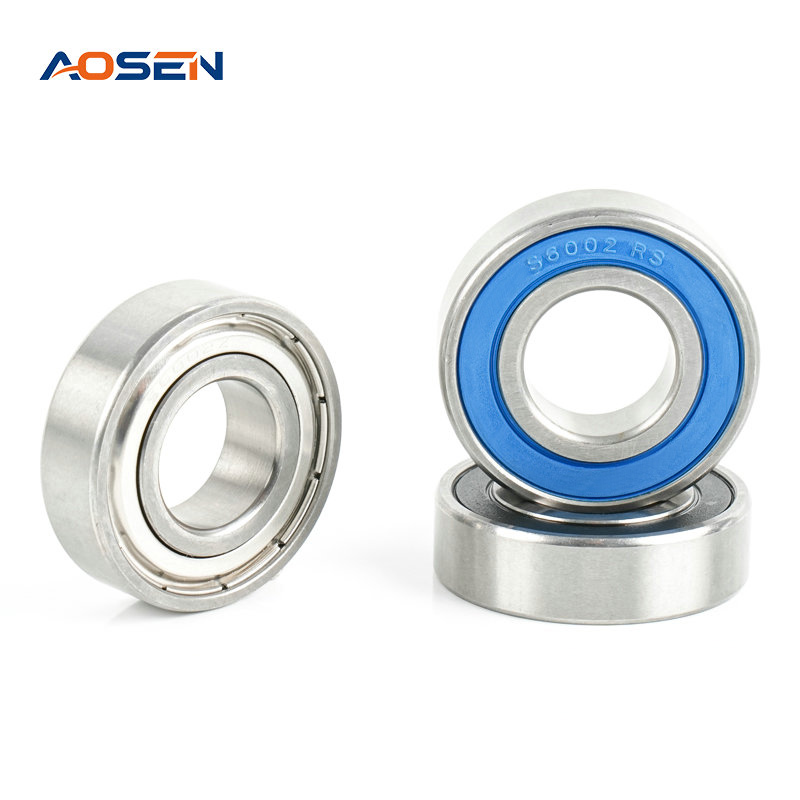
SS 6002 ZZ/2RS stainless steel deep groove ball bearings
-
 View More
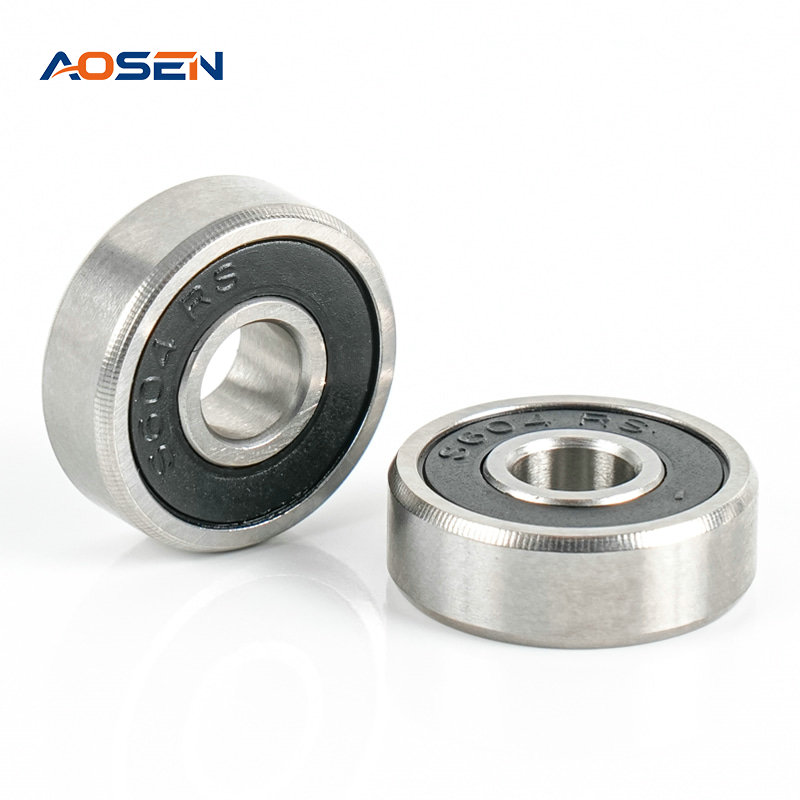
SS 604 ZZ/2RS stainless steel deep groove ball bearings
-
 View More
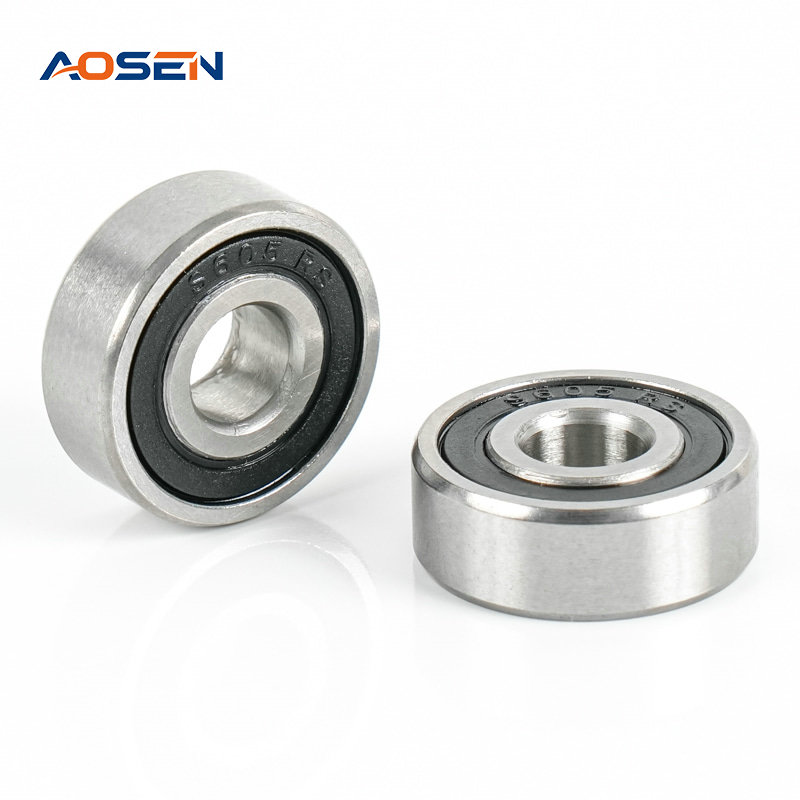
SS 605 ZZ/2RS stainless steel deep groove ball bearings
-
 View More
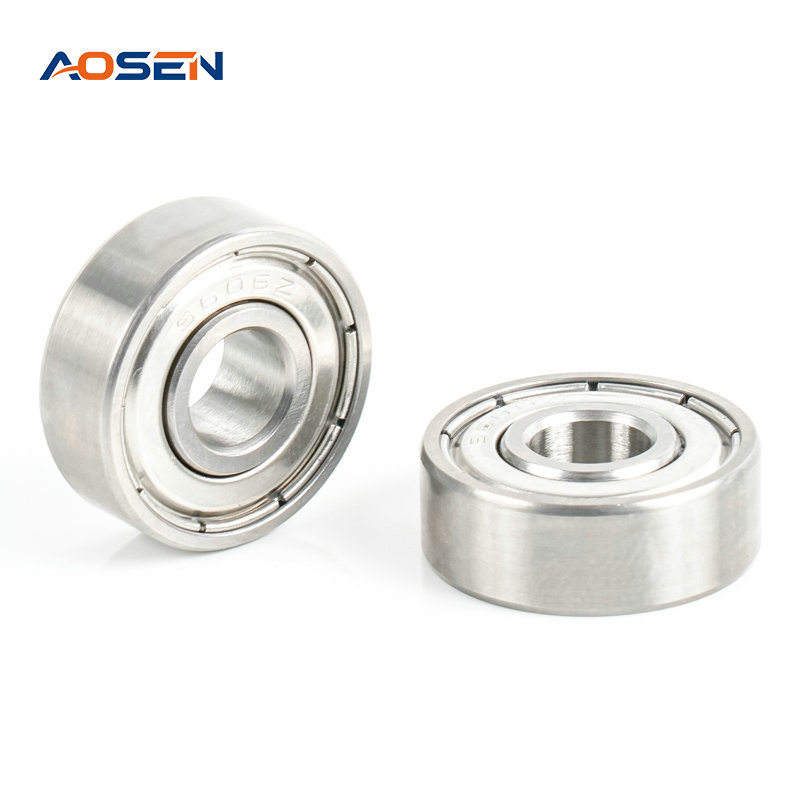
SS 606 ZZ/2RS stainless steel deep groove ball bearings
-

-
 +86-15990593443
 -
 No. 558 Huancheng West Road, Zhouxiang Town, Cixi City, Ningbo Province, Zhejiang Province

- Quick Links
- Product Categories
- Deep Groove Ball Bearings
- Stainless Steel Deep Groove Ball Bearings
- Angular Contact Ball Bearings
- Flange Bearings
