
 Español

How to Preload a Bearing: Step-by-Step Methods and Common Mistakes to Avoid
Bearing preload is one of those adjustments that looks straightforward until an assembly runs hot. The short answer is that preloading a bearing means intentionally removing internal clearance by applying a controlled axial load, so the rolling elements stay in contact with the raceways. Done correctly, it makes a spindle stiffer, quieter, and more precise. Done badly, it creates heat, noise, and early failure. If you have ever wondered why one spindle stays quiet at 20,000 rpm while an identical one whines, the difference is often preload. This guide walks you through the two main preload methods, how to decide on the right level, and where technicians most often lose the battle.
Why Preload a Bearing?
Think about a milling spindle that must hold a cutter steady while the load changes with every chip. If the bearing has internal clearance, the shaft can shift a few micrometres in the axial direction, the tool vibrates, and the surface finish degrades. Preload closes that gap and puts the rolling elements under a constant elastic contact condition. The practical reasons to preload a bearing are to improve stiffness, reduce noise, maintain precise shaft position, prevent ball skidding under light loads, and compensate for seating wear or thermal expansion. Machine tool spindles, measurement instruments, and medical equipment depend on preload for repeatable accuracy.
Preload is not the same as clamping the nut until it feels tight. The target is a defined internal load, not maximum torque. In engineering terms, you are creating compression between the inner and outer rings through the rolling elements.
Position Preload vs. Constant-Pressure Preload
Most preload systems fall into two families: position preload and constant-pressure preload. Position preload uses spacers, shims, or lock nuts to fix the bearings a set distance apart. The preload force is locked in by the spacer dimension relative to the bearing width; once installed, the system cannot move. Constant-pressure preload uses a spring, such as a wave spring or coil spring, to press the bearing rings together. The spring keeps the applied force approximately constant even as the bearing and shaft grow with temperature.
Both methods are common in angular contact ball bearings because the contact line between ball and raceway turns an axial preload into a predictable radial stiffness. For more background on this bearing type, see our angular contact ball bearing guide. Position preload gives high rigidity but can over-load the bearing when heat expands the shaft. Constant-pressure preload is more forgiving in high-speed applications because the force does not climb with temperature rise. When ordering angular contact bearings for preloaded sets, width tolerance and parallelism matter more than nominal bore dimension. A matched pair set from the factory simplifies assembly and gives consistent load sharing.
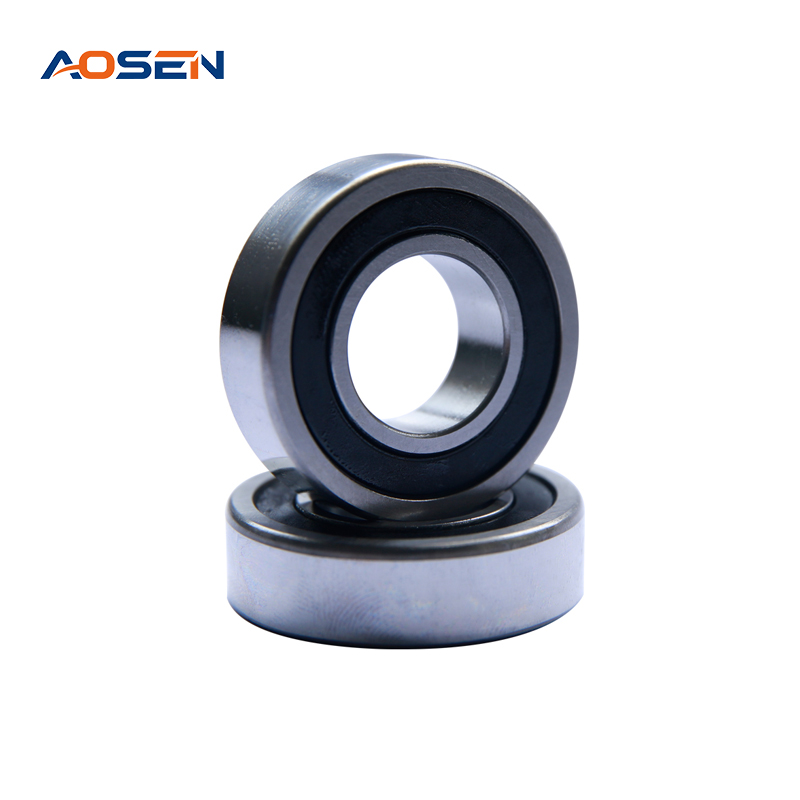 7000 Series Angular Contact Ball Bearings for High-Speed ApplicationsWith a 15-degree contact angle, these precision bearings suit high-speed, low-noise machinery. They pair well with light preload discussed nearby, offering rigidity and low friction for spindles.View Product →
How the Two Methods Compare
| Feature | Position Preload | Constant-Pressure Preload |
|---|---|---|
| Preload source | Fixed spacer or shim | Spring or elastic element |
| Stiffness | High | Moderate |
| Thermal response | Tends to increase with heat | Stays nearly constant |
| Typical use | High-rigidity spindles | High-speed or variable loads |
How to Determine the Right Preload
Choosing the right preload is more about application than torque. Light preload is usually enough for noise-sensitive equipment running at high speed, such as small electric motors. Heavy preload is reserved for applications where stiffness matters more than heat, like machine tool spindles. A practical approach is to start from the bearing manufacturer’s recommendation for a given arrangement, then verify with breakaway torque or axial deflection. On an angular contact pair, a small change in lock-nut torque can shift the internal load significantly, so always use a torque wrench and record the final value. When the correct bearing series is already fitted, the measured drag should be smooth over at least two full turns.
A useful rule of thumb is lighter preload for speed, heavier preload for rigidity. In many common series, the difference between light and medium preload is only a few micrometres of interference. If the manufacturer data sheet is not available, use a spring scale and measure friction torque while rotating the outer ring slowly; this gives a reproducible baseline. The operating temperature rise in the first hour is the final verdict. If the housing climbs more than 20°C above ambient and keeps rising, reduce the preload before further damage appears.
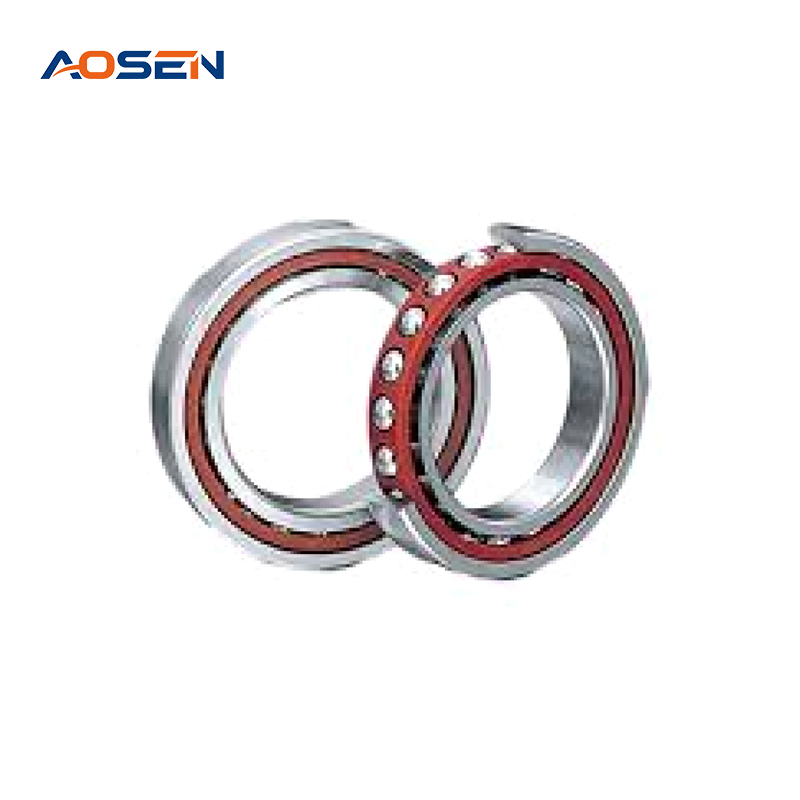 7200 Series Angular Contact Ball Bearings for Heavy-Duty LoadsFeaturing a larger contact angle, this series handles substantial axial loads and high rigidity. Ideal when heavier preload and stiffness are prioritized, as noted in the surrounding guidance.View Product →
Step-by-Step Preloading Procedure
Once the target preload is known, work through the assembly in a fixed order. The same sequence applies to most spindle, motor, and gearbox arrangements.
- Clean the shaft and housing, then deburr all contact faces and shoulder corners. Dirt under the inner or outer ring distorts the preload measurement and can scratch seating surfaces.
- Check the bearing arrangement codes. For matched pairs, the DB, DF, or DT arrangement must be installed exactly as marked; reversing a pair changes the contact angle direction and the preload behaviour.
- Place the bearing pair and any spacers or shims on the shaft. Keep the rings aligned with the raceway contact points; a misaligned spacer causes uneven load on the balls.
- Tighten the lock-nut or clamping nut gradually in stages. Rotate the bearing after each stage. Resistance should increase smoothly, not catch or bind at one angular position.
- Measure the resulting preload. This can be done by checking axial displacement with a dial indicator, or by measuring the breakaway torque of the bearing under a defined axial load.
- After final tightening, turn the shaft by hand. It should rotate smoothly with a slight uniform drag. Then run the assembly at low speed and watch for temperature rise.
Do not skip the rotation check after each stage. Spacers can distort if they are not square, and this usually shows up as a tight spot that appears at the same shaft angle in every revolution. If the preload is outside the expected range, stop and correct the cause, do not force the nut tighter.
Common Mistakes and Practical Tips
Most field problems trace back to a few repeating mistakes. Over-tightening is the most common: a technician treats preload as ordinary clamping force and ends up with a spindle that gets hot quickly. Heat expands the inner ring and shaft, which raises the preload further, creating a thermal runaway. Another mistake is ignoring thermal growth of the shaft; a few micrometres of expansion significantly increases the load on a preloaded pair.
Lubrication also changes the picture. Excessive grease at startup increases breakaway torque, and the wrong grease can mask a correct preload reading until the machine is running. Never reuse a bearing that has been running with false brinelling: once the raceways are dented, no preload adjustment will restore its smoothness. The first sign of a problem is usually a steady temperature rise, so logging bearing temperature during initial run-in is worth the small effort.
Preloading a bearing is not a single lock-nut value; it is a system decision that connects bearing type, spacing, spring rate, operating temperature, and lubrication. The reliable route is to select bearings designed for preload, install them in the correct arrangement, and verify the result with drag, torque, and temperature checks. The best setup procedure in the world cannot compensate for inconsistent raceway geometry, so a supplier with factory control and quality inspection is the right choice. Our angular contact ball bearings are machined with the width consistency needed for predictable preload. Buy from someone who can explain the tolerance story and stands behind the manufacturing process.


-

-
 +86-15990593443
-
 No. 558 Huancheng West Road, Zhouxiang Town, Cixi City, Ningbo Province, Zhejiang Province

- Quick Links
- Product Categories
- Deep Groove Ball Bearings
- Stainless Steel Deep Groove Ball Bearings
- Angular Contact Ball Bearings
- Flange Bearings

Message Us Now !