
 Español
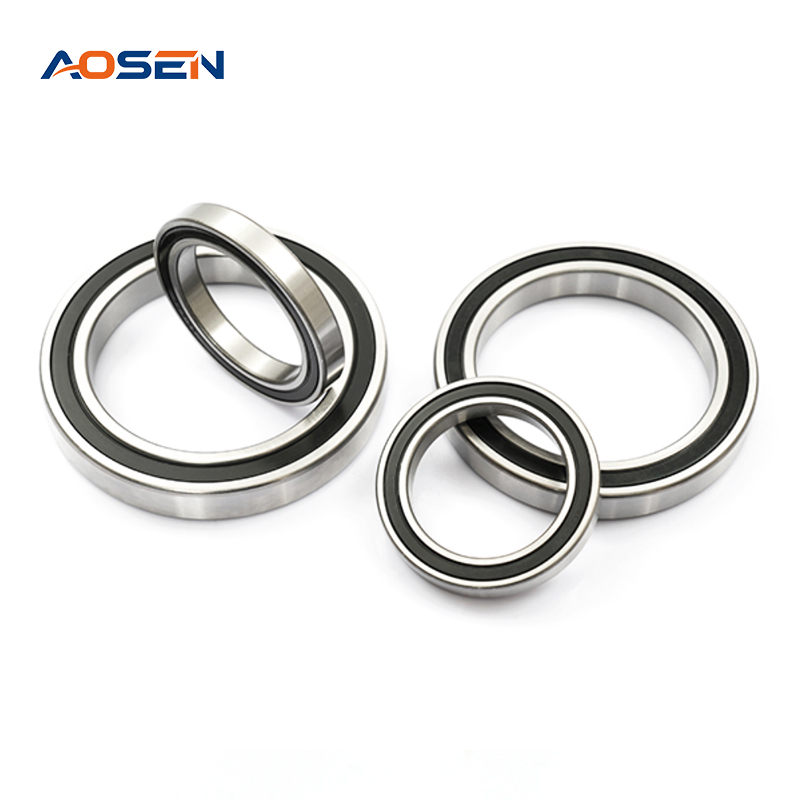
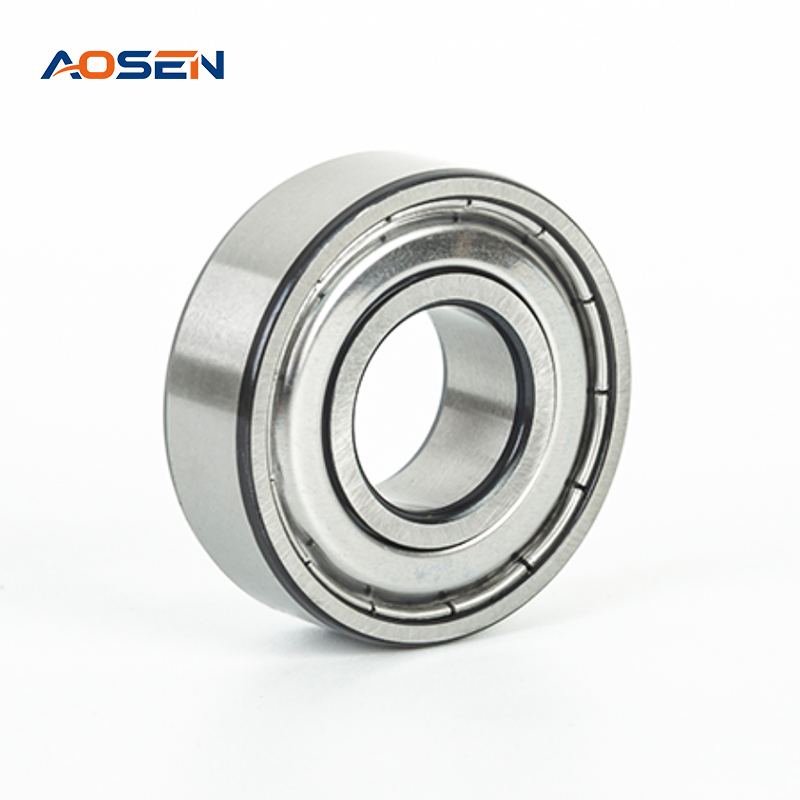
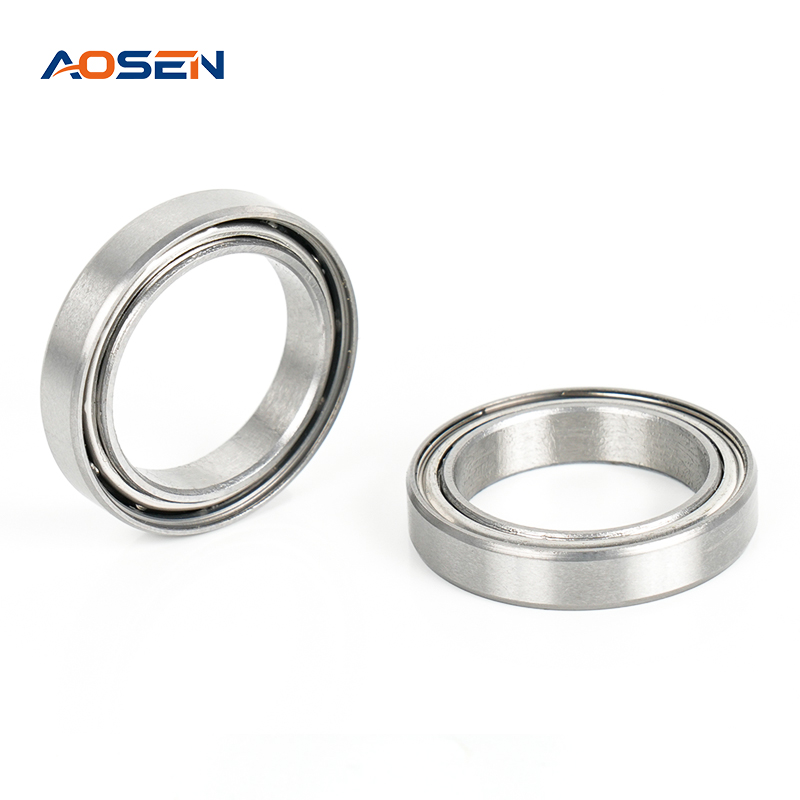
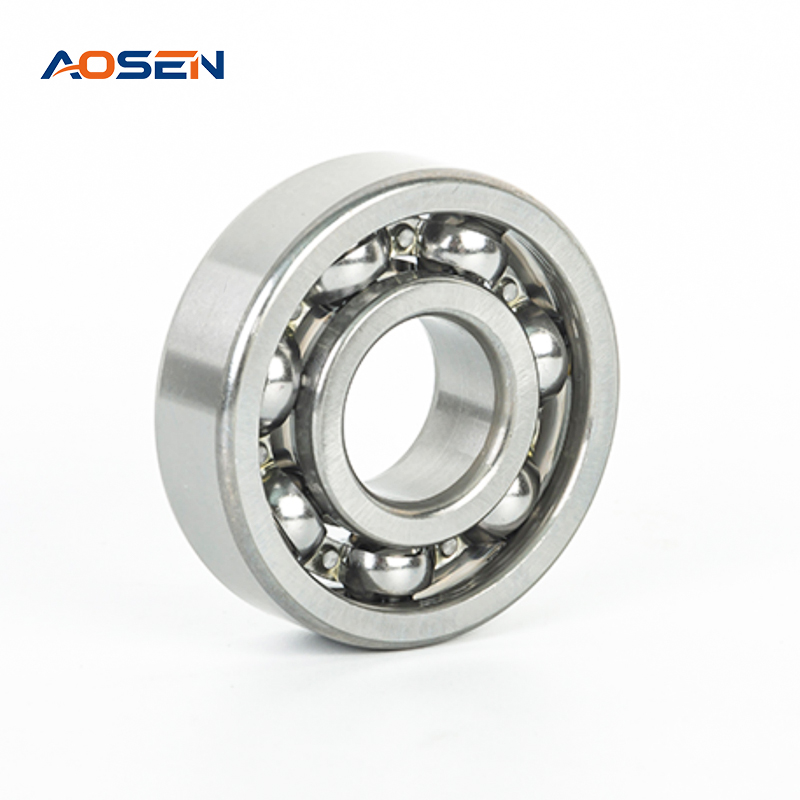
A deep groove ball bearing is the most widely used rolling-element bearing because its deep, uninterrupted raceway grooves let it handle both radial and moderate axial (thrust) loads simultaneously — something many other bearing types can't do without added components.
This makes it the default choice for general-purpose applications running at high speeds with low friction, from electric motors and gearboxes to household appliances and bicycle wheels.
Deep groove ball bearings (often abbreviated DGBB) account for the largest share of bearings produced worldwide, precisely because their design solves multiple loading problems at once. Below, we break down how the groove geometry delivers this versatility, when to choose a standard vs. stainless steel version, and how to size a bearing correctly for your application.
What the "Deep Groove" Design Actually Solves
The defining feature of this bearing type is right in the name: the inner and outer ring raceways are ground with grooves deep enough that the ball's contact arc sits well below the raceway shoulder, rather than sitting in a shallow track.
Because the groove is deep on both rings, the ball stays supported even when the shaft shifts slightly under axial load — this is the mechanical reason a deep groove ball bearing can take thrust loads in either direction without needing to be paired with a second bearing, unlike many angular contact designs.
Deep Groove vs. Angular Contact vs. Flange Bearings
Choosing the wrong bearing family for the load conditions is one of the most common causes of premature failure. Here's how the three most common ball bearing types compare:
| Bearing Type | Radial Load | Axial Load | Best Suited For |
|---|---|---|---|
| Deep Groove Ball Bearing | High | Moderate, both directions | General-purpose, motors, gearboxes, appliances |
| Angular Contact Ball Bearing | Moderate–High | High, one direction (or paired) | Pumps, spindles, high-precision axial loading |
| Flange Bearing | High | Moderate | Direct housing mount without a separate seat |
Practical note: If your application only ever loads in one axial direction and needs maximum stiffness there, an angular contact bearing typically outperforms a deep groove bearing. If load direction is unpredictable or mixed with radial load, deep groove is the more reliable default.
Choosing Between Standard and Stainless Steel Versions
Material selection matters as much as bearing type. The two most common options serve very different operating environments:
Standard chrome steel (GCr15)
Offers the best hardness and load-carrying capacity per cost, making it the standard choice for dry, indoor, or lubricated environments where corrosion isn't a primary concern — most motors and gearboxes fall into this category.
Stainless steel (typically 440C or AISI 304/316 for components)
Trades some hardness for corrosion resistance, which is essential in food processing, marine equipment, medical devices, and washdown environments where moisture or chemical exposure would rapidly degrade a standard bearing.
Choose Standard Steel If You...
- Operate in a dry, indoor, controlled environment
- Need maximum load capacity for the bearing size
- Have consistent lubrication maintenance in place
- Are cost-sensitive on high-volume applications
Choose Stainless Steel If You...
- Operate near moisture, washdown, or chemicals
- Work in food, beverage, or medical equipment
- Need resistance to rust in outdoor conditions
- Prioritize longevity over raw load capacity
How to Read a Deep Groove Ball Bearing Part Number
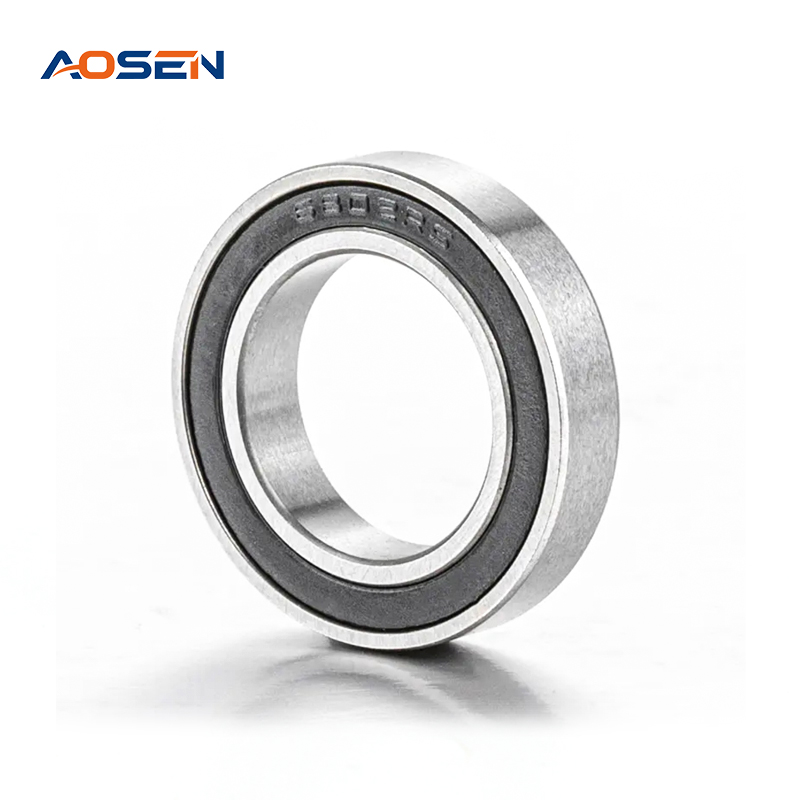
Bearing designations follow a standardized system, which makes it possible to identify key specifications directly from the code without a datasheet in hand. Using a common example, 6205-2RS:
| Code Segment | Meaning | Example |
|---|---|---|
| 6 | Bearing series (deep groove ball bearing) | 6205 |
| 2 | Dimension series (width/diameter series) | 6205 |
| 05 | Bore code — multiply by 5 for bore diameter in mm | 05 → 25mm bore |
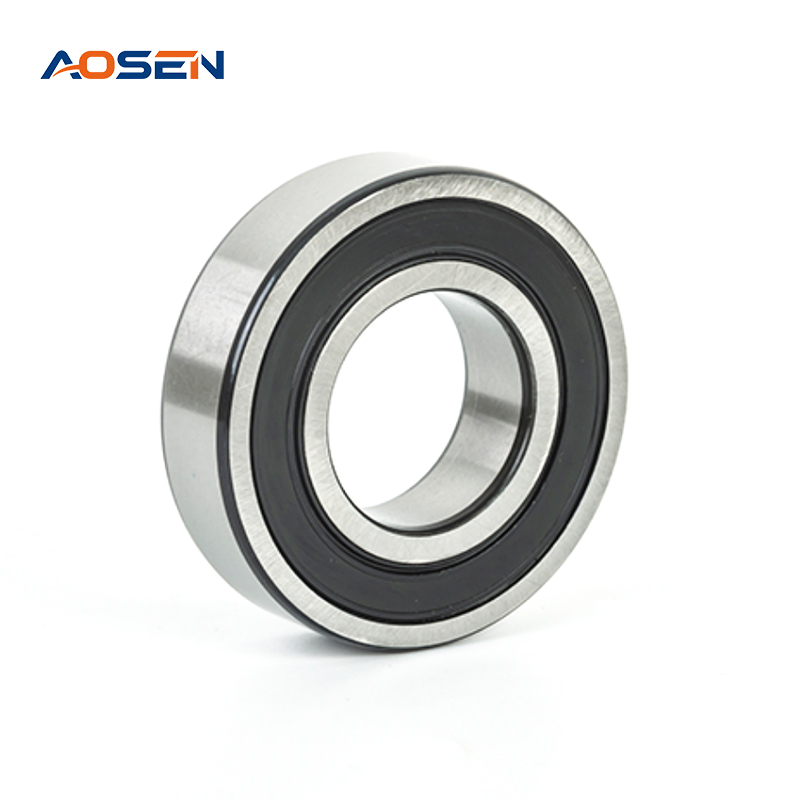
| 2RS | Seal type — rubber seals on both sides | 2RS = double rubber seal |
| ZZ | Alternative: metal shields on both sides | ZZ = double metal shield |
Bore codes 04 and above follow the "multiply by 5" rule; bore codes below 04 (00, 01, 02, 03) correspond to fixed bore sizes of 10mm, 12mm, 15mm, and 17mm respectively rather than following the multiplication pattern.
Sizing a Bearing Correctly for Your Application
Selecting the right bearing isn't just about matching bore diameter to shaft size. These four factors determine whether a bearing will meet its expected service life:
- Dynamic load rating (C) — the load a bearing can sustain for one million revolutions; compare this against your actual operating load with a safety margin
- Operating speed — check the bearing's maximum rated RPM against your application's actual shaft speed, especially for sealed variants which run slightly warmer than open or shielded types
- Sealing requirement — 2RS (rubber seal) suits dirty or wet environments; ZZ (metal shield) suits cleaner environments needing lower friction; open bearings suit applications with external sealing already in place
- Fit tolerance — an interference fit that's too tight can preload the bearing and shorten life, while too loose a fit allows the inner ring to spin on the shaft
Frequently Asked Questions
Can a deep groove ball bearing handle pure thrust loads?
It can handle moderate axial loads combined with radial load, but it isn't designed for pure, heavy thrust loading in a single direction — for that, a thrust bearing or angular contact bearing designed specifically for axial load is the better choice.
What's the difference between 2RS and ZZ sealing?
2RS uses rubber lip seals that contact the inner ring, giving better protection against dust and moisture but slightly higher friction; ZZ uses metal shields that don't contact the inner ring, giving lower friction but less protection in wet or dirty conditions.
How often should a deep groove ball bearing be re-lubricated?
This depends heavily on speed, temperature, and sealing type — sealed bearings are typically lubricated for life, while open or shielded bearings in continuous industrial use often need re-lubrication on a scheduled interval based on the manufacturer's speed and load data.