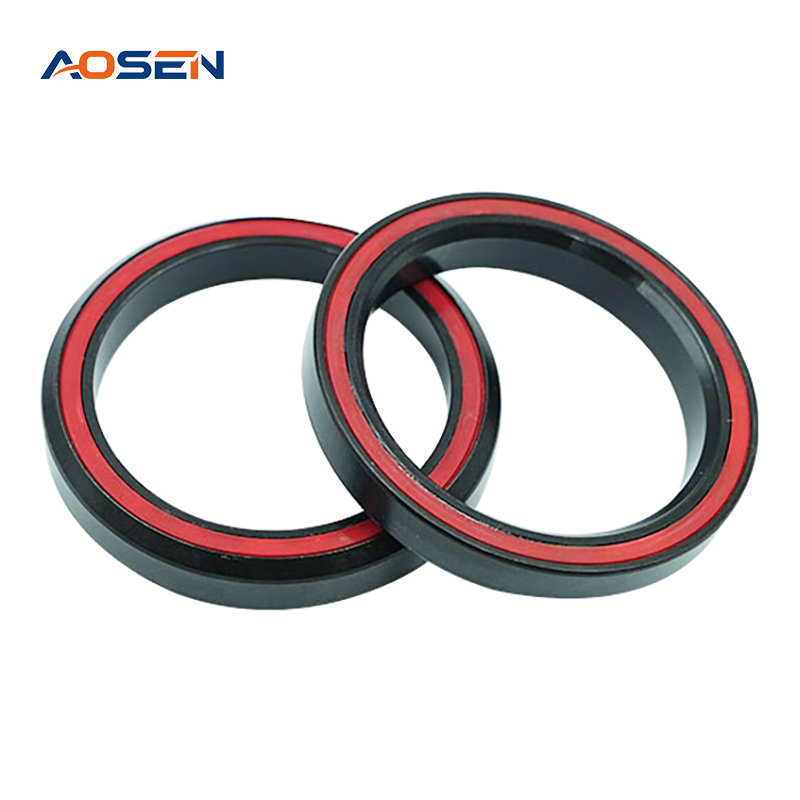
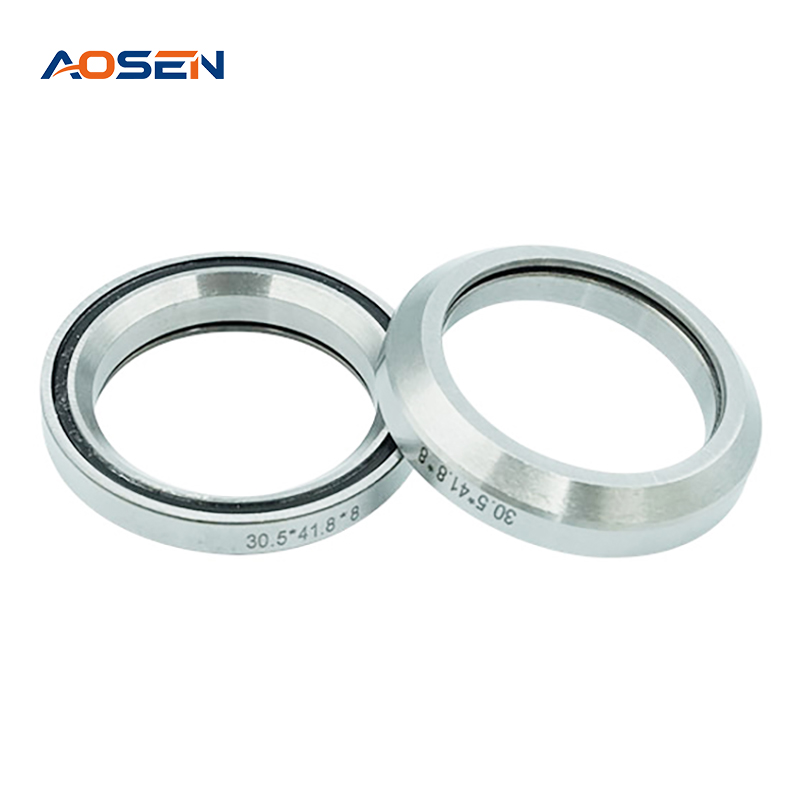
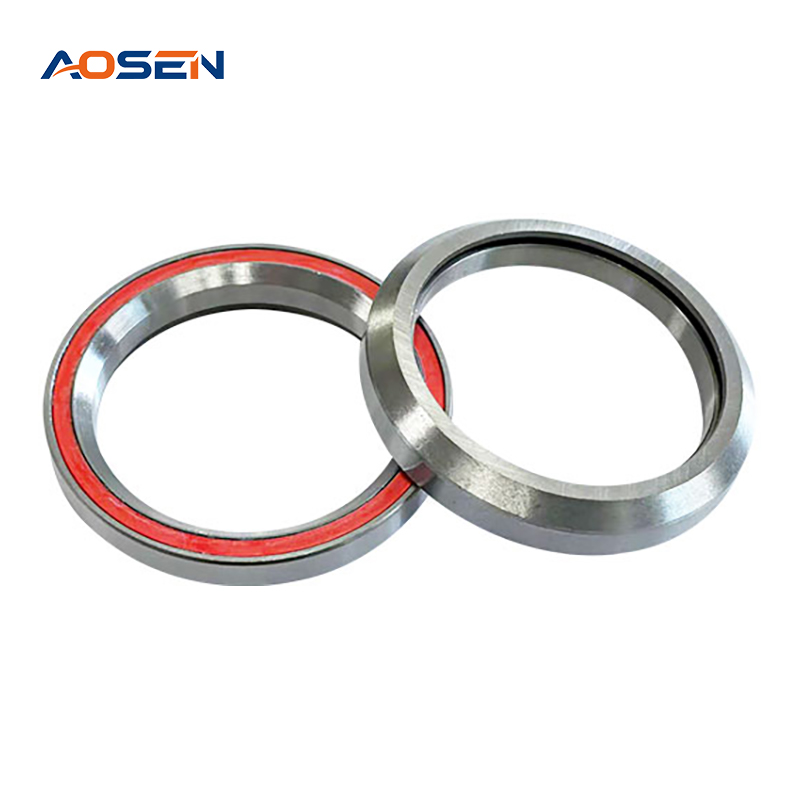
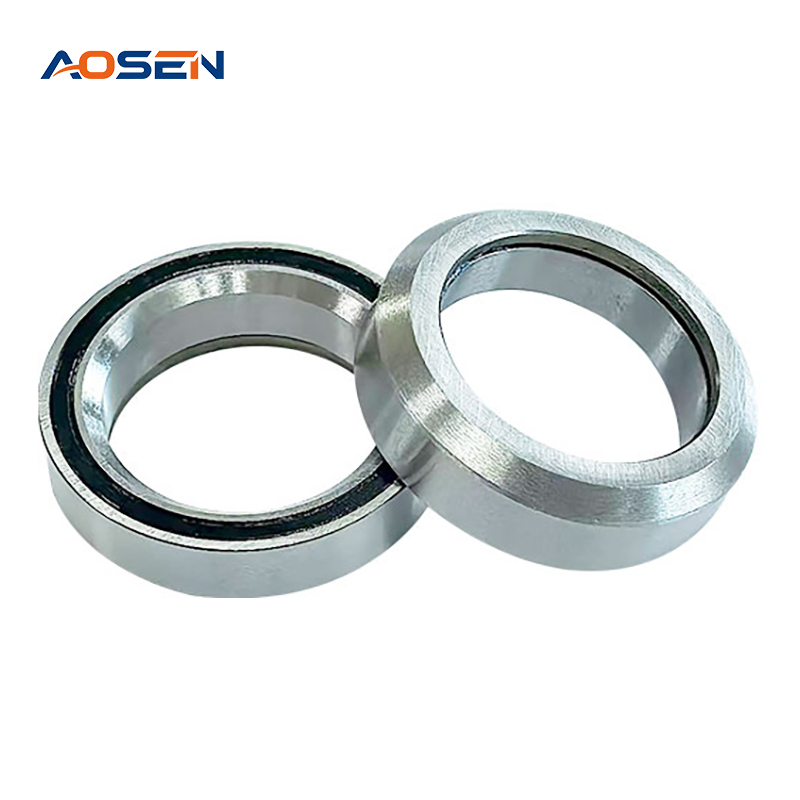
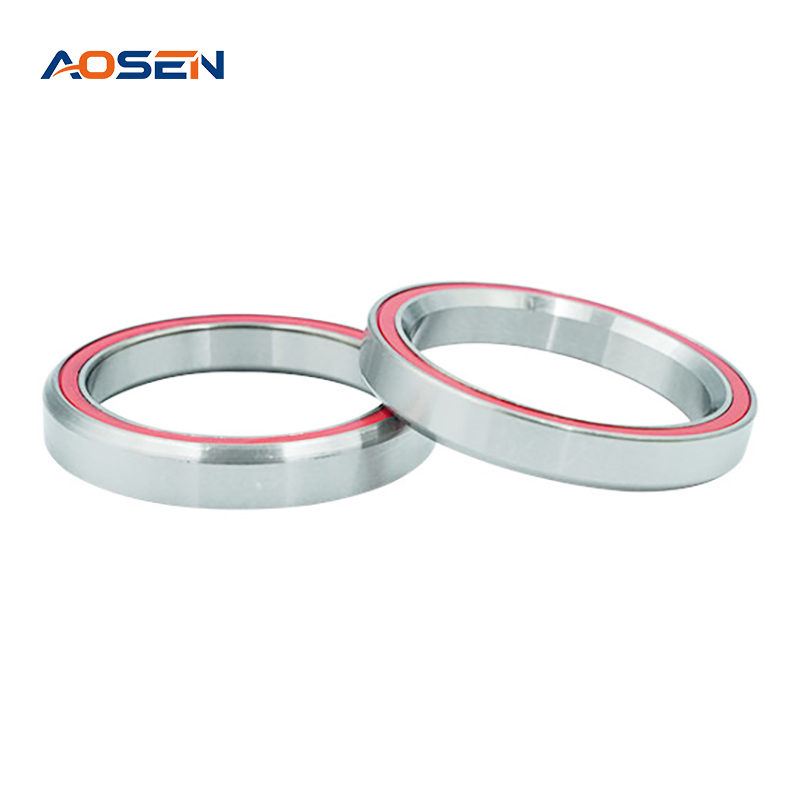
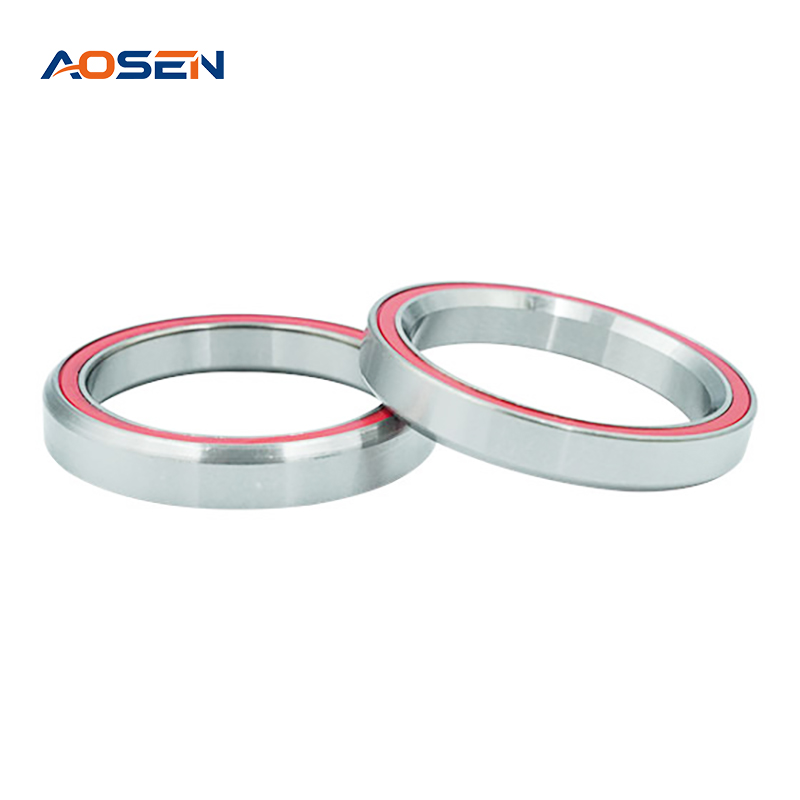
Most modern Bicycle Headset Ball Bearings don't use loose ball bearings anymore — they use sealed cartridge angular contact bearings, typically sized around 41.8mm OD with a 45/45-degree contact angle for a standard 1-1/8" threadless setup. If you're replacing a headset bearing, the fastest path to the right part is measuring three things with calipers: outside diameter, inside diameter, and the contact angle stamped or visible on the race — not just ordering by "1-1/8 inch," which describes the steerer tube, not the bearing itself.
Headsets sit in one of the most exposed, hardest-working spots on a bike — carrying steering loads, absorbing road shock, and sitting directly under the stem where water and grit run straight down the steerer tube. That combination of load and contamination exposure means getting the bearing type, size, and seal quality right matters more here than in almost any other part of the bike. The sections below cover how these bearings are actually sized, what separates a good one from a bad one, and how often to service them.
Cartridge Bearings vs Loose Ball Bearings
Older threaded headsets — and some older threadless ones — used loose ball bearings that sat directly in machined cups, retained by nothing but grease and a light cage. That design is now largely obsolete on modern bikes. Today, the near-universal standard is the sealed cartridge bearing: a self-contained unit with the balls, cage, and races pressed together as one part, dropped into the head tube as a single component.
The distinction matters for anyone doing their own maintenance, because the two types are serviced completely differently:
- Loose ball bearings can be disassembled, cleaned, and the balls themselves replaced individually if pitted or worn — useful on vintage or Campagnolo-style headsets that are designed to come apart.
- Cartridge bearings are sealed as a unit. Most aren't designed to be opened for cleaning — when the seal fails or the races develop play, the entire cartridge gets replaced rather than serviced piece by piece.
Headset bearings are also mechanically different from the bearings found elsewhere on the bike. Bearings in hubs or bottom brackets are typically deep-groove bearings built to handle straight radial load. Headset bearings are almost always angular contact bearings — the races are cut at an angle specifically because a headset has to resist combined radial and axial loads at the same time: the weight pressing down through the steerer, plus the sideways forces from steering and braking.
How Headset Bearing Sizing Actually Works (SHIS)
This is the part that trips up most people doing a headset bearing swap. A headset marketed as "1-1/8 inch" tells you the diameter of the steerer tube — it says nothing about the bearing's actual dimensions. The bearing itself is sized by three numbers plus an angle code, standardized industry-wide under the Standardized Headset Identification System (SHIS).
A cartridge headset bearing's full spec looks like this: outside diameter × inside diameter × width, followed by the contact angle of the top and bottom race — for example, 41.8 x 30.5 x 8mm, 45°/45°. The two angle numbers matter because they're not always identical: the inner race (against the fork's crown race or headset cone) and the outer race (against the frame or cup) can be cut at different angles depending on the standard.
| Dimensions (ID x OD x width) |
Contact angle |
Common compatibility |
| 30.6 x 41.8 x 8mm |
45° / 45° |
1-1/8" Campagnolo-style (TH-870) |
| 30.5 x 41.8 x 8mm |
45° / 45° |
Common 1-1/8" threadless integrated |
| 30.2 x 41mm x 8mm |
36° / 45° |
Cane Creek-compatible integrated |
| 34.1 x 46.8 x 7mm |
45° / 45° |
1-1/4" integrated (MR082, MR100, TH-970) |
| 40 x 52 x 7mm |
45° / 45° |
1.5" lower headset (TH-070, MR128) |
| 40 x 52 x 6.5mm |
36° / 45° |
1.5" lower, Cane Creek-style |
Why the angle actually matters
Mixing a 36° bearing with a 45° bearing on the same headset — even if the OD and ID happen to match — will not produce a properly seated 90° contact angle between the two races. Whether your headset uses 36°, 45°, or a mixed 36°/45° setup, both the upper and lower bearing need to match the frame and fork's intended standard, not just the physical bore size. When ordering a replacement, checking a manufacturer's SHIS chart against the digits stamped on the old bearing avoids a mismatch that a caliper measurement alone won't catch.
Measuring an Old Bearing When the Spec Is Unknown
Not every bike ships with documentation, and stamped codes wear off or were never printed clearly to begin with. When that happens, a digital caliper is the only reliable tool — a standard ruler isn't precise enough to tell a 41.8mm bearing apart from a 42mm one, and that half-millimeter difference is the gap between a bearing that seats correctly and one that rattles.
- Outside diameter (OD): measured across the widest point of the outer race — this is what contacts the frame or cup.
- Inside diameter (ID): measured across the bore — this is what seats against the fork's crown race or the headset's compression cone.
- Width: the stack height of the bearing itself, measured straight across.
- Contact angle: visible as the angled cut on the inner and outer races; if it isn't marked, comparing it against a known reference bearing or a manufacturer's chart is the safest route.
Universal bearing identifiers can also shortcut this process. Some cartridge bearings carry a code like 6802 stamped directly on the shield, which cross-references to an exact ID/OD/width combination in any bearing manufacturer's catalog — useful because it means the replacement doesn't have to come from the original bike brand at all.
Loose Ball Sizes on Older and Threaded Headsets
For anyone still running or restoring a threaded headset with true loose ball bearings, sizing works completely differently — by ball diameter rather than a cartridge's three dimensions. There are four sizes that account for the overwhelming majority of bicycle applications:
5/32" Most common headset & pedal ball size
3/16" Common front hub ball size
1/4" Common rear hub & bottom bracket size
1/8" Smaller, less common headset/pedal size
Even within a single brand, historical variation is real: Campagnolo's own vintage headset specs list one model using 22 balls at 3/16" while a closely related model from the same era uses 25 balls at 5/32" — so assuming a size based on the bike's age or brand alone isn't safe. The reliable method is the same as with cartridge bearings: measure the actual old balls with calipers, or count and measure what comes out during a service, before ordering replacements.
Ball quality also matters more than most people assume it should. Bearing balls are rated by a roundness grade, and for bicycle use, G25 grade is widely considered more than sufficient — paying extra for a higher-precision grade marketed specifically as "bicycle" balls typically buys a branded package rather than a meaningfully smoother ride, since the tolerances involved are already well beyond what a headset's operating loads require.
Sealing and Contamination: The Real Failure Point
Bearing failure in a headset is rarely a matter of the balls wearing out from mechanical fatigue — it's almost always contamination getting past the seal. The headset sits directly beneath the stem and steerer tube, which means road spray, rain running down the frame, and sweat dripping off the rider all funnel toward exactly the same spot.
This is why seal quality is arguably a bigger factor in headset bearing longevity than the steel grade or ball count. For riders in wet or dusty conditions, upgrading to bearings with higher-protection seals — commonly marked 2RS (double rubber-sealed) or LLU — is a straightforward way to extend service intervals without changing anything else about the bike's fit or geometry.
- Replace both bearings together. Even if only the top or bottom bearing feels rough, servicing the pair at the same time is the standard recommendation — the two see similar exposure and similar mileage, so a matched failure is common.
- Watch for a groove or "notchy" feel when turning the bars straight-ahead. This is a classic sign of a worn track forming in the race from repeated small movements at the same riding position — sometimes called "brinelling" or indexing.
- Check the compression ring and top cap, not just the bearing. A headset that feels loose or notchy is sometimes an adjustment problem, not a worn-bearing problem — ruling out preload issues before replacing parts saves an unnecessary purchase.
- Regrease at the same interval as brake and drivetrain services for riders in wet climates, since a headset that's been ridden through a wet winter without attention is one of the more common places to find a seized or pitted bearing at the next full service.
Choosing a Replacement: What Actually Separates Good From Bad
Once the size and angle are confirmed, the remaining decision is which bearing to actually buy — and the differences between a budget cartridge bearing and a premium one are concrete, not just branding.
- Steel vs stainless steel races Stainless races resist the corrosion that road salt and moisture cause over a wet season, at a moderate price premium over standard steel.
- Seal type 2RS or LLU-sealed bearings shed more water and grit than open or lightly-shielded designs, directly extending service intervals in wet climates.
- Full cartridge vs open bearing cup kits A full sealed cartridge is easier for most riders to service correctly; open cup-and-cone systems demand more careful adjustment but allow individual ball replacement.
- Matched angle spec A bearing with the correct OD and ID but the wrong contact angle will still fit physically while steering incorrectly — always confirm the angle code, not just the dimensions.
- Split vs solid crown race A split crown race is easier to install and remove during a fork swap, which matters if the headset will be serviced or the fork replaced more than once.
- Brand cross-compatibility Many cartridge bearings share the same universal bore/OD/width dimensions across brands, so a same-spec bearing from a bearing manufacturer often works as a drop-in replacement for a bike-brand-specific part.
Quick Checklist Before Ordering a Headset Bearing
Before placing an order, running through these points avoids the most common reason a replacement bearing gets sent back — it fit the steerer tube but not the actual bearing seat:
- Have you measured OD, ID, and width with calipers, rather than assuming the size from the headset's marketed "1-1/8 inch" or "1.5 inch" label?
- Do you know the contact angle, whether it's 45°/45° or a mixed 36°/45° setup, from a stamped code or an SHIS reference chart?
- Are you replacing both the top and bottom bearing together, rather than just the one that's currently noisy?
- Does the riding environment call for an upgraded seal, such as 2RS or LLU, given how much water and grit typically reaches this part of the bike?
- Have you ruled out a simple preload adjustment before assuming the bearing itself needs replacing?

 Español

 +86-15990593443
 No. 558 Huancheng West Road, Zhouxiang Town, Cixi City, Ningbo Province, Zhejiang Province