What Are Stainless Steel Deep Groove Ball Bearings?
Stainless steel deep groove ball bearings are the go-to choice when corrosion resistance, moderate load capacity, and long service life must coexist in a single component. Unlike standard carbon-steel bearings, they are manufactured from martensitic (AISI 440C) or austenitic (AISI 304/316) stainless steel, giving them the ability to operate reliably in wet, chemical, food-processing, and marine environments where ordinary bearings fail within weeks.
The "deep groove" geometry — a raceway depth roughly 25–33% of the ball diameter — allows the bearing to handle not only radial loads but also moderate axial (thrust) loads in both directions without requiring a separate thrust bearing. This versatility makes them one of the most widely specified bearing types across industries.
Key Material Grades and Their Differences
Not all stainless steel bearings are equal. Material selection directly determines corrosion resistance, hardness, and maximum operating temperature.
| Grade |
Type |
Hardness (HRC) |
Max. Temp. |
Best For |
| AISI 440C |
Martensitic |
58–62 |
150 °C |
High load, mild corrosion |
| AISI 316 |
Austenitic |
25–30 |
300 °C |
Strong acids, chlorides, marine |
| AISI 304 |
Austenitic |
20–28 |
300 °C |
Food, pharma, light loads |
Comparison of common stainless steel grades used in deep groove ball bearings
AISI 440C is the industry default for most stainless steel deep groove ball bearings because its high hardness closely matches that of standard chrome steel (52100), preserving load-carrying capacity. AISI 316 is preferred whenever chloride exposure — seawater, bleach, saline cleaning agents — is a primary concern.
Standard Dimensions and Load Ratings
Stainless steel deep groove ball bearings follow the same ISO 15 dimensional series as their carbon-steel counterparts, so they are interchangeable without redesigning the housing or shaft. The most frequently specified series are:
- 6200 series — bore 10–90 mm; widely used in electric motors and pumps
- 6300 series — heavier section; higher dynamic load ratings (C) for the same bore
- 6000 series — thin section; favored in precision instruments and medical devices
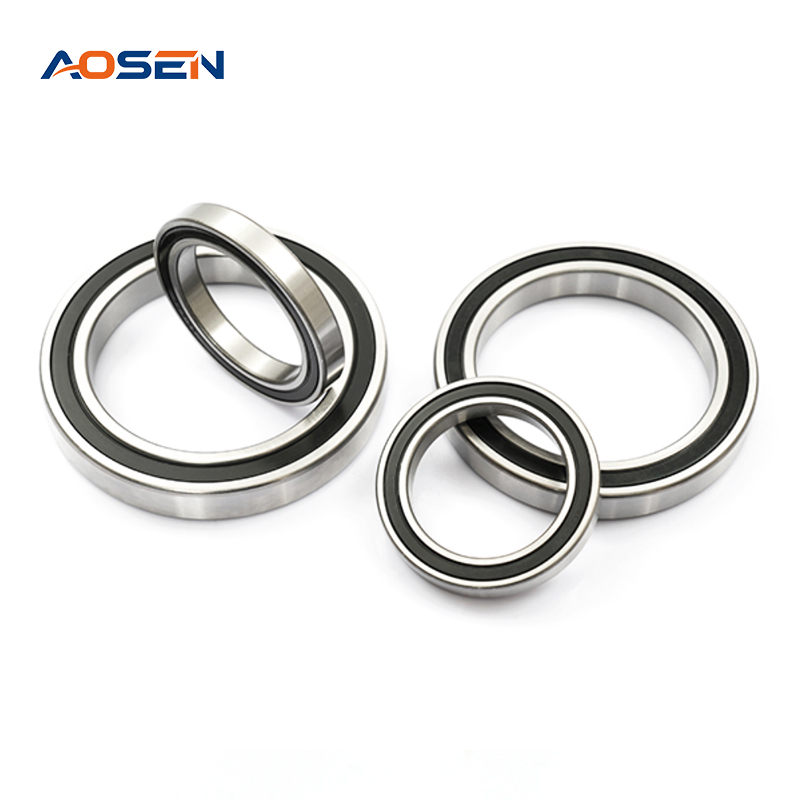
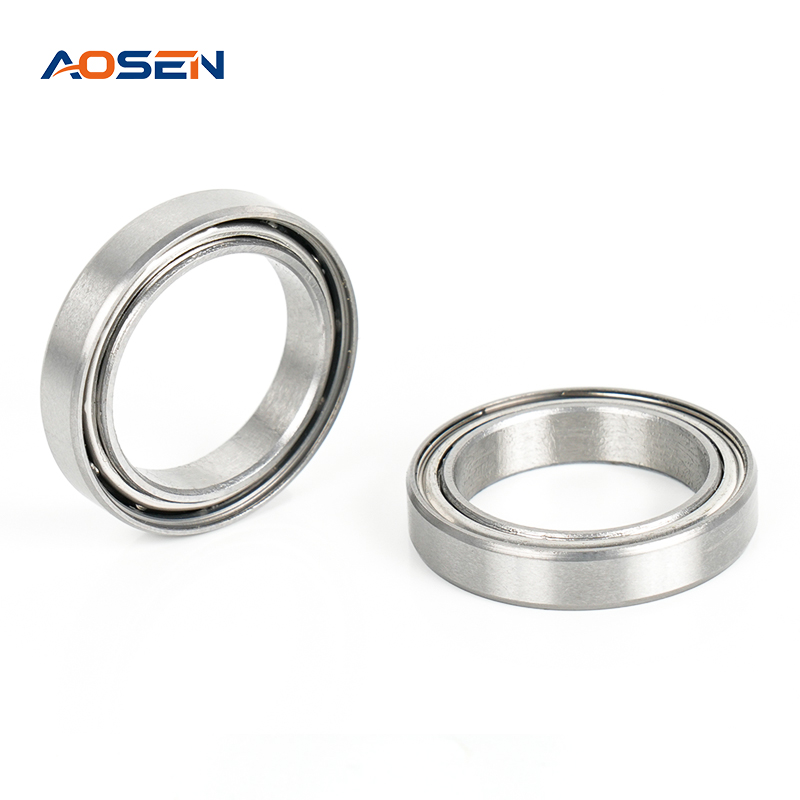
- 6800 series — extra-thin section; robotics, aerospace actuators
As a practical reference: a 6205-SS bearing (25 mm bore) carries a dynamic load rating (C) of approximately 7.8 kN and a static load rating (C₀) of 3.92 kN — about 10–15% lower than an equivalent chrome-steel 6205 due to the lower hardness of 440C steel. Engineers must account for this when replacing standard bearings with stainless variants.
Seal and Shield Options
The bearing's internal environment is just as important as its external corrosion resistance. Four configurations are common:
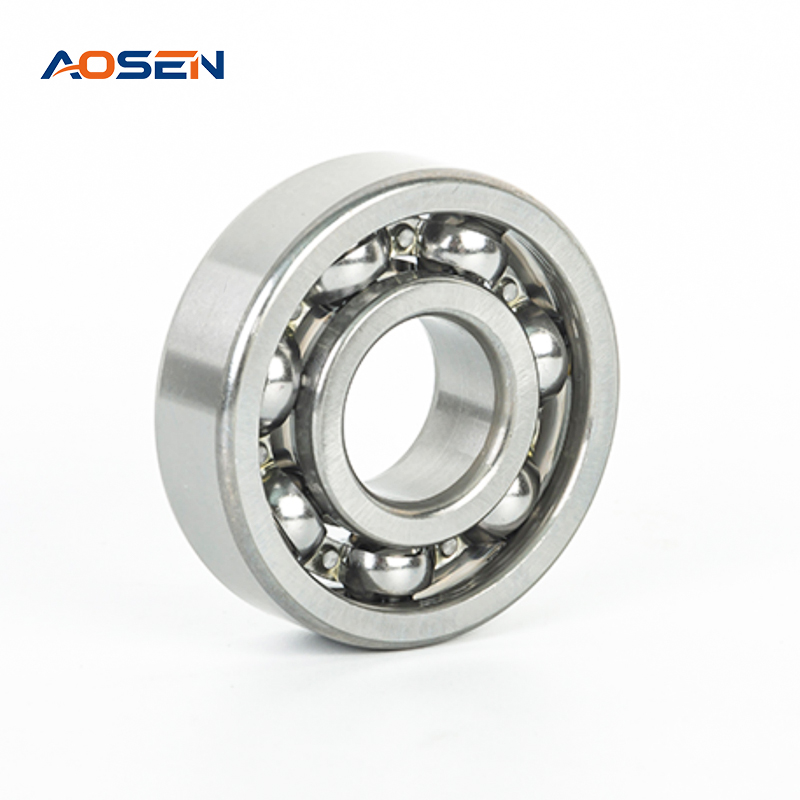
Open (No Suffix)
No seal or shield. Used when the application provides its own lubrication system or when the bearing will be fully submerged in a clean fluid. Maximum speed but zero contamination protection.
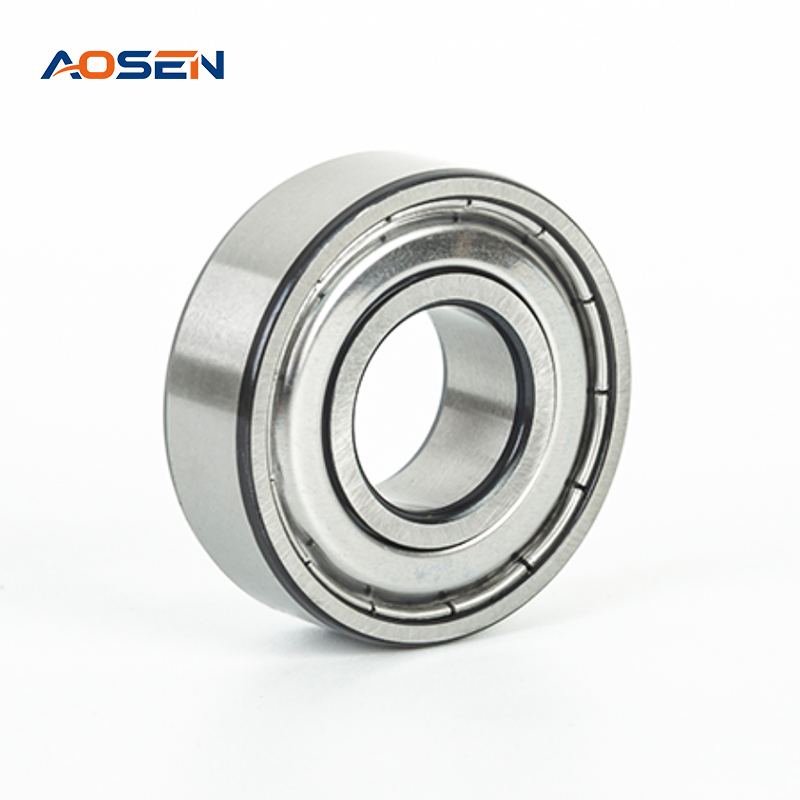
Metal Shields (ZZ / 2Z)
Stamped stainless steel shields sit close to the inner ring without touching it. They block large particles and are suitable up to the bearing's full speed rating. Common in gearboxes and blowers.
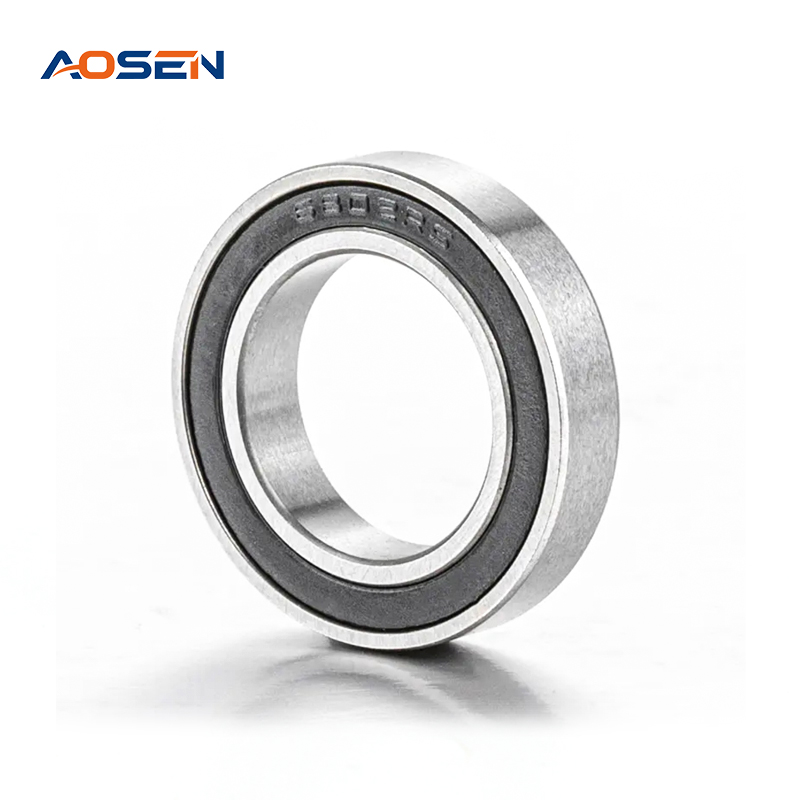
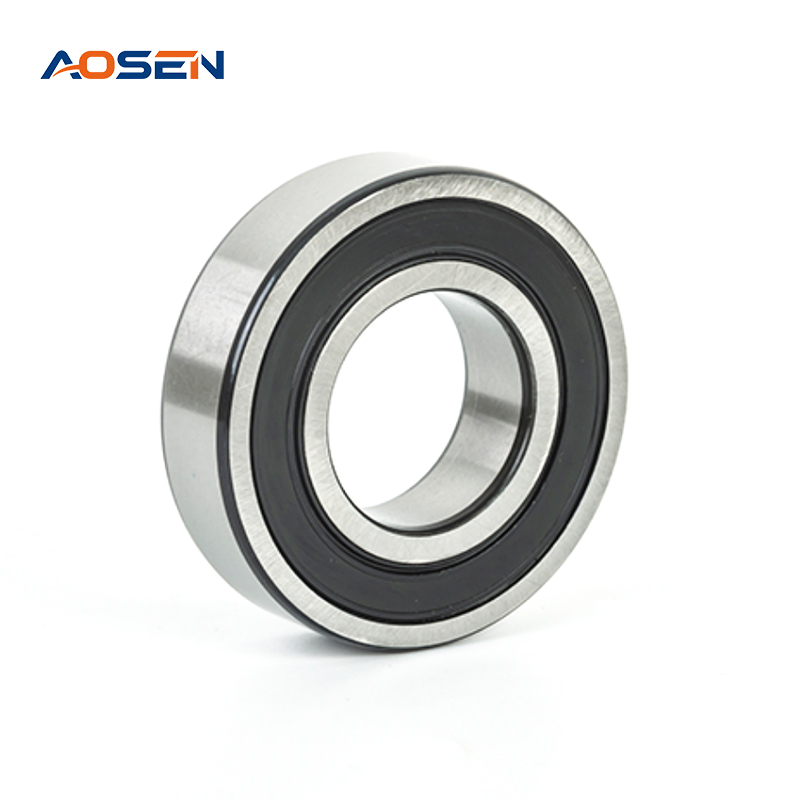
Contact Rubber Seals (2RS)
The most popular option for wet or contaminated environments. EPDM or NBR lip seals contact the inner ring groove, providing a positive barrier against water and dust ingress. Speed capability is reduced by roughly 20–30% compared to open or shielded variants.
PTFE (Teflon) Seals
Used in food, pharmaceutical, and aggressive-chemical environments where standard elastomers degrade. PTFE seals are FDA-compliant and resist virtually all solvents.
Lubrication: Grease vs. Oil
Stainless steel deep groove ball bearings are typically pre-greased with one of the following lubricants. The wrong lubricant choice is the single largest cause of premature bearing failure in corrosive environments.
- Lithium-complex grease — General purpose; operating range −30 °C to +120 °C. Standard fill for most industrial stainless bearings.
- PTFE/perfluoropolyether (PFPE) grease — Chemical inertness for aggressive media; range −70 °C to +260 °C. Required for oxygen-rich or pharmaceutical environments.
- Food-grade NSF H1 grease — Mandatory for incidental food-contact applications per FDA 21 CFR.
- Dry (unlubricated / ceramic balls) — For vacuum, ultra-high-purity, or MRI environments where any lubricant is unacceptable.
Grease fill level matters: overfilling above 30–50% of free space increases heat generation and cuts service life, while under-filling accelerates wear. Most pre-greased sealed bearings from reputable manufacturers are filled to the correct level at the factory.
Typical Applications by Industry
The combination of corrosion resistance and mechanical performance makes stainless steel deep groove ball bearings a cross-industry component.
| Industry |
Typical Application |
Preferred Grade |
| Food & Beverage |
Conveyor rollers, mixers, washdown pumps |
304 / 316 + food-grade grease |
| Marine |
Deck winches, sail furling systems, outboard motors |
316 + PTFE seal |
| Medical / Pharma |
Centrifuges, autoclaves, lab instruments |
440C + PFPE grease |
| Chemical Processing |
Agitator shafts, corrosive fluid pumps |
316 + open or PTFE seal |
| Semiconductor |
Wafer-handling robots, cleanroom spindles |
440C + dry / ceramic balls |
Common industries, applications, and recommended grades for stainless steel deep groove ball bearings
Performance Advantages Over Chrome Steel Bearings
Engineers often compare stainless steel deep groove ball bearings against the standard chrome steel (52100) alternative. The trade-offs are clear:
- Corrosion resistance: 440C stainless outperforms chrome steel by a factor of 5–10× in salt-spray testing (ASTM B117). 316 stainless performs even better in chloride-rich media.
- Magnetic permeability: Austenitic grades (304/316) are essentially non-magnetic, critical for MRI scanners and electromagnetic-sensitive equipment.
- Washdown compatibility: Stainless bearings survive high-pressure steam and chemical cleaning cycles that destroy standard bearings within days.
- Temperature range: AISI 440C retains adequate hardness up to 150 °C; austenitic grades remain structurally stable to 300 °C or beyond.
The primary limitation is cost: stainless steel deep groove ball bearings typically cost 2–4× more than equivalent chrome-steel bearings. However, when factoring in reduced downtime, fewer replacements, and elimination of corrosion-related failures, the total cost of ownership frequently favors stainless in harsh environments.
How to Select the Right Bearing: A Practical Checklist
Follow these steps to avoid the most common specification mistakes:
- Define the corrosive media — mild humidity calls for 440C; seawater or acids demand 316.
- Calculate required load rating (C / C₀) — apply a service factor of 1.2–2.0 for shock or vibration loads, and remember stainless C values are 10–15% lower than chrome steel.
- Confirm operating speed — check the bearing's limiting speed (n·dm value). Sealed stainless bearings run roughly 20% slower than open variants.
- Choose seal type — 2RS for wet/dusty environments; ZZ for dry, high-speed applications; PTFE seals for chemical or food contact.
- Specify the lubricant — standard lithium-complex grease for industrial use; NSF H1 grease for food contact; PFPE grease for chemical or high-temperature applications.
- Verify clearance class — standard C3 clearance is recommended for stainless bearings in temperature-variable environments to accommodate differential thermal expansion.
- Confirm dimensional compatibility — stainless bearings follow ISO 15 / ABEC standards, but always verify bore, OD, and width against your housing drawing before ordering.
Installation and Maintenance Best Practices
Correct installation is as critical as correct selection. Even the best stainless steel deep groove ball bearing will fail prematurely if mishandled during fitting.
Mounting
- Always apply mounting force to the ring being press-fitted. Never drive force through the rolling elements — this brinells the raceway immediately.
- For interference fits on shafts, use an induction heater to expand the bearing (target: 80–100 °C above shaft temperature) rather than hammering.
- Stainless steel has a higher coefficient of thermal expansion than carbon steel (~17 × 10⁻⁶/°C vs. ~12 × 10⁻⁶/°C). Design housing fits accordingly to prevent bearing spin at elevated temperatures.
Maintenance Intervals
- Pre-greased sealed bearings are typically maintenance-free for their rated life (L10). Do not open and re-grease them — contamination risk outweighs benefit.
- For open or shielded variants in wet environments, regreasing intervals should be cut by 50% compared to dry-environment schedules.
- Monitor vibration signature using a handheld vibration analyzer. A rise of more than 3 dB in the bearing defect frequency band signals the need for replacement before failure occurs.
Common Failure Modes and How to Avoid Them
Understanding failure modes enables targeted prevention, reducing unplanned downtime significantly.
- Pitting corrosion: Caused by chloride attack on 440C bearings. Prevention — switch to 316 stainless or apply a DLC (diamond-like carbon) coating.
- False brinelling: Fretting damage from vibration while the bearing is stationary. Prevention — use a higher-viscosity grease and apply a small preload during storage.
- Grease degradation: Oxidation or chemical breakdown of the lubricant. Prevention — specify the correct grease type for the operating media and temperature.
- Electrical erosion (fluting): Stray currents from variable-frequency drives etch washboard patterns into raceways. Prevention — use insulated bearings or ceramic ball variants to break the current path.
- Overloading: Occurs when replacing chrome-steel bearings with stainless without adjusting for the lower C rating. Prevention — recalculate load ratings as described in the selection checklist above.

 Español

 +86-15990593443
 No. 558 Huancheng West Road, Zhouxiang Town, Cixi City, Ningbo Province, Zhejiang Province