Ball bearings are made through a precise multi-stage manufacturing process that begins with high-quality steel rod or tube stock and ends with components ground to tolerances as tight as ±0.001 mm. The process involves forming, heat treatment, grinding, superfinishing, assembly, and inspection — each stage critical to achieving the load capacity, rotational accuracy, and service life the bearing must deliver.
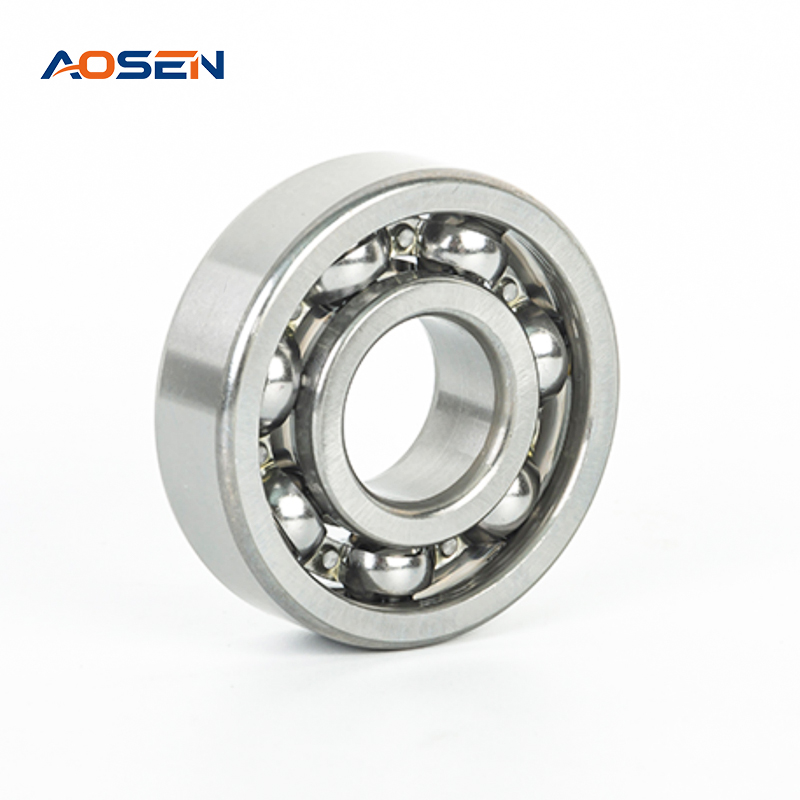
Deep groove ball bearings — the most widely manufactured bearing type in the world — follow this same process, with additional precision requirements for the deep raceway grooves that give them their ability to handle both radial and axial loads simultaneously. Stainless steel deep groove ball bearings follow an identical sequence but use corrosion-resistant steel grades that require modified heat treatment parameters. This article covers every stage in detail.
Raw Materials: What Steel Goes Into Ball Bearings
The material selection for a ball bearing determines everything from hardness and fatigue life to corrosion resistance and maximum operating temperature. Most standard deep groove ball bearings are made from AISI 52100 chrome steel (equivalent to 100Cr6 in European standards), a high-carbon, chromium-alloyed bearing steel that achieves a surface hardness of 58–65 HRC after heat treatment — hard enough to resist contact fatigue over hundreds of millions of stress cycles.
Standard Chrome Steel (AISI 52100 / 100Cr6)
This steel contains approximately 1.0% carbon and 1.5% chromium, giving it exceptional hardenability and fatigue resistance. It is through-hardened — meaning the entire cross-section achieves uniform hardness, not just the surface. AISI 52100 is the global default material for the inner ring, outer ring, and balls in standard deep groove ball bearings.
Stainless Steel for Corrosion-Resistant Bearings
Stainless steel deep groove ball bearings use martensitic stainless steel grades, most commonly AISI 440C (the high-carbon variant) or AISI 440B. AISI 440C contains approximately 1.0% carbon and 17% chromium, which forms a passive chromium oxide surface layer providing excellent resistance to moisture, mild acids, and salt spray. After heat treatment, AISI 440C reaches 58–62 HRC — slightly softer than 52100, which results in approximately 20–30% lower load ratings compared to equivalent chrome steel bearings.
For food processing, marine, pharmaceutical, and chemical applications where contamination risk makes this trade-off worthwhile, stainless steel deep groove ball bearings are the standard specification. Some manufacturers also offer AISI 316 stainless for extreme corrosion environments, though this austenitic grade cannot be hardened and requires ceramic balls to compensate.
Cage and Seal Materials
- Cages: Stamped low-carbon steel (most common), pressed brass, machined polyamide (PA66), or PEEK for high-temperature applications
- Shields (ZZ suffix): Sheet steel — keeps lubricant in and coarse contamination out without contacting the inner ring
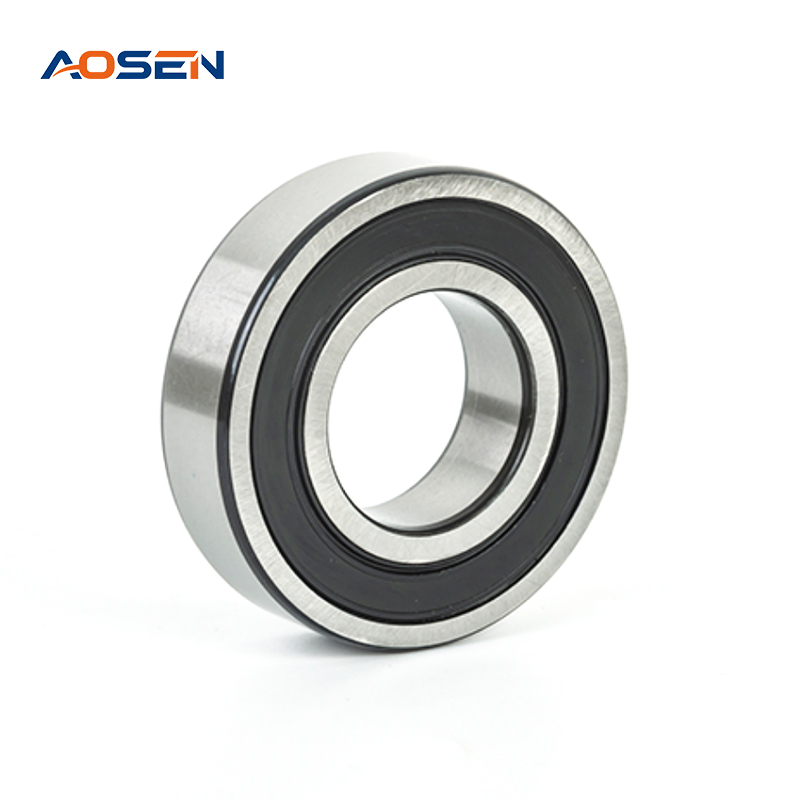
- Seals (2RS suffix): Nitrile rubber (NBR) for standard applications; fluorocarbon (FKM/Viton) for chemical or high-temperature service; PTFE for contact-free low-friction variants
Step 1 — Forming the Inner and Outer Rings
Ring manufacturing begins with steel bar stock or seamless tube that has been verified for chemical composition and internal cleanliness. Inclusions and micro-voids in the steel are the leading cause of premature bearing fatigue, so material qualification is not optional.
Cold or Hot Forging
For larger bearings (bore diameter above approximately 30 mm), steel billets are hot forged at temperatures of 900–1,100°C into rough ring blanks. Forging aligns the grain structure of the steel along the ring's circumference — a critical advantage because it orients the strongest grain direction to resist the hoop stresses the ring experiences in service. For smaller deep groove ball bearings, cold forming of tube stock is common, producing less material waste and requiring less subsequent machining.
Turning (Machining)
After forging, ring blanks are turned on CNC lathes to produce their basic dimensions — outer diameter, inner bore, width, and the initial form of the raceway groove. At this stage, dimensions are cut to 0.1–0.5 mm oversize to leave stock for subsequent grinding. The deep groove profile — the semicircular channel that contacts the balls — is formed here to a preliminary geometry that will be refined through multiple grinding operations.
Turned rings are then washed, inspected dimensionally, and prepared for heat treatment. Any surface defects detected at this stage — cracks, laps, or seams — are cause for rejection, as heat treatment will lock in any existing flaws.
Step 2 — Heat Treatment: Achieving Bearing Hardness
Heat treatment is the most metallurgically critical step in ball bearing manufacturing. It transforms the soft, machinable steel rings into hard, fatigue-resistant bearing components. Incorrect heat treatment — wrong temperature, wrong quench rate, or insufficient tempering — produces bearings that fail in service within hours rather than years.
Through-Hardening Process for AISI 52100
- Austenitizing: Rings are heated to 820–860°C in a controlled-atmosphere furnace (to prevent decarburization of the surface) and held at temperature until fully austenitized — typically 20–60 minutes depending on section thickness.
- Quenching: Rings are rapidly cooled by immersion in oil (most common) or by forced gas quenching. The rapid cooling transforms austenite into martensite — the hard, body-centered tetragonal crystal structure that gives bearing steel its hardness. The quench rate must be fast enough to prevent formation of softer pearlite or bainite phases.
- Cryogenic treatment (optional but increasingly common): Immersion in liquid nitrogen at -196°C for 4–24 hours converts retained austenite — a softer metastable phase — into martensite, improving dimensional stability and fatigue life by up to 20%.
- Tempering: Rings are reheated to 150–180°C and held for 1–4 hours to relieve quench stresses while preserving hardness. Final hardness after tempering: 60–64 HRC. Higher tempering temperatures reduce brittleness further but sacrifice some hardness.
Heat Treatment for Stainless Steel Deep Groove Ball Bearings (AISI 440C)
AISI 440C requires austenitizing at a higher temperature of 1,010–1,065°C followed by oil or air quenching, then tempering at 150–175°C. The higher austenitizing temperature is necessary to dissolve the chromium carbides present in this grade. Final hardness reaches 58–62 HRC. Critically, tempering above 400°C must be avoided — it precipitates chromium carbides at grain boundaries, dramatically reducing corrosion resistance in a process called sensitization.
Step 3 — Grinding the Rings to Final Dimensions
After heat treatment, rings are too hard to cut with conventional tools — only grinding with abrasive wheels can achieve the required dimensional accuracy and surface finish. Grinding is a multi-pass process, with each operation targeting a specific surface and progressively tightening tolerances.
Grinding Sequence for a Deep Groove Ball Bearing Ring
- Face grinding: Both side faces are ground flat and parallel to a tolerance of ±0.005 mm or better, establishing the reference datums for all subsequent operations.
- Outside diameter (OD) grinding: The outer ring's OD and the inner ring's bore are ground to their specified diameters. For a standard P0 (Normal) tolerance class bearing, bore tolerance is typically +0 / -0.012 mm for a 20mm bore.
- Raceway groove grinding: The most critical operation. Form-dressed grinding wheels cut the deep semicircular groove profile to its specified radius — typically 51.5–53% of ball diameter for deep groove ball bearings. The groove radius is tightly controlled because it directly determines ball contact angle, load distribution, and running noise.
- Superfinishing (honing) of raceways: Oscillating abrasive stones remove the directional grinding marks left by the wheel, producing a plateau surface finish with Ra values of 0.02–0.1 µm. This near-mirror finish is essential for minimizing contact stress, reducing friction, and achieving the Brinell pattern that retains lubricant film.
Precision class bearings (P6, P5, P4 per ISO 492) require progressively tighter tolerances at each grinding stage. A P4-class bearing has dimensional tolerances approximately 4× tighter than a standard P0 bearing and is used in machine tool spindles, medical imaging equipment, and precision instruments.
Step 4 — Manufacturing the Balls
The rolling elements — the balls themselves — are manufactured through a completely separate process that is arguably the most demanding in the entire bearing supply chain. Ball roundness, surface finish, and diameter consistency directly determine bearing noise, vibration, and fatigue life.
- Cold heading: Steel wire is fed into a cold heading machine that cuts a small slug and cold-forms it between two dies into a rough sphere with a characteristic equatorial "flash" ring. The flash ring is excess material squeezed out between the dies — it must be removed in the next stage.
- Flash removal (deflashing): Rough balls are tumbled in a groove between two cast-iron plates, breaking off the flash ring and producing a more spherical shape. At this stage, balls are still approximately 0.1–0.3 mm oversize with surface roughness of Ra 0.8–1.6 µm.
- Heat treatment: Balls undergo the same through-hardening process as rings — austenitizing, quenching, and tempering to achieve 62–66 HRC. Balls are typically hardened to a slightly higher value than rings because they experience the highest Hertzian contact stresses in the bearing.
- Hard grinding: Hardened balls are ground between rotating cast-iron plates using abrasive compound, reducing them to near-final size and improving sphericity. Multiple passes with progressively finer abrasives reduce the overstock to approximately 5–25 µm.
- Lapping and superfinishing: Final lapping between precision plates produces balls with sphericity errors (deviation from a perfect sphere) of 0.1–0.25 µm for Grade 10–25 balls used in standard deep groove ball bearings. Precision Grade 3 balls — used in high-precision bearings — achieve sphericity within 0.08 µm and surface roughness below Ra 0.012 µm.
- Diameter sorting: Finished balls are sorted into diameter groups with tolerances of ±0.25 µm per group. All balls used in a single bearing must come from the same diameter group to ensure equal load sharing among all balls in the complement.
Step 5 — Cage Manufacturing
The cage (retainer) maintains equal circumferential spacing between the balls, prevents ball-to-ball contact, and guides lubricant to the contact zones. It is a precision component in its own right, despite being less mechanically demanding than the rings or balls.
- Stamped steel cages: Sheet steel is blanked, formed, and pierced to create two half-cages that are riveted together around the ball complement. This is the most common cage type in standard deep groove ball bearings due to its low cost and adequate performance up to moderate speeds.
- Machined brass cages: CNC-turned from brass tube with pockets milled or broached. Used in high-speed, high-temperature, or high-vibration applications where steel cages would fatigue. Brass has excellent compatibility with petroleum lubricants and low risk of galling.
- Injection-molded polyamide cages: Glass-fiber reinforced PA66 cages are injection-molded in a single piece. They are lighter than metal cages, self-lubricating to a degree, and allow higher permissible speeds than steel cages in many designs. Suitable for operating temperatures up to approximately 120°C continuously.
Step 6 — Assembly of the Deep Groove Ball Bearing
Deep groove ball bearing assembly uses a specific technique that exploits the bearing's geometry: by offsetting the inner ring within the outer ring, a crescent-shaped gap opens on one side large enough to insert the full ball complement. This is the eccentric displacement method — it allows more balls to be loaded than would fit if inserted through the open side of a conventionally held assembly.
- Ring cleaning: Inner and outer rings are ultrasonically cleaned to remove all grinding residue, metallic particles, and contaminants before assembly. A single metallic particle trapped in the bearing during assembly causes premature raceway pitting.
- Ball loading: The inner ring is displaced to one side of the outer ring, and the maximum possible number of balls is loaded into the crescent gap. The inner ring is then centered, distributing the balls evenly around the circumference.
- Cage installation: The cage is snapped or riveted around the ball complement to hold the balls at equal spacing. For stamped steel cages, two half-cages are pressed together and riveted through pre-formed bosses.
- Internal clearance measurement: The assembled bearing is measured for radial internal clearance (RIC) — the total radial play between inner and outer rings. Standard C3 clearance (greater than normal, for interference-fit applications) is verified to fall within specified limits per ISO 5753.
- Lubrication: The correct quantity and grade of grease is injected into the bearing space — typically filling 25–35% of the free volume for sealed bearings. Overfilling increases operating temperature and churning losses; underfilling shortens grease life.
- Shield or seal installation: Metal shields (ZZ) are pressed into grooves in the outer ring without contacting the inner ring. Rubber seals (2RS) are similarly seated with a controlled interference fit against a seal groove on the inner ring surface.
Step 7 — Quality Inspection and Testing
Every finished deep groove ball bearing undergoes a battery of automated inspections before packaging. The inspection rigor varies with precision class, but even standard P0 bearings are 100% inspected — not sampled — for the critical parameters below.
Standard quality inspection parameters for finished deep groove ball bearings
| Inspection Parameter |
Method |
Typical Tolerance (P0 Class) |
Purpose |
| Bore diameter |
Air gauging / CMM |
+0 / -0.012 mm (20mm bore) |
Shaft fit interference |
| Outer diameter |
Air gauging / CMM |
-0.011 / -0.020 mm (47mm OD) |
Housing fit |
| Radial runout (KRIA) |
Rotation under load |
Max 0.015 mm |
Rotation accuracy |
| Radial internal clearance |
Displacement gauge |
C3: 11–25 µm (6204 example) |
Load and thermal expansion |
| Vibration (ANDERON / dB) |
Vibration meter |
Z, L, M bands per ABMA Std 13 |
Noise qualification |
| Hardness (rings and balls) |
Rockwell HRC |
58–65 HRC (52100); 58–62 HRC (440C) |
Fatigue resistance |
| Width |
Micrometer / CMM |
0 / -0.120 mm |
Axial positioning accuracy |
High-precision bearings (P5 and P4 class) additionally undergo axial runout testing, roundness measurement of rings and balls using roundness testers accurate to 0.01 µm, and in some cases 100% vibration testing with automatic sorting by noise grade (V1, V2, V3).
Chrome Steel vs. Stainless Steel Deep Groove Ball Bearings: Manufacturing Differences
While the manufacturing sequence is identical, stainless steel deep groove ball bearings require several important process modifications compared to standard chrome steel units.
Manufacturing process differences between AISI 52100 chrome steel and AISI 440C stainless steel deep groove ball bearings
| Process Stage |
AISI 52100 Chrome Steel |
AISI 440C Stainless Steel |
| Austenitizing Temp |
820–860°C |
1,010–1,065°C |
| Quench Medium |
Oil |
Oil or air (slower rate acceptable) |
| Tempering Range |
150–180°C |
150–175°C (must avoid 400–600°C) |
| Achieved Hardness |
60–65 HRC |
58–62 HRC |
| Grinding Difficulty |
Standard |
Higher — work-hardening tendency requires CBN wheels |
| Corrosion Treatment |
Phosphating or rust-preventive oil |
Passivation in nitric acid (enhances Cr₂O₃ layer) |
| Dynamic Load Rating |
100% (baseline) |
Approx. 70–80% of equivalent chrome steel |
Tolerance Classes and What They Mean in Practice
Deep groove ball bearings are manufactured to internationally standardized tolerance classes defined by ISO 492 and ABMA standards. The class determines the dimensional accuracy and running accuracy of the finished bearing — and directly drives the cost and manufacturing complexity.
- P0 (Normal / ABMA ABEC-1): The standard commercial grade. Covers the vast majority of applications including pumps, motors, conveyors, gearboxes, and household appliances. No special designation needed on bearing part numbers.
- P6 (ABEC-3): Tighter bore, OD, and runout tolerances. Used in machine tools, precision pumps, and medium-speed electric motors. Approximately 2× tighter than P0.
- P5 (ABEC-5): High precision. Required for machine tool spindles, precision measurement instruments, and high-speed applications above 15,000 RPM. Approximately 4× tighter than P0.
- P4 (ABEC-7): Ultra-precision. Used in CNC grinding spindles, gyroscopes, and aerospace applications. Bore runout tolerance for a 20mm bearing is just 2.5 µm — roughly 1/40th the width of a human hair.
- P2 (ABEC-9): The highest commercial precision class. Primarily used in precision medical imaging equipment, semiconductor manufacturing, and scientific instruments.
Stainless steel deep groove ball bearings are most commonly manufactured to P0 and P6 tolerance classes. Higher precision classes are available but are significantly more expensive due to the additional grinding difficulty of AISI 440C, and are typically reserved for specialized clean-room or medical applications where both corrosion resistance and precision are simultaneously required.

 Español

 +86-15990593443
 No. 558 Huancheng West Road, Zhouxiang Town, Cixi City, Ningbo Province, Zhejiang Province